
Polycystic ovary syndrome (PCOS), the most common female endocrine disorder, is a heterogeneous endocrine and metabolic disorder, affecting 6 - 10% of women of reproductive age (1). Features of PCOS may manifest at any age, ranging from childhood (premature puberty), teenage years (hirsutism, menstrual abnormalities), early adulthood and middle life (infertility, glucose intolerance) to later life (diabetes mellitus and cardiovascular diseases) (2). Several of these features increase the risk of cardiovascular diseases (CVD) in women (3) and the prevalence of hypertension in women with PCOS is about 40% in comparison with a prevalence of about 25.8 in the general population (4). PCOS is also associated with a higher risk of myocardial infarction (relative risk) (5) and with a compromised cardiovascular profile independent from obesity in young women (6).
Hyperandrogenism and insulin resistance or deficiency was linked to PCOS, as early as 1921, when Achard and Thiers published their classic description of a bearded woman with diabetes (7). The polycystic ovary syndrome was then called the Stein-Leventhal syndrome, which was first described in 1935. Originally, diagnosis required pathognomonic ovarian findings and the clinical triad of hirsutism, amenorrhea and obesity (8).
Experimental induction of a polycystic ovarian syndrome (PCOS) in rodents by Brower in 1996 was made possible by the use of a single intramuscular (i.m.) injection of estradiol valerate (EV) in 8-week-old rats. The rats ceased ovulation and developed characteristics of human PCOS, including large cystic follicles in the ovaries and altered concentrations of luteinizing hormone (9).
Roman chamomile or Chamaemelum nobile (L.), (synonym Anthemis nobilis L. from Asteraceae family), is a perennial herb cultivated in Western Europe and North Africa. In traditional medicine, chamomile flowers are used as an anti-spasmolytic and anti-inflammatory tea for stomach disorders. In women, the antispasmodic effects of Chamomile ease menstrual cramps and lessen the possibility of premature labor. It has also been found to stimulate menstruation (10). Chamomile extract's stimulating effect on leukocytes (macrophages and B lymphocytes) is used in skin irritations and eczema (11). The tranquilizer/ sedative effects of Chamomile depress the central nervous system making it useful for curing insomnia (12).
Studies on chamomile extract have shown that both lipophilic and hydrophilic compounds take part in its therapeutic activity. The most characteristic constituents of this plant species are volatile oil, sesquiterpene lactones and phenols including flavonoids. The main constituents of chamomile flowers include several phenolic compounds, primarily the flavonoids, apigenin, quercetin, patuletin, luteolin and their glucosides.
Flavonoids are chemical phenylbenzopyrones, which are usually conjugated with sugars and are present in all vascular plants. The benzopyranonring system is a molecular scaffold which is found in flavonoid natural products and has weak aromatase inhibitory activity (13).
Several biological properties have been ascribed to flavonoids, which among them are the wellknown anti-inflammatory, antioxidant, antihepatotoxic and antiviral activities together with their vasculo-protector and spasmolitic effects. Flavonoids constitute one of the most characteristic classes of compounds in higher plants. One of the 6 major subgroups of flavenoids is the subgroup of Flavone including Flavon, Apigenin and Luteolin, which all three exist in chamomile.
The effects of flavonoids on the central nervous system have been considered just in the past 10 years. In particular, the studies performed by Medina 1989 have demonstrated the capacity of some flavonoids for binding to the central type benzodiazepine (BZD) receptors (14). Apigenin, one of the predominant flavonoids in chamomile, was found to competitively inhibit the binding of flunitrazepam (a benzodiazepine receptor blocker of). At doses up to 30 mg/kg, apigenin was shown to have a clear anxiolytic activity without the sedative or muscle relaxing effects noted for benzodiazepines (e.g., Valium) without noticeable anticonvulsant properties (14). Effects of phytoestrogens on DNA synthesis and tyrosine kinase activity show that chrysin, quercetin, apigenin and luteolin inhibit estradiol (E2)-induced DNA synthesis or have antiproliferative properties (antimutagenic), growth inhibitory properties (15) and inhibitory effects on aromatase activity (13). In other words all these point out that chamomile can prevent cancer.
With due attention to PCOS which is the most common female endocrine disorder in women of reproductive age and the therapeutic activity of chamomile (Flavonoids), we saught to (1) compare the circulating levels of gonadotropins and gonadal steroids before and after injection of Chamomile extract in PCO induced rats (2), study the signs of PCOS in the ovarian tissue and (3) change in the number of dominant follicles upon Chamomile extract administration.
Thirty virgin adult cycling Wistar rats, weighting 200 - 220 g were divided into two groups and housed every six mice into a cage under standard conditions (21±2°C, 12-hour light/ 12-hour dark cycles) for at least one week before and throughout the study, with free access to standard chow and tap water ad libitum. The study and all the procedures were carried out in accordance with the guidelines for the care and use of laboratory animals of Tehran University of Medical Sciences Ethics Committee and that of the National Institutes of Health Guide for Care and Use of Laboratory Animals (Publication No. 85-23, revised 1985).
Estrous cyclicity was monitored by vaginal smears obtained between 0800 and 1200 hours, and assessed by light microscopy for the relative proportion of leukocytes, epithelial and cornified cells found in daily vaginal lavages, which characteristically change during different stages of the estrous cycle. The rat estrous cycle (estrus, diestrus 1, diestrus 2, and proestrus) usually lasts about 4 days, in both control and PCO rats (16).
Chamomile flowers were collected from natural resources in Ahvaz, Iran. After grinding the dried flowers, the plant material was extracted repeatedly with 70% ethanol. The solution was filtered and evaporated in vacuo to yield a powdered extract.
After one week of acclimatization, 8-week-old rats (n = 30) were divided into two groups of control and PCO rats. The control group received 0.2 ml corn oil and all the rates assigned to the PCO group received an i.m. injection of 0.2 mg Estradiol Valerate (EV) (Aburaihan Co., Iran), in 0.2 ml of corn oil, to induce PCO as described by Brawer 1996 (9). All the EV-treated rats were evaluated 60 days after the injection, when follicular cysts are first detected. Subsequently, PCO rats were subdivided into four groups: one group did not receive Chamomile extract and other three groups received different doses (25, 50 and 75 mg/kg) of Chamomile alcoholic-extract intraperitoneally for ten days.
Blood samples were collected and serum luteinizing hormone (LH), follicular stimulation hormone (FSH) and estradiol levels were determined by ELISA method. The kits used for the experiments included LH and FSH kits (Monobind Inc., Costa Mesa, U.S.A.), and Estradiol kit (DRG International, GmbH, U.S.A.).
Ovaries of the controls and EV-treated rats were removed, cleaned from adherent fat and connective tissue, and fixed in 10% formaldehyde buffer for at least 24 hours.
Statistical analysis was done by using SPSS software, version 13 (SPSS Inc, Illinois, U.S.A.). Differences between the two groups were analyzed by Student's t-test. Comparisons between the controls and EV-treated rats were made by ANOVA, followed by the Student-Newman-Keuls post-hoc test. A p-value less than 0.05 was considered statistically significant.
In the present study, we examined the effects of dried Chamomile flowers alcoholic extract on the ovaries and uteri of PCO-induced rats (Figure 1).
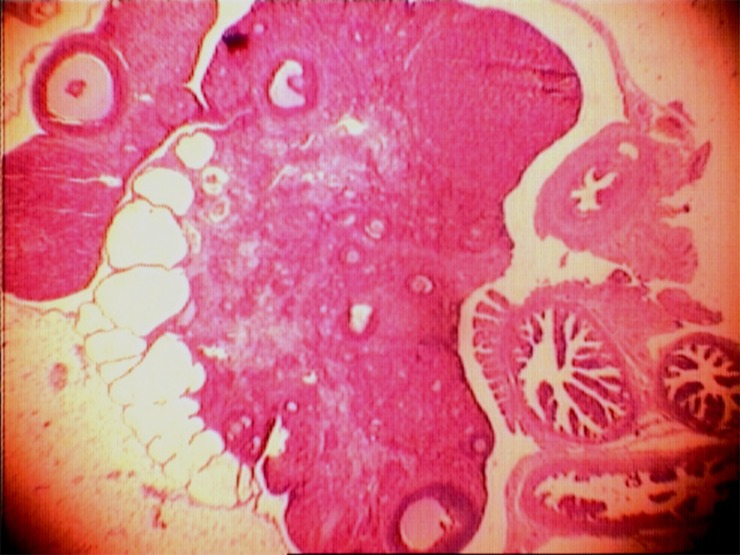
Rats with PCOS which had been treated by 50 mg/kg of Chamomile extract showed recovery demonstrated by macroscopic and microscopic morphological examination in the ovarian and uterine tissues. In the ovarian tissue, the cysts had mainly disappeared (Figure 2) and the number of dominant follicles had increased (Figure 3) and better endometrial tissue arrangements were observable (Figure 4). Mean hormonal changes in PCO-induced animals, injected with 50 mg/kg of Chamomile extract, showed statistically significant differences in comparison with the controls (p < 0.05), (Table 1). Serum levels of estradiol and gonadotropins, LH and FSH, were significantly decreased in the Chamomile group relevant to the control group (p < 0.05).
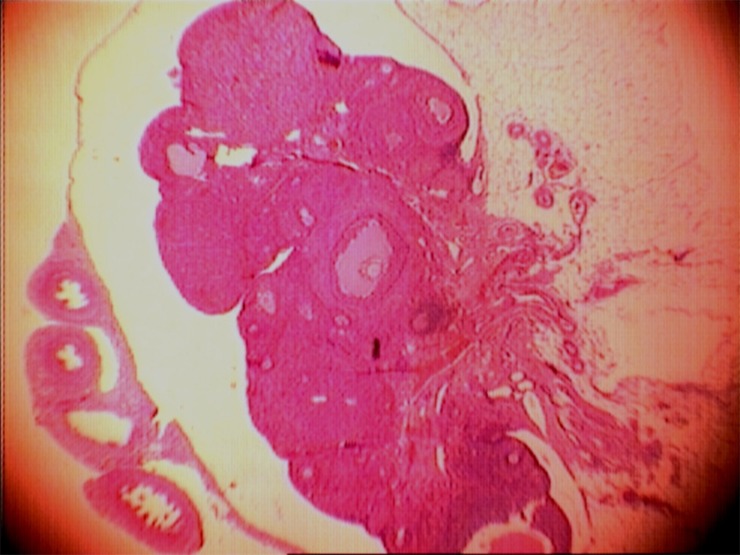
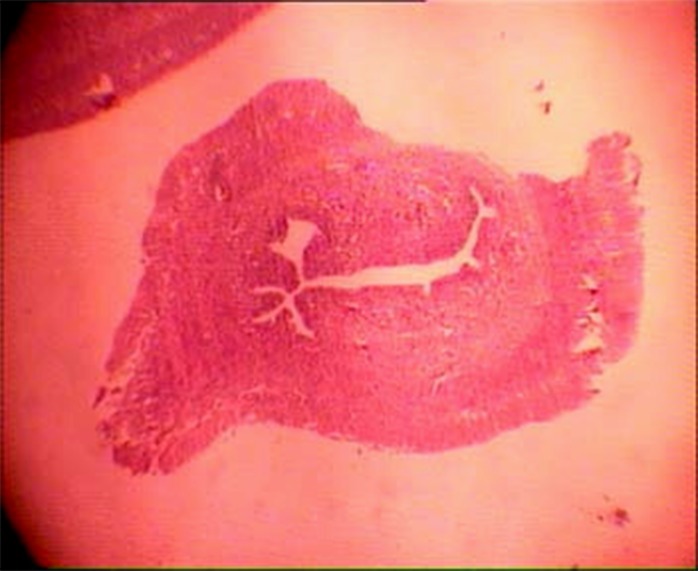
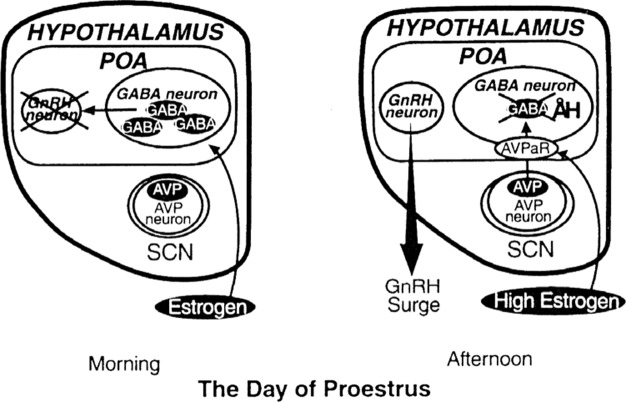
Table 1 Estradiol, LH and FSH concentrations in the studied groups (M±SD)
| Groups | Mean Hormone Concentrations | ||
|---|---|---|---|
|
| |||
| Estradiol (Pg/ml) | LH (IU/mL) | FSH (IU/mL) | |
| PCO + Chamo. 25 mg/kg | 1. 51 ± 0. 006 * | 0. 48 ± 0. 13 * | 0. 19 ± 0. 11 * |
| PCO + Chamo. 50 mg/kg | 1. 5 ± 0.007 * | 0. 5 ± 0. 41 * | 0. 37 ± 0. 2 * |
| PCO + Chamo. 75 mg/kg | 5. 53 ± 2. 75 * | 0. 57 ± 0. 31 * | 0. 28 ± 0. 2 * |
| Corn oil (control group) | 5. 7 ± 2. 4 * | 0. 58 ± 0. 2 * | 0. 3 ± 0. 1 * |
| PCO | 133. 93 ± 40 | 1. 57 ± 0. 45 | 1. 05 ± 0.2 |
p < 0.05
Experimental polycystic ovary (PCO) in rodents resembling some aspects of human PCO syndrome, for example changes in serum levels of gonadotropin-releasing hormones (GnRH) and appearance of cysts, was induced by injecting a long-acting estradiol valerate (EV). Classical neuroendocrinological studies indicate that in female rats, the neuronal component responsible for the induction of the LH surge is located in the preoptic area (POA) (17, 18). In fact, it has been reported that gonadotropine releasing hormone neurons in the POA express the immediate early gene, c-Fos, at the time of the LH surge suggesting that such GnRH neurons in the POA are responsible for the generation of the GnRH surge (19). To understand the mechanism underlying the generation of the LH surge, (i.e., the GnRH surge), one should determine the neuronal components of the GnRH surge generator. Accumulating evidence suggests that gamma amino butyric acid (GABAergic) regulation of GnRH neurons is profoundly involved in the regulation of LH surge (20, 21), (Figure 4). It has been suggested that a decrease in the inhibitory tone of GABAA on GnRH neurons causes LH to surge (22). Consistently, Kimura (1994) showed that intravenous infusion of bicuculline, a GABAA receptor antagonist, on the morning of proestrus induced a premature surge-like secretion of LH (23).
Studies on chamomile extract have shown that both lipophilic and hydrophilic compounds take part in its therapeutic activity. The most characteristic constituents of this plant species are volatile oil, sesquiterpene lactones and phenolics including flavonoids. The effects of flavonoids on the central nervous system have been considered only in the past 10 years. Particularly, the studies performed by Medina 1989 have demonstrated the capacity of some flavonoids for binding to the central type benzodiazepine (BZD) receptors. Apigenin, one of the predominant flavonoids in chamomile, was found to competitively inhibit the binding of flunitrazepam, a benzodiazepine derivative, and was fitted into a pharmacophore model for ligands binding to the GABAA receptor benzodiazepine site. This reflected the affinities of the compounds in the [(3) H]-flumazenil binding assay (14, 24–26). Therefore, the effects of Chamomile extract in rats which were shown in the present study can be attributed to the direct activation of the central benzodiazepine site.
Extract of dried Matricaria chamomilla L. flowers not only can induce recovery from an induced PCO state in rats, which is probably due to the interaction of the GABA system combined with the effects of chamomile in the regulation of LH surge secretion, it but also can increase dominant follicles. In the uterus, it causes better endometrial tissue arrangements.
This study was funded by the Institute for Islamic and Complementary Medicine; grant number P/26/M/T/1126. No conflict of interest existed.
