
Recurrent pregnancy loss (RPL) or habitual miscarriage is the loss of three or more consecutive pregnancies before the 20th week of gestation (1). The World Health Organization (WHO) has defined a miscarriage as the loss of a fetus or embryo weighing ≤500 g, which would normally be at 20–22 weeks of gestation. It varies with age and parity and a woman over the age of 35 is at greater risk of pregnancy loss than a 25-year-old woman. RPL affects approximately 1 in 300 pregnancies. However, epidemiologic studies have revealed that 1% to 2% of women experience recurrent pregnancy loss (2).
Approximately 15% of clinically recognized pregnancies result in spontaneous loss, and there are many more pregnancies that fail prior to being clinically recognized. Only 30% of all concepttions result in a live birth (3). The risk of miscarriage is 30% after two previous losses and 35% after the third one. This strongly suggests a need for evaluation after just two losses in patients with no prior live births. An earlier evaluation may further indicate whether the fetal cardiac activity is identifiable prior to a loss, if the woman is older than 35 years, or the couple has had difficulty in conceiving.
There are several leading causes of RPL, among them are uterine anatomical defects, (intrauterine adhesions, uterine fibroids or polyps and cervical incompetence), genetic factors, infectious, immunological, environmental and blood dyscariasis. However, despite extensive investigation of female partners in a large number of cases (40%– 50%) no cause has been identified and such cases are classified as idiopathic. It is possible that in such cases, the male partner may harbour sperm abnormalities.
Evaluation of male factor in RPL involves paternal chromosomal analysis only and the role of sperm factors has totally been ignored. With the advent of advanced assisted micromanipulation procedures, the role of sperm factors is being increasingly realized. However, routine semen parameters do not provide much information regarding sperm functional competence and reproductive potential. Thus, this study was designed with the aim to evaluate the role of sperm factors, oxidative stress and DNA damage in iRPL following spontaneous conception.
In this study we analysed semen samples for free radical levels, particularly the reactive oxygen species (ROS), total antioxidant capacity (TAC) and sperm DNA damage to evaluate if iRPL is associated with poor sperm quality in terms of DNA damage and oxidative stress.
Twenty couples with iRPL attending antenatal clinic and twenty fertile men who had fathered a child a year prior to the study and had normal sperm parameters were enrolled as cases and controls, respectively, after signing an informed consent form each and obtaining the approval from the institute's ethical clearance committee (Ref. No.: IES C/T-12/2010). The study was conducted from March 2010 to July 2011 at Laboratory for Molecular Reproduction and Genetics, All India Institute of Medical Science, New Delhi, India.
A detailed family, clinical, occupational and reproductive histories and a 7 day recall of the participants diet were recorded in a pre-designed Performa. The individuals were evaluated to rule out immunological, endocrinological, infectious or anatomical defects. The absence of antiphospholipid syndrome was confirmed by ruling out the presence of lupus anticoagulant (LA) and anticardiolipin (aCL) antibodies. None of the patients had taken oral antioxidant supplementation. Both the patients and the controls belonged to the same socio-economic strata (lower and low middle class) of the north Indian society. Therefore, the dietary intake, which could influence the levels of antioxidants, was similar in both the infertile men and controls. Blood and semen samples were collected from both cases and controls.
Semen samples were obtained by masturbation and collected into sterile non-toxic vials, after a period of 72–96 hours of sexual abstinence. Specimens were allowed to liquefy for 30–40 minutes at room temperature, and time of liquefaction was noted. Conventional semen analysis was performed according to WHO 2010 guidelines (4).
After liquefaction, 400 µl of raw semen was used to assess basal ROS levels. Ten microlitters of luminol (5-amino-2, 3,-dihydro-1,4-phthalazinedione; Sigma, USA), prepared as 5 mM stock in dimethyl sulfoxide (DMSO), was added to the mixture and served as a probe. A negative control was prepared by adding 10 µL of 5 mM luminol to 400 µL of PBS. Levels of ROS were assessed by measuring the luminol-dependant chemiluminescence with the luminometer (Sirius, Berthold Detection Systems GmbH, Pforzheim, Germany) in the integrated mode for 15 minutes. The results were expressed as RLU/min/20×10 6 sperm. Each sample was analysed in duplicate and the mean of three readings at a 1-week interval was taken.
Total antioxidant capacity was assessed using the commercially available kit (Cayman Chemical Item Number 709001, USA) as per the specifications of the kit manufacturer. An online tool was used for TAC calculations.
The SCSA was performed as per the protocol described by Evenson et al. (5), with minor modifications. Frozen aliquots of semen were placed in a 37 °C water bath until just thawed, after which samples were diluted with TNE buffer to 1–2×10⁶ sperm cells per mL. 0.20- mL aliquots of diluted samples were mixed with 0.40 mL of acid-detergent solution (0.08 M HCl, 0.15 M NaCl, 0.1% Triton X-100, pH=1.2). After 30 s, the cells were stained by adding 1.2 mL acridine orange (AO) stain solution (containing 6 µg AO, chromatographically purified; Polysciences, Inc., USA) per mL buffer (0.037 M citric acid, 0.126 M Na2HPO4, 0.0011 M EDTA (di-sodium), 0.15 M NaCl, pH = 6.0) was added. The test was run twice by a single observer.
Cells were analysed using FAC Scan flow cytometer (BD Biosciences, USA), with an air- cooled argon laser operated at 488 nm and a power of 15 mW. A total of 5000 events were accumulated for each measurement. For every six test samples, one standard reference sample was analysed to ensure instrument stability. Under these experimental conditions, and excited with a 488 nm light source, AO intercalated with double-stranded DNA emits green fluorescence and AO associated with single-stranded DNA emits red fluorescence. Thus, sperm chromatin damage can be quantified by flow cytometric (FCM) measurements of the metachromatic shift from green (native, double-stranded DNA) to red (denatured, single-stranded DNA) fluorescence and displayed as red (fragmented DNA) versus green (DNA stainability) fluorescence intensity cytogram patterns. The green fluorescence (FL1) was collected through a 515– 545 nm bandpass filter, and the red fluorescence (FL3) was collected through a 650 nm long pass filter. After staining with AO staining solution, the sample was placed in the flow cytometer and run through the flow system. After complete analysis of the sample, the X- (red fluorescence) and Y-mean (green fluorescence) values were recorded manually after selecting gate for sperm cells using FlowJo Cytometry Analysis Software (Oregon, USA).
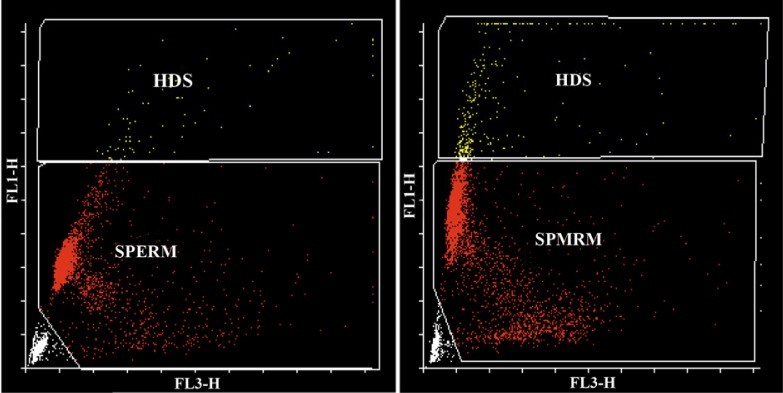
Extent of DNA denaturation (damage) was expressed in terms of DFI, which is the ratio of red to total (red plus green) fluorescence intensity, i.e. the level of denatured DNA over the total DNA. The DFI value was calculated for each sperm cell in the sample. The percentage of high DNA stainability cells (HDS) were also recorded in each sample manually from the graph plot. HDS represents another distinct population in semen that characterizes immature spermatozoa with incomplete chromatin condensation.
Statistical analysis was performed using SPSS version 15 and the parameters were compared by Mann-Whitney test. Pearson correlation test was used to find the correlation between parameters and a p-value <0.05 was considered significant. Receiver operating characteristics (ROC) curve analysis was applied to find out the cut-off value of DFI to discriminate male partners from fertile controls.
The mean age of the cases and the controls were 33.35±4.95 and 31.40±2.34 years, respectively. After detailed gynaecological and laboratory investigation, it was found that the female partners were normal. Moreover, both male and female partners were cytogenetically normal. There was no occupational or environmental exposure to radiation (electromagnetic radiation), high temperature, toxic chemicals (insecticides and pesticides), mutagens or pollutants in the patients or the controls. None of the patient or the controls had life style factors as smoking or alcohol intake which could affect the DNA integrity. All patients and controls were of the same socio-economic strata with poor/low intake of fruits and vegetables.
No significant differences in age, seminal volume, liquefaction time, pH and sperm concentration were observed between male partners of idiopathic RSA cases and controls, but sperm morphology and motility were significantly (p <0.05) lower in male partners of patients with iRPL (Table 1). ROS in neat semen was significantly (p <0.05) elevated in cases as compared to controls. The mean ROS levels observed were 47427.00 relative light unit (RLU)/min/20 million sperm in cases as compared to 13644.57 RLU/min/20 million sperm in controls (Table 2); normal value <15,000 RLU/min/20million sperm. The average mean of TAC in controls (6.95 mM trolox) was significantly (p <0.05) higher as compared to cases (2.98 mM trolox). The mean DFI of male partners was found to be 23.37±9.9 (8.50–44.07) and the mean DFI of controls was 13.89±5.40 (7.70–25.80), (Table 2). The mean DFI was significantly (p <0.05) higher in cases when compared to controls. The high ROS shows positive correlation with sperm DNA damage in male partners, but no such correlation was observed in controls. By applying ROC curve analysis, a threshold value of 16.50 was obtained to discriminate cases from controls (Figure 2).
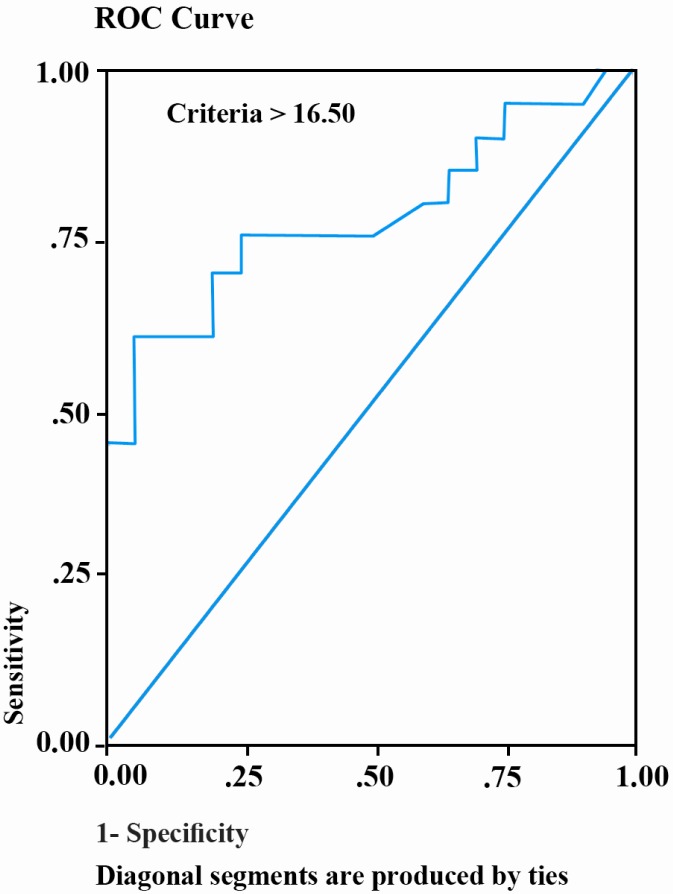
Table 1 Comparison of semen parameters in the cases and controls
| Category | pH | Volume (mL) | Liquefaction time (min) | SMA grade | NM% | SC (million/mL) |
|---|---|---|---|---|---|---|
| Cases (20) | 7.81 ± .275 | 3.25 ± 1.18 | 39 ± 6.40 | 30 (10,80)* | 35 (10,70)* | 34.1 (7.1, 156.5)* |
| Controls (20) | 7.78 ± .243 | 3.9 ± .80 | 37.25 ± 6.78 | 50 (30,80)* | 50 (30,80)* | (35,86)* |
Values are expressed as median (range). Keys: SC Sperm count; SM Sperm motility; NM Normal sperm morphology; SMA Sperm motility grade A
Table 2 Comparison of DFI and ROS levels of cases and controls
| Category | DFI | ROS (RLU/min/20 million sperm) | TAC (mM trolox equivalent) |
|---|---|---|---|
| Cases (20) | 25.36 (8.5,44.7)* a | 47427.00a | 2.98 ± 1.2# a |
| Controls (20) | 12.70 (7.7,25.8)* | 13644.57 | 6.95 ± 1.01# |
Values are expressed as median (range)
values expressed as mean±SD
p-values < 0.05 considered significant. Key: DFI: DNA fragmentation index; ROS: Reactive oxygen species; TAC: Total Antioxidant Capacity
The area under curve was 0.781 with a standard error of 0.076. Higher numbers of sperm cells were detected with green fluorescence (Y-axis) and lower numbers of cells with red fluorescence (X-axis) in pseudo-colour SCSA cytogram of control samples (Figure 1a), while more numbers of sperms were towards red fluorescence in the cytogram of cases (Figure 1b) indicating DNA damage and high DFI.
To correlate the semen parameters with DFI, the study group was divided into two groups, group A with DFI >16.50 and B with DFI <16.50. Sperm motility and morphology were significantly (p <0.05) compromised in group A. However, no significant differences were observed in the seminal volume, sperm count, pH and liquefaction time. A negative correlation was observed between motility, morphology and DFI and ROS levels in cases versus the controls.
The role of sperm factor in early embryogenesis has not been intensively investigated in cases of iRPL following spontaneous conception. However, recent studies (6) have emphasized that sperm DNA damage (DNA fragmentation or denaturation) and/or chromosomal aneuploidies may compromise early embryonic development and result in iRPL (6, 7). Till date, in cases of iRPL, the male partner is only investigated for the presence of chromosomal abnormalities. Chromosomal aberrations are the causal factor in a small percentage of cases experiencing RPL. However, a large number of cases may have sub-microscopic rearrangements or nonspecific DNA damage which is not detected by cytogenetic analysis. Such DNA alterations and sperm DNA damage may be due to oxidative stress (imbalanced ROS and TAC) in cases of iRPL with both normal and abnormal semen profiles.
In this study we analysed ROS levels, TAC and sperm DNA damage in cases experiencing iRPL following spontaneous conception. We planned to analyse these idiopathic cases of iRPL for oxidative stress and DNA damage.
It has been reported that spermatozoa membrane is rich in polyunsaturated fatty acids and it is poor in cytosolic antioxidants. Therefore, sperms are vulnerable to oxygen induced damage which leads to lipid peroxidation and mitochondrial and nuclear DNA damage. Increased ROS and reduced TAC leads to oxidative stress which culminates to sperm DNA damage impairing the reproductive functional efficiency of the sperm. The ROS being highly reactive has a tendency to react with sperm biomolecules as proteins, lipids and DNA. Though, the physiological levels of ROS form a major component of regulatory pathways in various biological systems, but its increased concentration is lethal to the normal sperm functioning. Increased free radical levels damage the nucleohistone component of the sperm genome. This component which maintains its nucleosomal structure has genes which are transcribed and are critical for early embryonic development (HOX and, HSP genes). ROS induces damage to this component and thus severely affects early embryonic development. The reactive nitrogen species is another category of free radicals which contributes to oxidative stress. Although low levels of ROS are necessary for normal sperm function but its high levels generated by immature and morphologically abnormal spermatozoa and by activated leukocytes in semen, exposure to xenobiotics, electromagnetic radiation, varicocele, infection and inflammation impair sperm functional competence by damaging the sperm membrane, mitochondrial and nuclear DNA (7). This is particularly relevant in the era when advanced forms of assisted reproductive technologies are commonly used (technologies that often bypass the barriers to natural selection), because there is some uncertainty regarding the safety of using DNA-damaged spermatozoa due to lack of longterm follow up studies.
Defective sperm function is the most common cause of infertility, and until recently, it was difficult to evaluate and treat. Part of this difficulty was due to our incomplete understanding of the factors contributing to normal and abnormal sperm functions leading to male infertility. It has been reported that majority of couples experiencing RPL are infertile and a large number of couples experiencing assisted and spontaneous conception failure may have underlying sperm factor(s) (sperm mitochondrial and nuclear DNA damage and oxidative stress). A previous study from our laboratory (8), documented that infertile men with normal/or abnormal sperm parameters had raised ROS and decreased antioxidant levels. However, it is difficult to predict increased ROS levels and DNA damage based on standard semen parameters. Thus tests for seminal oxidative stress and DNA integrity should be done complementary to routine semen assessment.
Therefore, the attention has now shifted from analysing standard semen parameters to studying/ evaluating molecular aspects of spermatozoa, among these are sperm chromatin structure assay, free radical levels, sperm transcript and telomere length (6, 7, 9). Men with high sperm DFI had poor success rate in ART (IVF/ICSI) (10–12). Therefore, to measure the DNA integrity of spermatozoa, various methods have been employed which are important to understand the etiology of iRPL and also to prevent severe financial burden of repeated ART failures and minimise emotional stress (9, 13). However, their utility in clinical settings are limited and also their threshold values are not clear (5, 14). In this preliminary pilot study we used sperm chromatin structure assay (SCSA) for evaluating sperm chromatin structure assay in male partners of couples experiencing iRPL. SCSA is a sensitive technique that uses the metachromatic property of acridine orange (OA) to emit green fluorescence when it binds to double-stranded native DNA and to emit red fluorescence when it binds to fragmented single-stranded DNA. It evaluates sperm chromatin susceptibility to acid denaturation and is expressed as DNA fragmentation index (DFI) (15).
Our results clearly showed that male partners of couples experiencing iRPL had poor sperm quality and loss of DNA integrity. It is possible that raised ROS levels and oxidative DNA damage have been associated with poor blastocyst development and impaired embryogenesis and consequently pregnancy loss.
The DFI threshold value of 16.50% observed in this study may be used to discriminate male partners of couples experiencing RPL and fertile men. This value is similar to an IUI study, where the sperm DNA fragmentation was found to be lower (12%) in the group that resulted in pregnancy than those that did not (16), but to further validate the threshold value from this pilot study, a large sample size is required. The negative correlation of sperm DNA fragmentation with fertilization and embryo cleavage rate was reported by Sun JG et al., (17). In contrast, no association was found between DNA fragmentation and IVF and ICSI outcome by TUNEL1 assay undertaken by Benchaib et al. (18), however, they observed high fertilization rate in the group with DNA fragmentation <10%. Recent study by Dada et al, reported that infertile men with repeated ICSI failure had increased sperm DNA fragmentation (19). Among various methods to assay the sperm DNA fragmentation, SCSA forms a reliable method for studying sperm chromatin integrity (6, 15, 20, 21). Various studies have reported threshold cut-off values between 20–30% in infertile men opting for ART (16, 22, 23) but in cases of iRPL the cut-off values by various methods of sperm DNA fragmentation assay have not been reported and the cut-off values also vary with the methods used for the assessment of sperm DNA integrity. It has been reported that there is a 3-fold increase in the miscarriage rate in cases with high DNA fragmentation (6, 7, 18, 24–26). This may be a mechanism of natural selection where embryos with intact DNA integrity could only complete development. Previous studies have reported increased incidences of genetic/epigenetic abnormalities, genitourinary abnormalities, musculoskeletal defects, autosomal disorders and even carcinoma in children who conceived from sperm harbouring DNA damage (27–29).
Recent studies have shown that sperm DNA damage correlates with infertility, early pregnancy loss, defective embryogenesis, congenital malformations and genetic abnormalities. In our study 15 out of 20 male partners had high DFI (>16.5%), these cases had a greater chance of prenatal and postnatal morbidity. In these cases it is very important to understand the underlying mechanism of sperm DNA damage. One of the chief causes of sperm DNA damage is oxidative stress (9, 15, 25, 26, 30–32) which results in the generation of oxidized bases like etheno nucleosides which impair oocyte nucleoside excision repair capacity and thus the sperm DNA damage is not repaired, therefore accumulation of such oxidized bases may lead to higher probability of pre- or post-implantation failure.
"Oxidative stress" is a state of homeostatic imbalance associated with cellular damage induced by increased oxygen and oxygen-derived oxidants (reactive oxygen species) which overwhelm the antioxidant defence mechanisms (33, 34). Oxidative stress in sperm is the result of imbalance between ROS generation and the scavenging anti-oxidant potential. The scavenging potential in gonads, seminal fluid and sperm is normally maintained by adequate levels of antioxidants. A situation in which there is a shift in this ROS balance towards pro-oxidants because of either excess ROS or diminished anti-oxidants, can be classified as oxidative stress. In our study, the ROS scavenging potential measured as a parameter of total antioxidant capacity was found to be significantly reduced in infertile men. Therefore, in our samples it was both the reduced total antioxidant capacity and the increased ROS levels which could have lead to the sperm DNA damage.
Sperm exist in a state of oxygen paradox as they require oxygen for ATP production but are thus exposed to high ROS levels which damage both mitochondrial and nuclear DNA (25). An additional factor of impaired DNA repair mechanism due to mutations in the DNA repair genes as DNA pol G, p53, bcl 2 could also be predicted in our infertile men.
Mammalian spermatozoa are rich in polyunsaturated fatty acids and, thus, are very susceptible to ROS attack which results in a decreased sperm motility due to altered membrane permeability and fluidity, presumably by a rapid loss of intracellular ATP leading to axonemal damage, decreased sperm viability, and increased midpiece morphology defects with deleterious effects on sperm capacitation and acrosome reaction (35–37). Lipid peroxidation (LPO) of sperm membrane is considered to be the key mechanism of this ROS-induced sperm damage leading to infertility (31, 32, 38). Lipid peroxidation is the most extensively studied biochemical manifestation of oxygen activation in reproductive biology (39). In spermatozoa, production of malondialdehyde (MDA), an end product of LPO induced by ferrous ion promoters, has been reported (32, 40).
Spermatozoa, unlike other cells, are unique in structure, function, and susceptibility to damage by LPO (38). In general, the most significant effect of LPO in all cells is the perturbation of membrane (cellular and organellar) architecture and function (transport processes, maintenance of ion and metabolite gradients, and receptor mediated signal transduction). Besides membraneous effects, LPO can damage DNA and proteins, either through oxidation of DNA bases (primarily guanine via lipid peroxyl or alkoxyl radicals) or through covalent binding to MDA resulting in strand breaks and cross-linking (39). ROS can also induce oxidation of critical -SH groups in proteins and DNA, which will alter structure and function of spermatozoa with an increased susceptibility to attack by macrophages (41). The oxidative damage to mitochondrial DNA occurs in all cells rich in mitochondria including spermatozoa. In addition, the redox status of human spermatozoa affects phosphorylation and ATP generation with a profound influence on fertilizing potential (41). Sperm DNA damage is associated with high levels of reactive oxygen species, which are detected in the semen of 25% of infertile men (42). Although low levels of reactive oxygen species are necessary for normal sperm functions (Capacitation and acrosomal reaction) high levels of ROS are generated by defective spermatozoa and by seminal leukocytes (43), which result in sperm dysfunction. The association between sperm DNA damage and sperm-derived reactive oxygen species suggests that DNA damage may be caused by a defect in spermiogenesis (44), whereas the association between sperm DNA damage and leukocyte-derived reactive oxygen species suggests that DNA damage may be caused by a post-testicular defect (45). In a previous study from our laboratory, we documented that raised ROS levels lead to both mitochondrial sequence variation and nuclear DNA damage, which results in impaired motility and hypospermatogenesis which may be the underlying pathology in infertility and RSA (6, 7).
The mean ROS levels were significantly higher in male partners as compared to controls. The high ROS showed a positive correlation with sperm DNA damage in male partners, but no such correlation was observed in controls.
The male partners showed a negative correlation of DFI with sperm motility and morphology, although no such correlation was found in controls, which is in accordance with earlier studies (41). However, some studies found no such correlation (46, 47). It is postulated that since oxidative stress is a chief cause of DNA damage it could also cause mitochondrial sequence variation which further results in increased production of free radicals and lower levels of ATP leading to impaired motility– low ATP levels secondary to mitochondrial dysfunction lead to impaired polymerization of microtubules resulting in partially formed or totally disorganized micro tubular apparatus.
Unlike the relatively loose structure of chromatin (DNA and nuclear proteins) in somatic cells, sperm chromatin is highly compact because of the unique association of the sperm DNA and sperm nuclear proteins (predominantly highly basic proteins known as protamines). These neutralize the negative charge of DNA and thus make the DNA highly crystalline and a compact toroid (48, 49). During the later stages of spermatogenesis, the spermatid nucleus is remodelled and condensed, which is associated with the displacement of the majority of histones (85%) by transition proteins and then by protamines (50). The DNA strands are tightly wrapped around the protamine molecules (about 50 kb of DNA per protamine), forming tight and highly organized loops. Inter- and intra-molecular disulfide cross-links between the cysteine-rich protamines are responsible for the compaction and stabilization of the sperm nucleus. It is thought that the nuclear compaction is important to protect the sperm genome from external stresses such as oxidation or temperature elevation (51). The current understanding is that sperm chromatin is tightly packaged by protamines, but up to 15% of the DNA remains packaged by histones at specific DNA sequences (52). The histone-bound DNA retains its nucleosomal structure, and it is peripherally located in the nucleus containing genes essential for early embryonic development. This loosely bound peripheral sperm genome is highly susceptible to oxidative damage. The TTAGGG-rich hexamere repeats (telomeres) are also peripherally located (53). These guanine-rich repeats with low oxidation potential get oxidised to 8-OH 2-deoxy guanosine which is promutagenic and results in transversion and single-stranded breaks and subsequently telo-mere shortening. Telomere shortening was also observed in these cases (outside preview of this paper). However, oxidative stress induced DNA damage, unlike other cytogenetic abnormalities and mutations, can be minimized by lowering the exposure to factors which lead to increased ROS production, by maintaining minimum life style modifications like quitting smoking and alcohol intake, exercising in moderation, increasing the intake of fruits and vegetables and treating acute and chronic infections and inflammations.
The assay of oxidative stress and integrity of the sperm DNA is essential in couples with iRSA following natural and induced conceptions. This pilot study, the first of its kind in India, established the role of sperm factors in iRSA. This would aid in providing most in- depth understanding of this problem and advising appropriate therapeutics to the couples. Early diagnosis of oxidative stress should warrant prompt antioxidant supplementation and life style modifications
To the best of our knowledge, this pilot study showed a positive correlation between DFI and ROS and an association between increased free radical levels and loss of DNA integrity in couples experiencing iRSA. It also established a DFI threshold value of 16.50% by SCSA, however, the authors stress the need to further potentiate these results in a large cohort of iRSA cases.
The financial support from the Department of Biotechnology (DBT), Government of India is highly acknowledged.
