
The Polycystic Ovary Syndrome (PCOS) first identified in 1935 (1), accounts for 75% of anovulatory infertility cases in women which makes it one of the most common humandisorders and particularly a major endocrinopathy in women of reproductive age (2). PCOS is a complex and heterogeneous genetic disorder characterized by androgen excess and ovulatory dysfunction (1). Follicular growth is disrupted as a result of ovarian hyperandrogenism, hyperinsulinemia due to insulin resistance and distorted intraovarian paracrine signaling (3). In PCOS, folliculogensis occurs normally throughout the preantral stage; beyond which the progression of the follicle into a preovulatory one will be disturbed. In addition to the role of the endocrine control in the development of the preantral follicle, there are various paracrine and autocrine factors identified in small follicles, playing roles during early follicular growth not to mention a critical role of the oocyte in this process (4–7). Studies have shown that granulosa cells (GCs) in antral follicles in PCOs exhibit decreased aromatase activity, altered response to growth factors, hormones and early leutinization (8−10).
Normally, inactive primordial follicles undergo arrest at prophase I and contain nongrowing oocytes and squamous pregranulosa cells supported by a basal lamina. As these follicles get activated the squamous pregranulosa cells will develop to form a single layer of cuboidal granulosa cells that will later divide to form a multilayered follicle (11). It is clear that tissue remodeling is essential for follicular maturation; as such, the communication between GCs and the extracellular matrix (ECM) is inevitable for normal folliculogenesis. The role of ECM in GC function has been investigated since early 1980s and continues with the improvement in the in vitro culture systems (12). Attempts to study GC differentiation in vitro has focused on the effects of soluble mediators such as hormones, growth factors, cytokines and neurotransmitters (13–15); however, the crucial role of the microenvironment in GC differentiation is poorly understood. It has been shown that antibodies which block cell-ECM interactions have resulted in the loss of progesterone synthesis in cultured rat GCs in vitro (16). In addition, studies have revealed that ECM rescues primary GCs from apoptosis (17). Consistent with this, it has been shown that gonadotrophins and ECM synergize to regulate GC differentiation, as measured by progesterone production, and induction of gap junction formation (18).
Gap-junctional intercellular communication (GJIC) is implicated in many normal physiological and pathological processes. GYIC has been documented to play a crucial role in the physiology of the ovarian follicle. GJIC has been also implicated in the control of steroidogenesis (19). In ovaries, connexin 43 (Cx43), encoded by Gja1, has been found to be the main connexin expressed in developing follicles forming the gap junctions coupling granulosa cells (20–23). In agreement with the role of gap junctions in folliculogenesis, Cx43 knockout mice have had folliculogenesis arrest in their primary stage and developed incompetent oocytes (24, 25). Furthermore; GCs lacking Cx43 have displayed lower proliferation rate and reduced response to oocyte-derived mitogens resulting in an impaired function of these cells (26, 27).
The regulation of GJIC and connexin protein expression by steroids has been documented in several cell types (28–30), including ovarian cells (31); causing either a downregulation or an elevation in the expression of gap junctional proteins. An in vitro study revealed that GJIC up-regulation in granulosa-oocyte complex is independent of gonadotropins (32). However, its breakdown is gonadotropin dependent and occurs by the clustering of Cx43 in lipid raft microdomains of the cells.
Taking into account the importance of GJIC for GC differentiation and oocyte growth, in addition to the important role of steroids in controlling GJIC, the current study was designed to study GJIC in GCs of androstenedione-induced PCOS in rats using in vivo and in vitro models. Specifically, we investigated the expression of Cx43, a gap junctional protein, in normal and androstene-dione-induced PCO, the effects of androstenedione on Cx43 expression, GJIC, and progesterone production in vitro.
Androstenedione, Diethylstilbestrol (DES), equine chorionic gonadotrophic (eCG) and human chorionic gonadotrophic (hCG) hormones, follicle stimulating hormone (FSH), Hanks Balanced Salt Solution (HBSS), Dulbecco's Minimal Essential Medium (DMEM-F12), penicillin/ streptomycin, trypsin-EDTA, poly-L-lysine and 18α glycyrrhetinic acid (18αGA) were purchased from Sigma Chemical Co. (St Louis, Missouri, USA). Protease inhibitors, CompleteTM, were obtained from Boehringer (Mannheim, Germany). Fetal bovine serum (FBS) was purchased from Gibco (Paisely, Scotland). The source of growth factor reduced EHS (Engelberth-Holm-Swarm tumor)-matrix, Matrigel™, was from Collaborative Biomedical Products (Bedford, MA, USA). PVDF membranes and α-32PdCTP were supplied by Amersham Pharmacia Biotech (Uppsala, Sweden), and rat-specific progesterone RIA kits were obtained from Immunotech (France). Rabbit anticonnexin 43 was obtained from Zymed (San Francisco, CA, USA). Anti-rabbit and anti-goat IgG HRP conjugated antibodies, β actin antibodies, Enhanced Chemiluminescence (ECL) kit and ECL markers were obtained from Santa Cruz Biotechnology (Santa Cruz, CA, USA). Lucifer Yellow CH (LY), Secondary goat anti-rabbit IgG FITC-conjugate, propidium iodide, and Prolong AntifadeTM kit were purchased from Molecular Probes (Leiden, Netherlands). Biorad DC protein assay reagent was obtained from Biorad (Hercules, CA, USA). All other material used was of molecular biology grade.
Immature 21−24 day old female Sprague Dawley rats were obtained from the animal care facility at the American University of Beirut. All animal care requirements were fulfilled, and animals were given food and water ad libitum. Rats were sacrificed by cervical dislocation. For in vivo studies, rats were divided into five groups. The control group received injections of corn oil (100 µl/day for 3 days, subcutaneously [s.c.]) and ovaries were subsequently removed one day after the last injection. Another group of rats received injections of DES (1 mg/day, for 3 days, s.c.); the rats were then either sacrificed (DES group; ovaries enriched in preantral follicle-undifferentiated GCs) or subsequently received injections of eCG (15 IU, intraperitoneal injection [i.p.]). Forty-eight hours later, the latter group of animals were either sacrificed (eCG group; ovaries enriched in antral follicle-differentiated GCs) or administered hCG (15 IU; i.p.) and sacrificed eight hours, thereafter (hCG group; ovaries enriched in luteal cells). This protocol was used to mimic the different follicular developmental stages in the rat ovary (33). The PCOS group received daily injecttions of androstenedione at a concentration of 6 mg/100 g body weight dissolved in 200 µl corn oil for 21 days. It is established that this treatment is sufficient to induce PCOS in 24 day-old female rats (34–39). The ovaries were removed, fixed in 4% buffered formaldehyde, embedded in paraffin, and sectioned at 5 µm and mounted onto Vectabond coated slides. Sections were used for immuunofluorescence as described later. For GC culture, rats received daily injections of DES (l mg/day, s.c.) for three consecutive days. Ovarieswere excised and surrounding tissues were removed.
For GC culture, ovaries were washed in cell culture medium (DMEM-F 12) containing 5% FBS. GCs were harvested in DMEM-F 12 containing 5% FBS by follicle puncture using 25-gauge needle fitted to a 1 ml insulin syringe. The GCs were isolated from the excised ovaries using gentle pressure with a blunt microspatula. The culture medium was collected and the cells were sedimented by centrifugation at 150 g for 5 min at 4 °C. The pellet was then washed with DMEM-F12 and resuspended in l ml of DMEM-F 12. The cells were counted using a hemocytometer and plated in a 24-well cell culture plate at a seeding density of l.5x105 cells/ml. Cells were maintained in a humidified incubator (95% air, 5% C02) at 37 °C. GCs were plated on serum precoated tissue culture plates in serum supplemented (5% FBS) DMEM-F12 media in the presence of 20 ng/ml FSH and 1% penicillin/streptomycin. The medium was changed on the first day after plating and on subsequent days as needed. Serum was removed on day 1 after plating and diluted MatrigelTM (1.5% vol/vol) was dripped (hereafter referred to as EHS-drip), onto cells (40). After washing, cells were grown on plastic without matrigel.
GCs were cultured with or without androstenedione at 10−7 or 10−5 M (dissolved in 100% ethanol) as of day 1 after plating. Cells were trypsinized and counted (Trypan blue viable counts) using a hemocytometer, and the conditioned medium was collected for progesterone quantification using a radioimmunoassay kit according to the manufacturer's instructions.
In experiments where 18αGA was added to GCs, 50 µM 18αGA (dissolved in DMSO) was added to the cultured GCs on day l of culture. Media were changed on a daily basis and accompanied with repeated androstenedione treatments.
Cells were cultured on plastic, EHS-drip in 24-well plates. Media conditioned beta cells were collected on daily basis until day 6 of culture. Upon collection, 40 µl of diluted protease inhibitors cocktail was added to the media. The sampled media were stored at −70 °C for subsequent analysis. Progesterone concentration in the media was quantified using a solidphase radioimmunoassay (RIA) kit. The assay was performed according to the manufacturer's instructions. Samples from each treatment were run in duplicates and the values were converted to concentrations by extrapolation from a standard curve.
Total proteins extracted either from ovaries or GCs in culture were analyzed by western blotting for Cx43 as described by El-Sabban et al. Briefly, ovaries were homogenized for 2 min, into RIPA buffer supplemented with protease inhibitors (40 µl/l ml of RIPA). The homogenate was then centrifuged at 10,000 g for 30 min where the supernatant was removed and stored at −70 °C. For GCs in culture, protein extraction was performed on day 4 of culture by scraping the cells in RIPA buffer supplemented with protease inhibitors. The scraped cells were then sheared, centrifuged at 10,000 g for 30 min and the supernatant was removed and stored in aliquots at −70 °C. Biorad assay was used for quantification of protein content of samples extracted from both cells and ovaries. Twenty µg of protein were run on a 12% SDS-PAGE and blotted. Membranes were then blocked in 3% skimmed milk for 1 hr, incubated with primary rabbit anti-connexin 43 according to the supplier's suggestion in 5% skimmed milk for 1 hr at room temperature then for 1 hr at room temperature in 3% skimmed milk solution containing goat antirabbit IgG conjugated to horse raddish peroxidase (1:5000). Immunoreactivity was detected using enhanced chemiluminescence.
GCs were cultured on poly-L-lysine coated EHS-dripped coverslips in 24-well plates as described previously. On day 4 of culture, cells were washed with warm HBSS and fixed in cold (−20 °C) 70% ethanol. Fixed cells were rinsed twice with phosphate-buffered saline (PBS), blocked for 1 hr with 3% normal goat serum and incubated for 2 hr at room temperature with rabbit anti-connexin 43. The cells were then incubated for 1 hr with secondary goat anti-rabbit IgG (H + L) FITC-conjugate. Concentrations of the primary and secondary antibodies were used as recommended by the supplier. Nuclei were counterstained with propidium iodide (5 µg/ml). Washing with PBS was performed twice between incubations. Cells were then mounted on slides and staining was preserved by adding AntifadeTM to the stained cells. Cells were observed using a fluorescence microscope (Zeiss LSM 410, Germany). Same procedure was followed for the immunohistochemistry of the ovarian sections, except that deparafinization and rehydration in an ethanol gradient were needed before proceeding in the immunostaining. All incubations and washings were done at room temperature.
GCs were grown on EHS-drip in 8-chamber polystyrene tissue culture treated glass slides at 3.0x10⁵ cells/ chamber. Scrape-loading technique was performed using Lucifer Yellow (LY) dye (41, 42).
The degree of significance of variations between average levels of progesterone from triplicate wells was determined after appropriate Analysis of Variance (ANOVA) using Least Significant Difference (LSD) test. All analyses were performed using SPSS version; 11.5 for windows SPSS Inc., Chicago, IL, USA).
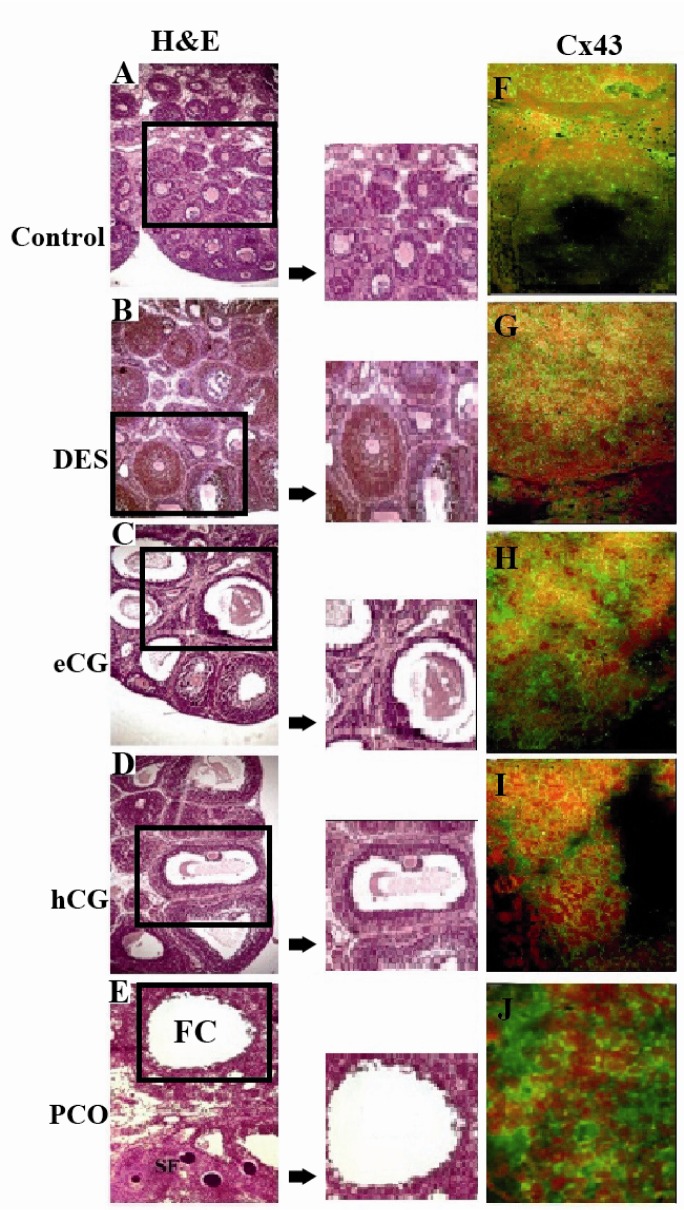
To reveal a potential role of Cx43 in GC function, we aimed to characterize its distribution in rat ovaries from hormone-treated animals with different follicular developmental stages and in those from rats with PCOs after androstenedione induction. Sections were by stained H&E to reveal follicular development in each of control, treated and PCOs groups. As (Figure 1A-E) indicates, control ovaries had mostly primordial and primary follicles (Figure 1A). The DES-treated group had their ovaries filled with preantral follicles (Figure 1B). Follicles were at the early antral to late antral stage in ovaries of the eCG group (Figure 1C). The hCG ovaries were filled with follicles at the preovulatory stage having the oocyte in an eccentric position (Figure 1D). Polycystic ovaries were enlarged and occupied with follicular cysts that were either devoid from oocytes or had their oocytes surrounded with a maximum of two layers of GCs. Immunolocalization of Cx43 in rat ovaries of DES, eCG, hCG, and PCO groups stained with H&E stains (Figure 1A-E) revealed that Cx43 localized to the GCs of all animal groups (Figure 1F-J). Cx43 was not detected at the thecal cell layer or at the border between GCs and oocytes where Cx26 and Cx32 were found to be predominant, respectively (data not shown).
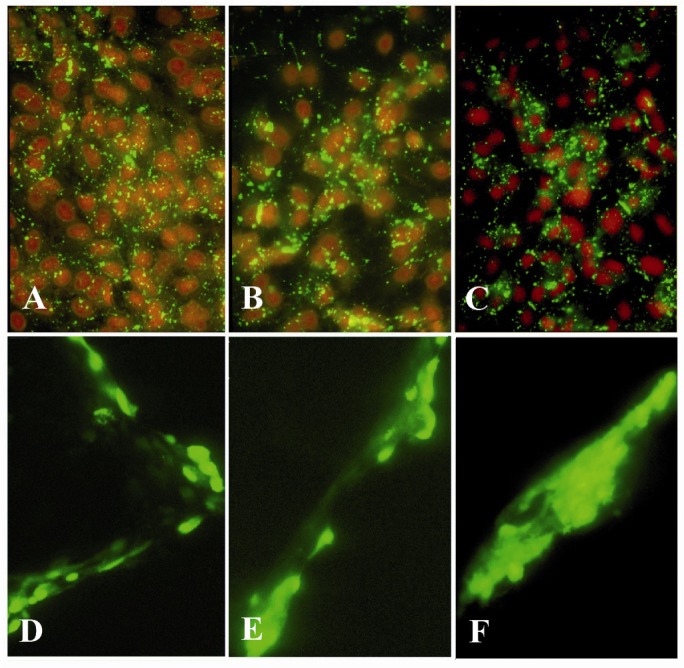
To assess the effect of androstenedione on Cx43 expression and localization and GJIC functionality, GCs’ expression and localization of Cx43 were examined. When GCs were plated on EHS-drip with or without androstenedione, they expressed Cx43 as indicated in (Figure 2A-C). To further analyze the effect of androstenedione on Cx43 cellular distribution in GCs culture immunelocalization studies were performed. Cx43 expression was evident at 4 days in culture and had a punctate membranous appearance in the absence or presence of androstenedione at both 10−7 M and 10−5 M concentrations (Figure 2A-C). Neverthe-less, the functionality of GJIC between GCs on day 4 of culture was enhanced upon androstenedione treatment. Confluent cultures of GCs plated on EHS-drip alone displayed limited dye transfer to neighboring cell layers (Figure 2D), although these cells showed increased dye transfer when compared to cells cultured on plastic alone (data not shown). Similar transfer of the fluorescent dye was observed with GCs cultured on EHS-drip with 10−7 M androstenedione when compared to control untreated cultures, however, appreciable increase in LY transfer to cell layers away from the scrape sites was noted when GCs were cultured on EHS-drip with 10−5 M androstenedione (Figure 2F), suggesting enhanced GJIC in PCO-like conditions (34).
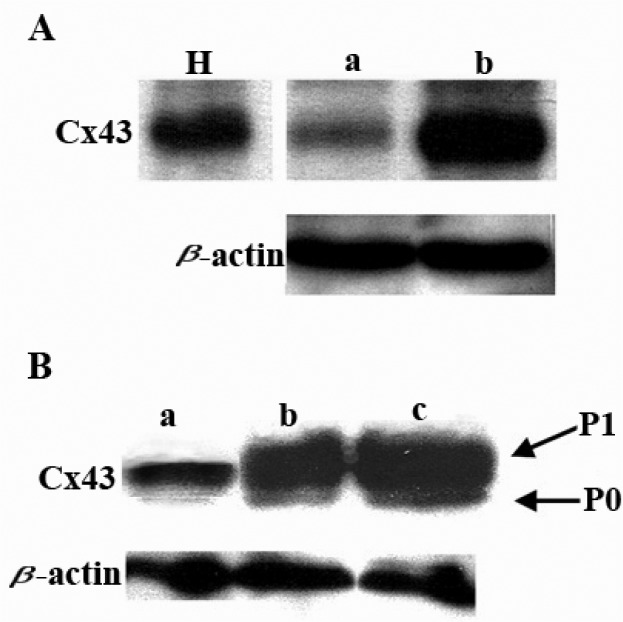
Since Cx43 has been shown to be the major Cx expressed in GCs in vivo in both control and PCOs, we examined the localization and levels of expression of Cx43 in GCs in response to androstenedione dosages. Western blot analysis showed that the treatment of rats with 10−5 M concentration of androstenedione upregulated Cx43 expression in their PCOs (Figure 3A). Similarly, and parallel to enhanced GJIC noted in culture, androstenedione also enhanced Cx43 expression at 10−7 and 10−5 M by cultured GC in a dose-dependent manner. Enhanced phosphorylation of Cx43 was also noted in androstenedione treated cells (Figure 3B).
Progesterone production was used as an indicator of the extent of differentiation of GCs. We showed that the enhanced GJIC and Cx43 expression in androstenedione-treated cells was paralleled by an increase in progesterone production. To assess the effect of androstenedione on progesterone levels produced by GCs on day 4 of culture, RIA analysis was performed. Whereas GCs on p lastic produced very low levels of progesterone (<20 pg/cell), cells on EHS-drip produced significantly (p <0.05) higher progesterone levels (> 100 pg/cell). Furthermore, EHS-dripped GCs cultured with 10−7 M and 10−5 M androstenedione, significantly increased their progesterone levels, in a dose dependent manner, as compared to the controls. GCs cultured with 10−5 M androstenedione produced more than 700 pg/cell of progesterone (Figure 4A).
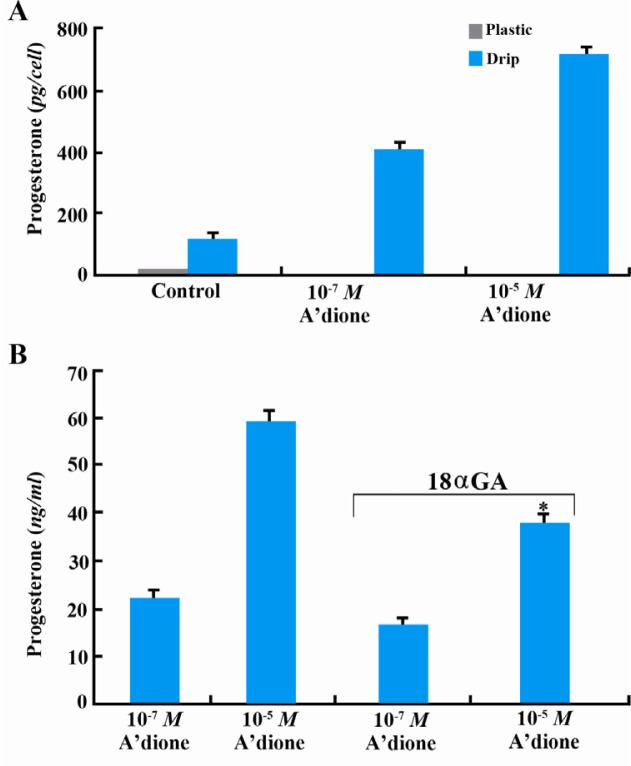
In order to study the role of GJIC in facilitating progesterone production in GCs in response to androstenedione 18αGA, a gap junction inhibitor, was used. Increased progesterone production was at least partly a consequence of increased GJIC since 18αGA decreased progesterone production by GCs in culture. Compared to control untreated cells, progesterone production by GCs cultured on EHS-drip in the presence of 10−5 M androstenedione was inhibited by about 40% in the presence of 18αGA with no significant difference (p <0.05) in its levels in the 10−7 M androstenedione (Figure 4B).
GJIC has been shown to regulate major cellular programs such as growth, differentiation, and apoptosis (41, 43–45). More specifically in the ovary, cell-cell communication between GCs allows transport of metabolites and signal molecules between them and also with oocytes. This cellular communication is crucial for follicular development and oocyte growth and maturation (46). Mice with disrupted GJs were infertile and the communication between oocytes and the neighboring GCs was greatly reduced (47). Aberrant GJIC is involved in ovulatory dysfunction, results in interrupted folliculogenesis and prevents formation of GC layers around the oocyte in Cx43 null mice. Ackert et al. demonstrated that the mutant oocytes obtained from Cx43 null mice failed to undergo meiotic maturation and could not be fertilized. This correlation between abnormal folliculogenesis, Cx43 expression and aberrant GJIC prompted our laboratory to investigate the regulation of Cx43 in the PCO.
In vivo rat PCO model has long been established, and could be experimentally induced through prolonged injections of androgens in immature female rats (38, 39, 48). In the current study, androstenedione was successfully used to induce PCOs in rats as verified by H&E staining of PCO sections. These ovaries had evident follicular cysts, and lacked corpora lutea, as most follicles developed into early follicular stages but did not develop to ovulatory stages in PCOs (49, 50). In the ovary of a control 41-day old rat, Cx43 was localized to GCs of small and large follicles and the corpus luteum (CL). In androstenedioneinduced PCO rats, Cx43 was also localized in follicular GCs. This is consistent with previous data indicating that Cx43 was present in follicular GCs of rat (51), mouse (24, 52), ewe (53), cow (54), and pig (55, 56). Cx43 has also been previously detected in rat CL (57, 58).
In this study, GCs were grown in the culture media under differentiation-permissive conditions, supplemented with FSH and dripped with EHS-matrix. GCs cultured on plastic in media lacking androstenedione produced very low amounts of progesterone while those cultured on EHS-drip produced appreciable amounts. More so, increased progesterone production by GCs on EHS-drip was noted in response to androstenedione in a dose-dependent manner. This suggested that EHS-drip and androstenedione together synergistically promoted progesterone production by GCs. It has previously been shown that growing mammary epithelial cells enhanced their differentiation phenotype and GJIC with EHS-drip and lactogenic hormones (41, 59). During the follicular phase of ovarian cycle, androstenedione produced by theca cells reaches a level of 10−7 M in the follicular fluid. In PCO syndrome, androstenedione levels rise from 10−7 M to 10−5 M, which is the androgen concentration that reaches the GCs (60, 61). The mechanism of this rise in androgen levels is unclear. Nevertheless, this excess clearly adds up to the complexity of PCOS and is mediated by both intrinsic and extrinsic factors (62). The rise in androstenedione levels is either due to increased activity of theca cells, or decreased GC ability to aromatize the accumulating androgens into estrogens (63, 64). Given that, 10−7 M (moderate) and 10−5 M (high) androstenedione concentrations were used to study the effects of androstenedione on Cx43 expression, GJIC and subsequently GC differentiation.
Cx43 is the major Cx expressed by GCs that contributes to intercellular coupling; hence playing role in GC development, maturation, differentiation and leutinization (46, 65). As such, we intended to characterize the effect of androstenedione on Cx43 expression, localization and GJIC to further understand how GJs display PCO phenotype through their effects on GC differentiation. Cx43 immunolocalization showed punctate membranous distribution in GCs when cultured on EHS-drip, in the presence of both 10−7 and 10−5 M androstenedione, or in androstenedione free medium. However, scrape loading of LY showed a significant increase in GJIC in the presence of 10−5 M androstenedione. Increased LY dye transfer in the presence of 10−7 M androstenedione was not as evident. In parallel experiments we showed that no LY transfer was noted in GC cultured on plastic compared to those on EHS-drip (not shown). Taken together, the data suggests a possible synergistic role of both hormones, androstenedione in this case and ECM, in promoting GJIC. A similar observation was reported earlier in mammary epithelial cells (41). In fact, in human GCs, hCG and ECM synergize to enhance gap junction formation and progesterone production (18). As for GJIC, androstenedione could be acting directly on increasing Cx gene expression in GCs, since it has been shown previously that Cx43 promoter is responsive to estrogens (66), and that estrogen upregulated Cx43 expression in GCs in vivo (57). Though, estradiol and progesterone have been shown to decrease Cx43 protein levels when administered together into cultured rat endometrial cells (28). Alternatively, androstenedione could be activated by several kinases, such as MAP kinase which is also activated by ECM (67), and it has been shown to regulate GJIC (68–70). Direct regulation of GJIC in GCs by either estrogens or androgens has not been previously studied. It was found that Cx43 protein levels were highly upregulated in the PCOs as compared to the controls. This trend is not noted in the immunohistochemistry as it only reveals the distribution and localization of Cx43.
Quantification of fluorescence was not attempted and Western blotting for Cx43 protein was used for quantification purposes instead.
The elevation of Cx43 protein levels observed in PCOs in this study cannot be attributed to an increase in the number of ovarian blood vessels expressing Cx43, since H&E staining of both PC and control ovaries did not reveal any difference in vascularization (not shown). GJIC is at least partly mediated by Cx43 post-translational modification through kinase activation (41, 71) because an increase in Cx43 protein levels and phosphorylation in the presence of 10−7 M and 10−5 M androstenedione were noted. It has been documented that GJIC in porcine granulosa cells was enhanced by protein kinase A (PKA) phosphorylation but decreased by protein kinase C (PKC) (72). Other studies indicated that FSH-stimulated Cx43 phosphorylation was attributable to PKA (73), and that casein kinase 1 induced Cx43 gap-junction assembly (74).
Androstenedione treatment of GCs on EHS-drip promoted increased GJIC in GCs, in addition to increased progesterone production. Yet, under physiological concentrations (10−7 M) of androstenedione, inhibiting GJIC did not lead to a significant decrease in progesterone production levels suggesting that GJIC is not the sole mediator but could contribute along with ECM to progesterone production. Cx43 effect on progesterone production is only prominent under non-physiological doses of androstenedione (10−5 M). The effect of ECM, androstenedione and FSH on GC differentiation and progesterone production is likely due to the collective effects of enhanced activity and expression of the steroidogenic enzymes (75), deposition of some basement membrane components like fibronectin and proteoglycans, maintenance of FSH receptors under optimal culture conditions (75) and/or an increase in c-AMP production (76). Treating cultured rat GCs with cAMP increases GJIC (77, and unpublished data), since cAMP, apart from being a second messenger, has been known to enhance GJIC and induce differentiation in several cell types (41, 78). Knowing that GJIC may play a role in increasing progesterone and consequently mediating GC differentiation, the effect of inhibiting GJIC on GC differentiation had to be examined. When treating GCs with 18αGA, an inhibitor of GJIC (41, 79–81), progesterone production was downregulated. It is worth noting that the androstenedione-induced differentiated phenotype, as evident by increased progesterone production, was unlikely due to changes in cell morphology since GCs cultured on EHS-drip with or without androstenedione did not show marked altered morphology. Therefore, the effect of androstenedione on progesterone production may be partially mediated by increased GJIC, either through upregulating Cx43 levels of protein expression, as seen in our study, or through promoting Cx43 phosphorylation by activating several kinases.
The involvement of other connexins in regulating GC function cannot be ruled out (46). In fact, Cx45 has been shown previously to be expressed by rat ovarian GCs (82). Similarly, we showed Cx45 immunolocalization in GCs of normal rat ovaries and PCOs, and Cx45 protein levels were upregulated in PCOs as compared to normal ones (unpublished data), further suggesting the involvement of Cx45 in addition to Cx43 in modulating GJIC in GCs following androgen stimulation. The role of Cx45 in PCO syndrome needs further investigation.
Gap junctions form a network of bonded interconnecting GCs that surround the oocyte, and the loss of these junctions may facilitate the dissociation of the oocyte and disrupt normal folliculogenesis. In conclusion, this work demonstrates for the first time the modulation of Cx43 in androstenedione-induced rat PCO. Moreover, androstenedione induced luteinization of cultured GCs together with enhanced GJIC, and Cx43 expression suggest a role for gap junctions in partially mediating the effect of androstenedione on progesterone production. Further studies are required to understand the androstenedione-induced GJIC dependent signaling pathways mediating a PCO-like phenotype in vitro.
The authors are grateful to doctors. Medhat Khattar and Joana Kogan for critical reading of the manuscript. Wissam Mehio is acknowledged for assisting in the preparation of the manuscript. This work is supported by the University Research Board (RST, CGT and MES). Medical Practice Plan, Diana Tamari Sabbagh Research Fund, Terry Fox Cancer Research fund (MES), and Lebanese National Council for Scientific Research (CGT, and RST).
Declaration of conflict of interest: The authors declare no conflict of interest.
