
Receptor for Hyaluronic Acid Mediated Motility (RHAMM, CD168) is a Hyaluronic acid (HA) receptor with many intracellular and extracellular functions (1). RHAMM regulates various cellular and dynamic processes, such as cell-to-cell adhesion, cell migration, morphogenesis, cell proliferation (including mitosis), cell signaling, regulation of gene expression, RNA splicing, cell differentiation, and metastasis (2). Savani et al. reported that anti–RHAMM anti-bodies block the migration of endothelial cells, which is an important key to the process of tissue injury and angiogenesis (3). It is known that over-expression of RHAMM correlates with an increase in the mitogen activated protein (MAP) kinase and progression of breast cancer (4), with the histological grade, invasion and metastasis of endometrial carcinoma (5), with adverse prognostic factors in colorectal cancer (6), and with gastric tumor progression (7).
Concerning reproductive tissues, several reports have described RHAMM-mediated promotion of cell growth and movement, sperm motility (8), angiogenesis (3) and embryonic development (9). Choudhary at al. showed, for the first time, that RHAMM is differentially expressed during all stages of preimplantation human embryos and human embryonic stem cells (hESC), and indicated that RHAMM knockdown results in down-regulation of several pluripotency markers in hESCs, induction of early extraembryonic lineage, loss of cell viability, and changes in hESC cycle (2).
The uterus undergoes extensive remodeling during estrous cycle and embryo implantation (10).
In estrous cycle and on day 4 of pregnancy, the rat endometrial stroma has two morphologically distinct compartments, denominated supepithelium and deep stroma. The superficial stroma underlying the luminal epithelium is formed by four or five layers of round shaped and compactly arranged endometrial fibroblasts. The deep stroma, situated between the superficial stroma and the myometrium, is composed of elongated and loosely arranged endometrial fibroblasts.
On days 5 and 6 of pregnancy, rat endometrial stroma has five compartments. The first two compartments (supepithelium and deep stroma) are similar to those of the estrous cycle. The third compartment is peridecidua which contains fibroblasts that are in the process of redifferentiating into decidual cells. The mature decidua layer is formed by fully transformed decidual cells. The last compartment, the non-decidua compartment, is a layer of nontransformed fibroblasts situated close to the myometrium.
During both these processes, mitosis, cell pro-liferation, differentiation and migration of cells have been observed in the endometrium (11). It is known that RHAMM plays an important role in several cellular events, but the role of RHAMM during estrous cycle and embryo implantation has not been investigated much. In this study we aimed to investigate whether RAHMM is expressed by uterine cells in estrous cycle and implantation days.
The study was approved by the Animal Ethical Committee of the faculty of Medical Medicine affiliated to Dokuz Eylül University and was conducted in accordance with the recommendations outlined in Guidelines for Care and Use of Experimental Animals. A total of 36 female adult Wistar albino rats with body weights ranging from 200 − 230 gr were subjected to a constant cycle of 12 hr of light and 12 hr of darkness. The animals were maintained at a constant temperature of 22 °C in the Experimental Animal Unit of the Faculty. Daily vaginal cytology specimens were collected and prepared to establish the estrous cycle of each animal. The vaginal smears were obtained by cotton-tipped applicators and fixed on a slide by 5% alcohol. The smears were stained by Giemsa stain. Following three or more successive normal estrous cycles, the animals were divided into six groups:
Group I (n = 6): Estrous group, proestrus; Group II (n = 6): Estrous group, estrus; Group III (n = 6): Estrous group, diestrus; Group IV (n = 6): Implantation group, day 4; Group V (n = 6): Implantation group, day 5; Group VI (n = 6): Implantation group, day 6.
The first three groups of animals (proestrus, estrus, and diestrus) were humanely hilled according to the estrous cycle. Later, the rate in the implantation group were mated with proven fertile male rats at the proestrus period. Mating was confirmed by the presence of sperm in the vaginal smears. The day of mating was termed the 0.5th day of pregnancy. Pregnancy was confirmed by the presence of leukocytes and mucus in the vaginal smear. The implantation sites were identified by intravenous injection of 1% Chicago blue (Sigma) in 0.85% sodium chloride. The animals were sacrificed on D4 to D6 of implantation. The uterine horns of all animals were placed in fixative and were then cut along the antimesometrial border to expose their endometrial lining. Paraffin blocks of the tissue were cut in 5 µm sections and collected on poly-L-lysine coated slides (Sigma, St. Louis, MO, USA). Tissue sections were deparaffinized in xylene and rehydrated in a decreasing graded series of ethanol. For antigen retrieval, sections were boiled in a microwave oven in citrate buffer (10 mM, pH = 6.0) for 10 min and left to cool for 20 min. Endogenous peroxidase activity was quenched by 3% hydrogen peroxide in methanol for 20 min. The sections were incubated with primary antibody as monoclonal rabbit anti-RHAMM (Boster Bio-tecnology, China) in a humidified chamber at room temperature for 60 min. The antigen–antibody complex was detected by using a biotin-labeled secondary antibody (Bulk Kit, Invitrogen Corp., Camarillo, CA, USA) and a streptavidin–peroxidase complex (LabVision), respectively, for 20 min. Each step was followed by three washes in phosphate buffered saline (PBS, pH = 7.4) unless otherwise stated. The resulting signal was developed by diaminobenzidine (DAB), (Spring Biosciene, Fremont, CA, USA). Sections were counterstained by Mayer's hematoxilen (Richord-Allan Scientific, CA, USA) and finally mounted in Entellan. Two histologists who had no knowledge of the groups examined all the immunostained sections. The proportion of epithetlial, subepithelial, predecidual, mature decidual and non-decidual cells in each selected field was determined.
Two randomly selected areas were scored, and in sections where all the staining appeared intense, one random field was chosen. The proportion of epithelial, subepithelial, predecidual, mature decidual and non-decidual cells in each selected field was determined by counting them at a high magnification. At least 100 cells were scored per X40 field for each animal in all the groups. All sections were scored in a semiquantitative fashion, by considering both the intensity and percentage of cell staining. Intensities were classified as 0 (no staining), +1 (weak staining), +2 (distinct staining) and +3 (very strong staining). The staining of RHAMM was graded semiquantitatively and the H-score was calculated using the following equation: H-score = ΣPi (i + 1), where i = intensity of staining with a value of 1, 2 or 3 (weak, moderate or strong, respectively) and Pi is the percentage of stained cells for each intensity, varying from 0 to 100.
The data were summarized as median±Range. Comparisons between all groups were made using Kruskal-Wallis test. The p < 0.05 was considered significant. The statistical analysis was performed by SPSS, version 10 for Windows.
Immunohistochemically, anti-RHAMM antibody positivity was seen in the membranous region of uterine cells. Concentration of RHAMM peaked (343.00±12.81) in the uterine antimezometrial epithelium of rats in the proestrus group compared with mezometrial region (275.00±27.89), and estrus (275.00±25.96) and diestrus groups (262.00± 20.71), (Table 1). RHAMM expression in the sub-epithelium of the proestrus group (285.00±27.26) was much stronger than estrus (220.00±14.48) and diestrus groups (192.50±29.25), (Table 1). Moreover, RHAMM immunoreactivity was very high in the stroma during proestrus (270.50±36.00) compared with the estrus (218.00±11.19) and diestreous groups (216.00±12.97), (Table 1 and Figure 1).
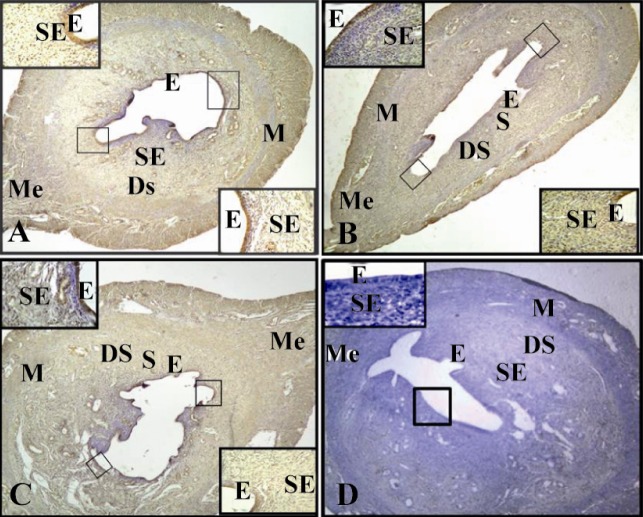
Table 1 H-score values of RHAMM immunoreactivities in different compartment of endometrium at estrous groups
| RHAMM | Proestrus | Estrus | Diestrus | |||
|---|---|---|---|---|---|---|
|
| ||||||
| Mesometrial | Antimesometrial | Mesometrial | Antimesometrial | Mesometrial | Antimesometrial | |
| Epithelium | 275.00±27.89 | 343.00±12.81* | 268.00±29.29 | 275.00±25.96 | 257.50±16.21 | 262.00±20.71 |
| Subepithelium | 285.00±27.26 * | 255.00±32.04 | 220.00±14.48 | 278.00±17.31 | 192.50±29.25 | 268.00±17.17 |
| Deep stroma | 270.00±36.00 * | 282.00±27.53 | 218.00±11.19 | 226.50±9.22 | 216.00±12.97 | 264.50±32.76 |
Values are medians±range of three independent experiments analysed by Kruskal-Wallis test compared with proestrus, estrus and diestrus.
p < 0.05
The most intense immunoreactivity of RHAMM was in the epithelium on D4 (275.50±30.06) and D6 (293.50±34.47) of pregnancy compared with D5 (243.33±17.04), (Table 2). Although there was no statistical difference in RHAMM expression of the subepithelial and deep stroma on D4, D5 or D6 but decidual region was different. RHAMM expressions were strong in both mature decidua and predecidua cells on D5 (256.00±18.71 and 247.00±22.14, respectively) and on D6 (256.00± 30.72 and 265.00±14.87, respectively), (Table 2 and Figure 2).
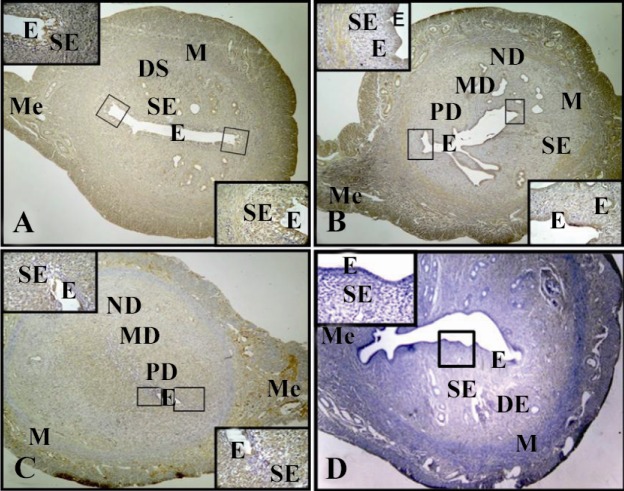
Table 2 H-score values of RHAMM immunoreactivities in different compartments of endometrium on day 4 of implantation groups
| Day 4 | Day 5 | Day 6 | ||||
|---|---|---|---|---|---|---|
|
| ||||||
| Mesometrial | Antimesometrial | Mesometrial | Antimesometrial | Mesometrial | Antimesometrial | |
| Epithelium | ||||||
| Implantation | 275.50±30.06 * | 235.00±20.33 | 243.00±17.04 | 268.50±37.08 | 293.50±34.47 * | 252.50±12.14 |
| Interimplantation | 215.00±22.48 | 243.00±44.74 | 252.50±33.56 | 276.00±18.64 | 189.00±23.23 | 214.50±17.87 |
| Subepitelium | ||||||
| Implantation | 217.50±5.19 | 223.00±30.43 | 224.00±69.25 | 207.50±10.18 | 264.50±70.14 | 223.00±9.93 |
| Interimplantation | 222.50±21.65 | 226.00±21.68 | 259.00±9.50 | 254.00±9.57 | 238.00±3.08 | 195.00±48.17 |
| Deep stroma | ||||||
| Implantation | 210.00±31.17 | 202.00±49.54 | 217.50±38.20 | 231.50±27.06 | 209.00±28.65 | 201.00±18.06 |
| Interimplantation | 250.00±9.07 | 211.00±11.77 | 262.00±19.46 | 245.50±37.43 | 238.00±10.78 | 223.50±23.18 |
| Predecidua | ||||||
| Implantation | -- | -- | 256.00±18.71 * | 220.00±11.64 | 256.00±30.72 * | 250.50±13.36 |
| Interimplantation | -- | -- | 248.50±11.72 | 198.50±5.55 | 260.50±11.51 | 233.50±8.41 |
| Mature deciduas | ||||||
| Implantation | -- | -- | 247.50±22.14 * | 232.50±23.70 | 265.00±14.87 * | 207.00±14.61 |
| Interimplantation | -- | -- | 273.50±29.47 | 252.50±29.60 | 258.00±17.42 | 247.50±19.51 |
| Non-decidual cells | ||||||
| Implantation | -- | -- | 270.00±13.36 * | 248.00±12.37 | 211.00±10.67 | 219.00±8.91 |
| Interimplantation | -- | -- | 255.50±14.67 | 258.50±12.29 | 258.00±18.69 | 241.00±17.04 |
Values are medians±range of three independent experiments analysed by Kruskal-Wallis test compared on days 4, 5 and 6.
p < 0.05
RHAMM stimulates cell migration and locomotion via activation of a signal transduction cascade upon HA binding (2). This article demonstrates, for the first time, that RHAMM undergoes substantial variation within the estrous cycle and during implantation days of rat endometrium. Peaks of RHAMM expression coincide both phases of profound cellular proliferation of estrous cycle and embryo implantation in rat, where RHAMM may contribute endometrial renewal and embryo implantation.
It is well known that the functionalis layer of endometrium sloughs off during menses and parturition, and the putative endometrial stem cells residing in the basal layer regenerate the functionalis layer (12). The basal layer is believed to behave as a germinal compartment from which various types of endometrial cells proliferate and differentiate. We observed that the RHAMM immunoreactivity of uterine epithelial cells and sub-epithelial cells increased in proestrus compared with estrus and diestrus cycles (Table 1). It is known that uterine epithelium undergoes renewal during the proestrus of estrous cycle (11) and we hypothesized that the increases in RHAMM immunoreactivity in the epithelium and subepithelium may be related to mitosis of the uterine stem cells which are found in both the epithelial and stromal compartments of the endometrium (13).
It is known that RHAMM is highly expressed in the G2/M phase of the cell cycle, thus, controlling mitosis (14). RHAMM is a centrosomal protein that localizes to interphase microtubules, spindle poles, the anaphase midbody and the telophase midzone microtubules. RHAMM contains a centrosome targeting carboxy-terminal basic leucine zipper and, like Xklp2, interacts with the dynein motor complex (14). Overexpression of RHAMM was also detected in high mitotic index in malignancies (4).
Because of the fundamental role for RHAMM in mediating and HA-induced cell migratory response, the strong RHAMM immunoreactivity in both uterine epithelium and subepithelium of the proestrus cycle may be related to stem cell motility. We thought that RHAMM played an important role in stem cell motility of the subepithelium toward epithelium and stroma. RHAMM is believed to increase cellular motility through direct interaction with the cytoskeleton and may have a role in the separation and migration of daughter cells following mitosis (15). It has been reported that certain anti-RHAMM antibodies block the HA-dependent migration of a variety of cell types (16).
HA is a naturally existing molecule in the female reproductive tract. It is present in the human endometrium (17) and its concentrations have been shown to increase dramatically on the day of implantation in mice (18). One of the main signaling receptors for HA is RHAMM (1) which regulates various cellular and dynamic processes, such as cell-to-cell adhesions. Although there were no differences in antimesometrial epithelia for RHAMM immunoreactivity among the implantation days, the mesometrial RHAMM immunoreactivity increased in the implantation group, especially on days 4 and 6. We thought that RHAMM may be involved in the adhesion of embryo during implantation. Several studies have been performed in order to evaluate the ability of HA in promoting embryo implantation. Although the major biological functions of HA are still unknown, various mechanisms can be proposed for its beneficial effect on implantation. However, the results are still conflicting. Considering the presence of HA increases during implantation days, HA improves embryo implantation; these effects may be mediated by RHAMM, as well as CD44, its major cell surface receptor (19).
Decidualization is the transformation from small spindle-shape cells to large plump decidual cells, which is essential for normal implantation of blastocyst. It is known that rodent decidualization occurs after normal entrance into pregnancy following cervical stimulation and insemination on about day 4.5; it does not begin naturally during the estrous cycle (20). Initially, decidualization occurs in several cell layers of the endometrial stroma immediately adjacent to the implanting conceptus. This area is known as the primary decidual zone and is located adjacent to the anti-mesometrial chamber of the uterine lumen that surrounds the conceptus. In this study, we observed that RHAMM immunoreactivity increased on D4 and D5 in non-decidual, cells and on D5 to D6 in mature and predecidual cells. The increases of RHAMM in non-decidual area during decidualization period may be related to the start of decidualization and also the increases in pre- and mature decidual areas related to RHAMM.
RHAMM mRNA and protein are poorly expressed in most normal human tissues (21) but RHAMM expression increases in pathologic conditions such as wound repair in response to hypoxia and fibrogenic factors (TGFβ1) (22). Tong et al. reported that in wound repair RHAMM acts as a fibrogenic factor required for temporal and spatial regulation of granulation tissue formation and resolution. An underlying signaling defect associated with Rh−/− wounds is deregulated ERK1, 2 activation, which promotes fibroblast migration, as well as mesenchymal cell differentiation (23).
An angiogenic network is also formed in the uterine stromal bed, critically supporting the early development of the embryo. Endothelial cells which are in close proximity to decidual cells pro-liferate to form a new dense vascular network in pregnant uterus (24). Decidual angiogenesis and maintenance of vasculature in the early postimplantation period is an absolute requirement for normal pregnancy development. VEGF/VEGFR-2 pathway is a key regulator of decidual angiogenesis (25). We observed that RHAMM expression increased in stromal cells during D5 and D6, and we thought that RHAMM also had a function during angiogenesis. Matou-Nasri S et al. reported, for the first time, that CD44 and RHAMM were both involved in oligosaccharides of hyaluronan-induced endothelial tube formation in Matrigel, mediating distinct angiogenic signaling pathway (26). In addition, several other studies have demonstrated an association between HA and tumor vascularization. In some invasive tumors, revascularization occurrs adjacent to a region of desmoplasia rich in HA. HA concentrations increased dramatically in the ECM of human breast tissue during carcinoma infiltration (27).
In conclusion, RHAMM may have an important role in uterus both estrous cycle, and invasion and implantation period via promotes cell proliferation, differentiation and angiogenesis.
Considering the role of RHAMM in cell proliferation, differentiation and angiogenesis, it seems that spatiotemporal expression of RHAMM in the uterus during estrous cycle and peri-implantation period is a means through which uterus becomes receptive for developing an embryo.
The study was supported by Celal Bayar University Scientific Research Projects Commission (FEF: 2008/111).
