
Approximately 10–15% of couples of reproductive age are unable to conceive within twelve consecutive months of unprotected intercourse and therefore they are characterised as infertile. A male factor has been implicated in almost 50% of the cases, either solely (20%) or in combination with the female factor (30–40%) (1, 2).
Conventional semen analysis has been (and still is) considered as the cornerstone laboratory examination during the initial evaluation of male factor infertility (3). Although criticised as being an "imperfect tool" (4), when performed under strict methodological guidelines and quality control, the basic semen analysis may provide useful information regarding male fertility potential. In certain cases, the initial semen examination can reveal some radical forms of sperm dysfunction, eg. azoospermia or globozoospermia (5, 6), that have serious negative consequences to natural conception.
However, despite the progress that has been achieved in reinforcing the diagnostic vigour of conventional semen analysis (7), limitations still exist in the diagnostic potential of the traditional spermiogram. An estimated 15% of men with normal basic semen analysis profiles have nonetheless been associated with infertility (8, 9, 10, 11).
Clearly, the need for the application of more sophisticated testing has arisen in view of accurately determining the functional aetiology of male infertility and its relation to the reproductive outcome. Many recent studies demonstrated that spermatozoal DNA integrity is a prerequisite for normal fertilization and transmission of paternal genetic information to the offspring (12, 13). Consequently, an array of techniques has been introduced in routine laboratory practice, aiming to enrich the diagnostic information regarding seminal functional characteristics (14).
Our objective was to discuss the clinical significance of sperm DNA integrity testing in relation to the conventional semen parameters examination. The diagnostic potential of genomic testing was evaluated according to laboratory and clinical endpoints and conclusions were sought regarding its value and practical utility in the efficient therapeutic management of couples in need of reproductive assistance.
The microscopic examination of human semen was introduced as a means of determining a man's fertility potential and when van Leeuwenhoek initiated the practice in the laboratory andrology in 1677 (15, 16). During the recent years, the role of conventional semen analysis has been subjected to harsh criticism, characterized as "obsolete". Its diagnostic potential was challenged, especially after the introduction of advanced assisted reproductive tech-nology (ART), such as intracytoplasmic sperm in-jection (ICSI) (17). However, the majority of experts in the field of andrology still agree that the basic (complete) semen analysis is and will remain the most essential initial step in male infertility evaluation. According to the recommendations of the American Urological Association (AUA) and the American Society for Reproductive Medicine (ASRM), a complete initial evaluation of the infertile male should include the recording of a comprehensive medical and reproductive history, a physical examination and at least two semen analyses (2, 18).
Since its introduction, a progressive development of techniques and guidelines has led to standardization of minimum methodological requirements of a semen analysis performance and the identification of criteria for the clinical evaluation of the results (16). Toward this direction, the WHO published a new 5th edition of the "Laboratory Manual for the Examination and Processing of Human Semen" in 2010 which constitutes a fully revised version of the four previous ones (1980, 1987, 1992, 1999) (7, 19, 20, 21, 22).
The new manual provides detailed descriptions of the methods and their limitations (23), including alternative options that permit each laboratory to choose the tests to apply, respective to its particular needs (24). The content is well referenced and provides relevant background information (23). Emphasis is given to the application of quality control in order to ensure that the analysis is performed carefully, according to universally agreed-upon guidelines using standard operating procedures (25). Most importantly, the basic innovation characterizing the new WHO manual is the introduction of re-evaluated, evidence-based data supporting reference limits for the basic seminal parameters (26, 27). However, notwithstanding the considerable importance of the newly proposed guidelines of the WHO manual for the standardization and evaluation of the semen profile, the diagnostic interpretation of the semen an-alysis results remains a subject of scientific scrutiny.
The information obtained by the conventional sperm parameters reflects to a certain extent the quality of the spermatogenic process which determines the functional competence of the spermatozoa and therefore the fertilizing potential of the ejaculate (25). Sperm concentration, motility and morphology have been correlated with fertilization rates in vivo and in vitro (2, 26), as a result of normal development of spermatozoal subcellular structures during spermatogenesis in the testes, normal epididymal maturation and normal seminal plasma constituents (2).
A deviation of one or more semen parameters from the reference ranges can serve as an indication that a male factor may be implicated in the infertility problem encountered by the couple (28). Abnormal sperm quality has been linked to several infertility problems, eg. abnormal sperm morphology with an increased presence of tapered sperm heads has been associated with recurrent pregnancy loss (29). Nevertheless, the presence of a low value per se may not preclude the possibility of the initiation of an in vivo pregnancy or, contrastingly, a "normal" spermiogram does not necessarily guarantee satisfactory fertilizing potential (2).
Due to these inherent limitations of the methods of assessment in combination with the variable nature of human semen, as well as the competence level of different seminology laboratories performing the examination (30, 31), an overlap has been experienced between fertile men and men who fail to cause pregnancy, during the clinical evaluation of the analysis in the context of reproductive outcome (2, 10, 32). This may be attributed to the inability of the conventional analysis to reveal the underlying mechanisms of male fertility dysfunction. In order to enrich the diagnostic value of this fundamental form of assessment, it is necessary to conduct more specialized tests aiming to investigate the functional integrity of the spermatozoa at the molecular level (25). In the light of accumulating evidence that spermatozoal DNA damage may be linked to adverse clinical outcomes, the examination of sperm chromatin integrity emerges as a new, potentially valuable tool in the diagnostic armamentarium of laboratory andrology (33).
Sperm chromatin is a well-organized, compact, crystalline structure, consisting of haploid DNA and heterogeneous proteins. Its highly condensed and insoluble nature plays a protective role during the transfer of the paternal genetic information through the male and female reproductive tracts (10, 34), adjusting to the extremely limited volume of the sperm nucleus (35). The organization of sperm chromatin is depicted by the model proposed by Ward and Coffey (36), starting as long strands of DNA that are gradually packaged at four subsequent levels: (1) chromosomal anchoring, ie. the attachment of DNA to the nuclear annulus; (2) formation of DNA loop domains, as a result of the attachment of DNA to the nuclear matrix; (3) replacement of histones by protamines, which condense the DNA into compact "doughnut"-shape configurations and (4) chromosomal organization (35, 37).
The extremely tight complexes formed by the interaction of spermatozoal DNA with proteins generate highly stable and transcriptionally inert chromatin. The replacement of the largest part of histones (85%) by transition proteins (TPs) and subsequently by protamines takes place during spermiogonesis and epididymal transit (13, 38). The retained 15% of histone-bound DNA is located at regions of high genetic importance for the development of the early embryo, eg. promoters, imprinted loci and microRNAs (39). Protamines are highly basic proteins, about half the size of typical histones. In human, two types of protamines are found (P1 and P2) in contrast to other animal species, which contain P1 only (34).
During sperm nuclear condensation, a dramatic sequence of events occurs involving topological rearrangements, transition of DNA-binding proteins, alterations in transcription and loss of nucleosomal structure. Endogenous nuclease activity has been postulated to create and ligate nicks on DNA strands during mid-spermiogenesis, while their presence is normally not detected in mature sperm (9). The TPs are speculated to play a reparative role regarding these transient DNA nicks, in order to prevent persistent DNA damage to mature ejaculated sperm (40). In addition, any perturbation in the epigenetic mechanisms of the spermatozoal molecular contribution to the embryo, such as selective histone retention, histone modifications, transcription factors, proteasome constituents, as well as DNA methylation, may prohibit the effective delivery of the paternal genome to the oocyte and therefore hinder sperm function (39, 41).
Alterations occurring in any stage of the process of chromatin configuration could have detrimental effects on sperm function (14) (Table 1). The presence of sperm DNA damage is mainly linked to the following major mechanisms: 1. abortive apoptosis during meiosis I resulting in ejaculated spermatozoa which, albeit defective, escape the apoptotic pathway (42); 2. defective chromatin condensation during spermiogenesis that involves defective protamination and insufficient chromatin packaging (35, 42); 3. post-testicular oxidative stress mainly resulting from imbalance between reactive oxygen species (ROS) and antioxidant capacity, produced internally or externally (10, 14, 43); 4. fragmentation induced by endogenous caspase and endonuclease activity (44); 5. collateral effects of various pathological iatrogenic and environmental factors including: cancer, antineoplastic drugs (44), varicocele (45), high fever (46), leukocytospermia (47), centrifugal pelleting and other conditions of sperm handling (34, 48), occupational exposure to toxic agents, eg. carbaryl (49), episodic air pollution (50, 51) and also advanced male age (43, 52, 53). Additionally, genetic factors have been associated with predisposition to sperm DNA fragmentation in infertile men. Variations and polymorphisms in genes playing key roles in procedures regulating genome integrity, meiotic recombination, gametogenesis, ie. mismatch repair pathway (54), detoxification pathway (55), antioxidant protection (56), have been implicated in an increased risk of sperm DNA fragmentation. Chromosomal structural rearrangements, such as reciprocal and Robertsonian translocations, pericentric inversions and chromosomal aberrations, ie. Yq microdeletions, have been associated with an increased susceptibility to reduced sperm DNA integrity in infertile men (57, 58, 59) (Figure 1). The detrimental role of these factors seems to be interrelated. For example, a dysfunctional mechanism during spermiogenesis, such as poor chromatin compaction, may produce spermatozoa that may be more susceptible to oxidative stress at a later time point, resulting in detrimental effects on sperm DNA integrity (33, 60).
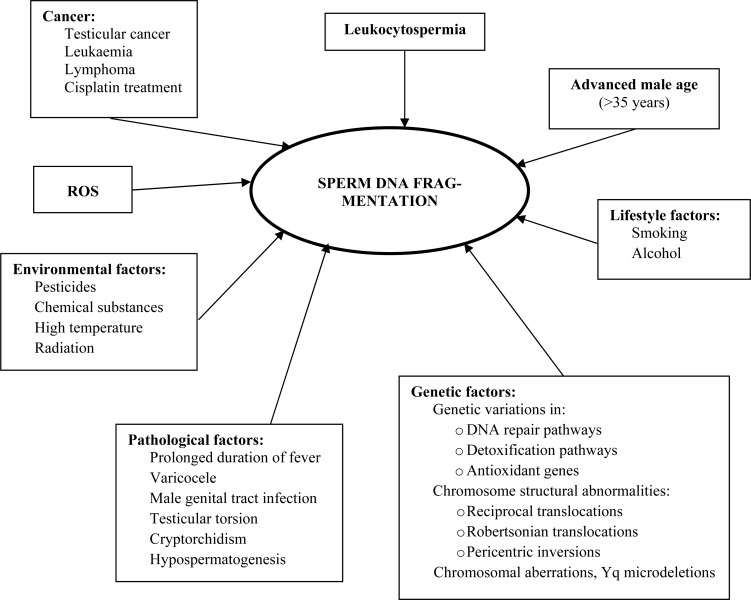
Table 1 Molecular aetiological mechanisms of sperm DNA fragmentation
| Endogenous | Exogenous |
|---|---|
| Dysfunction of topoisomerase II | ROS |
| Abortive apoptosis expressed in: | |
| Hypospermatogenesis- maturation arrest at the spermatid stage | |
| Advanced male age | |
| Varicocele patients | |
| Chronic prostatitis | |
| Testicular torsion, cryptorchidism, vasectomy | |
| Radiation, heat exposure | |
| Hormonal dysfunction |
A number of methods have been developed for the analysis of sperm chromatin and DNA integrity. The former include aniline/toluidine blue staining and protamine examination by chromomycine A3, while the latter mainly regard the TUNEL (Terminal deoxynucleotidyl tranferase-mediated dUTP nick end labelling), COMET (single-cell gel electrophoresis), SCD (Sperm Chromatin Dispersion), SCSA (Sperm Chromatin Structure Assay), DNA ladder and DNA-break detection FISH (Fluorescence in situ hybridization) assays. The advantages and technical limitations of these assays are analytically reviewed by Evenson et al. (61), Schlegel and Paduch (62) and Erenpreiss et al. (63). A comparative summary of the various methods evaluating sperm DNA fragmentation and chromatin integrity is presented in Table 2.
Table 2 Methods of evaluation of sperm DNA fragmentation and sperm chromatin integrity
| Sperm DNA fragmentation | ||
|---|---|---|
| Method | Advantages | Disadvantages |
| SCD | ||
|
| |
| SCSA | ||
|
| |
| TUNEL | ||
|
| |
| COMET | ||
|
| |
| Alkaline method: | ||
| ||
| Neutral method: | ||
| ||
| DNA ladder | ||
|
| |
| DNA-break detection FISH | ||
|
| |
|
| ||
| Sperm chromatin integrity | ||
|
| ||
| Aniline/Toluidine blue staining | ||
|
| |
| Chromomycin A3 | ||
|
| |
The ability of the aforementioned methods to accurately quantify DNA damage is based on variable technical and biological characteristics. To date, the introduction of generalized criteria which will identify the fertile population, signifying the lowest threshold value that can permit the initiation of a pregnancy, still remains a scientific challenge (4, 10, 53). Regardless of the advantages and setbacks of the available tests for DNA quality analysis, comparative studies have surprisingly demonstrated close correlations in DNA damage measured by different commonly used assays (TUNEL, COMET, SCSA, SCD), despite their variability in protocol and examined sperm parameters (4, 9, 11, 14, 34, 64).
Over the last years, several studies have attempted to investigate the possible correlation between sperm DNA fragmentation and conventional sperm parameters, leading to ambiguous conclusions (9). The majority of the studies report an inverse correlation between DNA fragmentation rate and sperm quality, as evaluated by sperm concentration, motility, vitality and morphology, irrespective of the age of the subjects examined (35, 52, 65, 66, 67, 68, 69, 70).
A significant negative correlation has been established particularly between the percentage of morphologically normal spermatozoa and DNA fragmentation (65, 71). Abnormal chromatin structures and DNA strand breaks are correlated with severe forms of morphologically abnormal profiles, such as the combined presence of megalocephaly and multiple tails with disomy (72) or the incidence of globozoospermia accompanied by increased aneuploidy rates (30). In addition, specific morphological anomaly patterns, such as tapered heads, have been linked to unexplained recurrent pregnancy loss in subjects that also exhibit increased DNA fragmentation (29). Likewise, sperm with abnormally small heads have shown poor prognosis with IVF and that is linked to a very high degree of DNA fragmentation (72).
In contrast, several studies have failed to report a significant correlation between the traditional seminal variables, such as sperm concentration, motility, strict morphology and DNA fragmentation indices (10, 49, 73). Spermatozoa presenting normal characteristics according to WHO criteria have been nevertheless associated with compromised genetic material (12, 32, 64). Contrastingly, in specific groups of patients, such as translocation carriers and cancer patients, sperm chromosomal aberrations have not always been accompanied by abnormal seminal characteristics, eg. percentage of normal sperm morphology (74).
Furthermore, SCSA indices such as DFI, have been weakly correlated with conventional semen parameters (4, 34). Relative studies report that 25 − 40% of men with conventional seminal characteristics above the WHO cut-off values exhibit infertility due to a DFI of >20 − 30% (33). Since SCSA is extensively applied in research studies, it can reasonably be considered as an independent measure of sperm function, namely sperm genetic integrity, for which conventional semen variables are not strong predictors (50).
The controversial issues regarding the correlations between conventional semen parameters and DNA fragmentation indices among different studies may be attributed to various factors:
DNA damage may exert its effect at different stages of the reproductive procedure, beginning from the pre-implantation development of the embryo to the achievement and sustaining of pregnancy and finally the creation of healthy offspring. Scientific data demonstrated the impact of sperm DNA damage at various fertility checkpoints, showing correlations with clinical endpoints including fertilization rates, embryonic development, implantation, pregnancy and abortion rates and congenital anomalies of the offspring (11, 60, 73).
There is indeed some controversy regarding the effect of sperm DNA fragmentation on fertilization rates. Negative correlation have been associated between fertilization results with the presence of high levels of sperm DNA fragmentation (76, 77). However, if the type and extent of DNA damage can be balanced by the reparative ability of the oocyte, it is possible to achieve fertilization even in the presence of elevated sperm DNA fragmentation rates (10, 11, 12, 13, 14). This is particularly evident in cases of ART procedures, especially ICSI, where fertilization rate does not seem to be related with the incidence of spermatozoa with DNA fragmentation or abnormal DNA condensation (35, 73).
After the 4 to 8 cell stage, when the paternal genome is switched on, further development of the embryo is definitely affected by the integrity of the spermatozoal DNA (9). In case of compromised sperm DNA quality, apoptosis and fragmentation may also be present within the embryo and subsequently there is some difficulty in reaching to blastocyst stage (35). This observation is evident in cases of ART (IVF and ICSI) where the genomically aberrant spermatozoa may confer irreparable damage to the embryo, causing its subsequent developmental blocking before the blastocyst stage and low implantation rates (9, 12, 14, 35, 78).
An inverse relationship has been reported between the likelihood of achieving pregnancy either by natural intercourse or by application of ART and the presence of high sperm DNA fragmentation levels (11, 14, 34, 77). Although a specific upper or lower limit for predicting pregnancy is still under debate for major DNA integrity parameters (eg. 30% DNA Fragmentation Index–DFI for SCSA) (10, 13), the negative predictive value of DNA fragmentation testing appears to be higher in natural and intrauterine insemination (IUI) cycles (64). In general, samples with low DNA fragmentation present higher probability of successful pregnancy occurring naturally (6.5 to 10.0-fold) or after IUI (7.0 to 8.7-fold), compared to standard IVF (2-fold) and ICSI (1.5-fold) with samples of high DNA damage (12, 52). Among the two in vitro fertilization methods, DNA fragmentation seems to have a stronger correlation with conventional IVF than ICSI outcome (33, 79).
This correlation is not always found statistically significant, but the tendency has been confirmed by numerous studies showing that an increased presence of sperm DNA fragmentation is a deleterious factor for achieving and sustaining pregnancies (12). Recurrent pregnancy loss is associated with a variety of genomic anomalies, including sperm DNA fragmentation (11). A four-fold increase in miscarriage risk has been reported in IVF and ICSI data regarding cases with elevated DNA fragmentation (9, 12, 35). Natural selection may indeed be the underlying cause of this attribute, since most of the aborted fetuses are genomically aberrant or aneuploid (35).
The strong correlation between aneuploidy rates and sperm DNA fragmentation in couples with recurrent pregnancy loss is intriguing. Relative studies have shown that aneuploidy and DNA fragmentation are highly correlated in this group of patients, implying a defective checkpoint mechanism employing cellular apoptosis during spermiogenesis (29). This observation has also been confirmed in severely oligozoospermic patients affected by severe testicular damage or partial obstruction of the seminal ducts (80). Patients experiencing male factor infertility generally display high levels of damaged DNA (77), as compared to fertile men (10), and this fact denotes the inherent problems in spermatogenesis (37).
While spermatozoa with damaged DNA may be characterised by a reduced capacity to fertilize and induce a pregnancy, it is possible to achieve desirable results, especially with the aid of ICSI. In these cases, the effect on the health of the future generation has not yet been clearly established.
Damaged paternal DNA due to occupational exposure to metals, solvents, pesticides or smoking has been linked to birth defects, childhood disease or even cancer (35). Recently, an increased incidence of genetic diseases, such as schizophrenia, achondroplasia and Apert's syndrome has been reported in children of men of advanced age with high levels of sperm DNA damage (11).
Bearing in mind the fact that DNA damage in sperm is expressed as an "iceberg effect", denoting its presence at a variable degree in all the spermatozoa of an ejaculate (43) and also the limitations that normally characterize the reparative ability of the oocyte and embryo (10), it is reasonable to contemplate the risk involved in the application of invasive ART, such as ICSI (37, 65, 66, 81). Undoubtedly, despite the need for further follow-up research, the seriousness of offspring morbidity linked to DNA quality of the spermatozoon constitutes an alarming risk that warrants scientific attention.
Considerations regarding the diagnostic application of sperm DNA fragmentation assessment in routine clinical practice.
Additional large scale clinical trials are needed before the available tests for sperm DNA damage can be fully integrated in routine clinical practice (10). Hitherto, the statistical variables (sensitivity, specificity, likelihood ratios) do not support a generalized association with clinical indications in IVF and ICSI cycles in terms of probability of pregnancy. The identification of specific subgroups of infertile patients who could benefit diagnostically from this type of testing is a more realistic approach (13). Men encountering idiopathic infertility (70), cancer patients with testicular neoplasia in Hodgkin's disease particularly following chemo- and/or radiotherapy (43), male carriers of a structural chromosomal abnormality (69), infertile men achieving low gestational rates and low embryonic quality in ART (14), men exhibiting severe morphologic abnormalities ie. polymorphic teratozoospermia, globozoospermia, large head syndrome (82), selected cases affected by potential sources of DNA damage such as varicocele (45), repeated ART failure (4), miscarriage (83), inflammatory processes or genital tract infection (12) constitute examples of this sort (64) (Table 3).
Table 3 Clinical cases for sperm DNA fragmentation screening
| Prolonged idiopathic infertility |
| Low fertilization rates or bad quality embryos in IVF |
| Implantation failure following IVF |
| Repeated abortions |
| Prolonged exposure to toxic environmental conditions affecting fertility |
| Conventional seminal parameters found below the reference ranges |
| Advanced male partner age |
| Varicocele patients |
| Cancer patients |
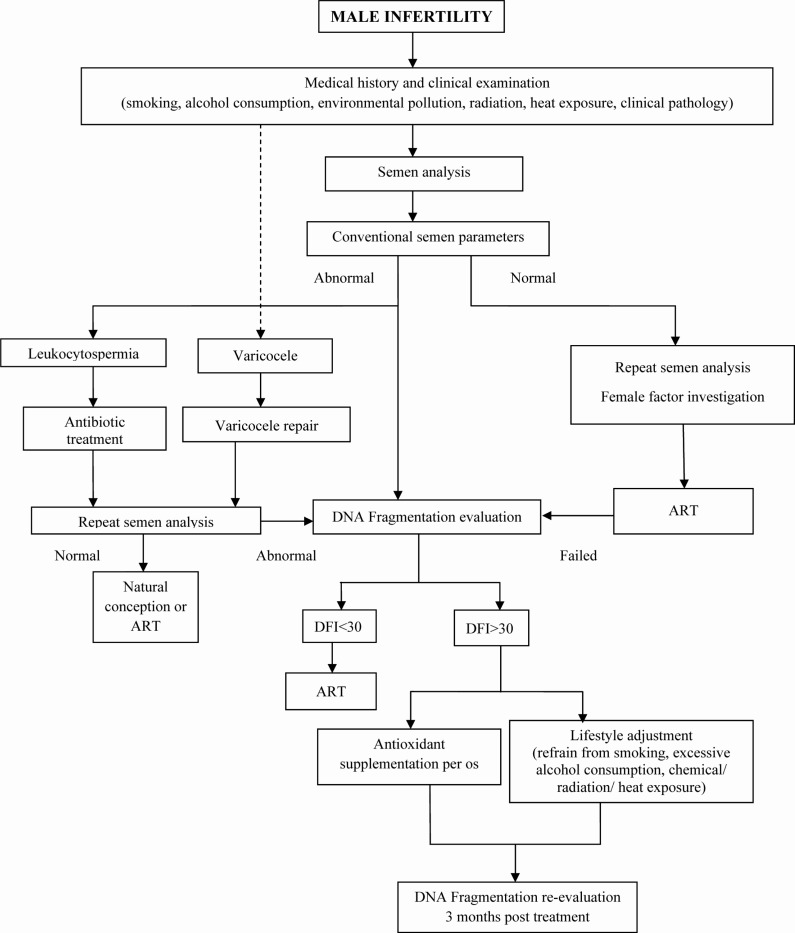
The accurate and detailed examination of DNA damage in carefully selected patients, in combination with the conventional semen evaluation could play a significant instructive role for either the prevention or the correction of the underlying pathology in pre-ART evaluation (12, 25). A comprehensive seminological workup, incorporating a complete medical history evaluation and clinical examination, as well as female factor investigation will determine the steps of the procedure. If the evaluation reveals pathological issues such as varicocele or leukocytospermia, a primary treatment option could be considered, ie. surgical repair or antibiotic therapy followed by repeat semen analysis and DNA fragmentation evaluation. In case of ART failure, despite a repeatedly normal semen analysis and absence of female factor pathology, sperm DNA fragmentation should be investigated. Increased levels of DNA fragmentation could justify an empirical therapeutic approach, such as antioxidant supplementation or lifestyle adjustment, in order to reduce the possible oxidative stress-related damage. An algorithm presenting the diagnostic-therapeutic evaluation of male infertility related to sperm DNA fragmentation is summarized in Figure 2.
Bearing in mind the fluctuating nature of semen variables including DNA quality, a more efficient therapeutic management could be achieved by the use of semen samples with optimised levels of DNA integrity (12). Since despite the rapid progress in ART, success rates remain relatively low (8, 61), the development of appropriate tests to specifically identify and isolate spermatozoa with intact DNA should be an important objective in view of ameliorating the reproductive outcome (10, 66). Several novel techniques are currently being examined toward this direction, including:
However, large scale trials are still needed to evaluate the effectiveness of these methods of sperm selection in routine clinical practice.
According to Aitken, "the creation of a conventional semen profile will always represent the foundations of male fertility evaluation" (25). This statement is clearly true, provided the semen analysis is performed in compliance to universally accepted methodology under rigorous quality control. In light of the scientific data accumulated during the last decades regarding the importance of spermatozoal integrity in male reproductive potential, a standardised detailed examination of sperm DNA damage may justifiably be incorporated in a comprehensive investigation of couple infertility (35). Certainly, consensus on various issues regarding the selection of the optimal assay, the protocols applied and most importantly the thresholds that will determine the clinical relevance and prognostic value of the results still remains to be addressed (11).
In conclusion, the future of a holistic approach for diagnosis of male infertility lies on the efficient combination of information derived from the conventional seminological parameters and the attributes of spermatozoal genomic integrity. Targeted large-scale studies are necessary to standardize the variables determining the specific traits and reference values that will aid the optimized diagnosis, treatment and prevention of specific aspects of male factor infertility.
