
Successful embryo implantation is a process which requires both a synchronous development and interaction between hatched blastocyst and endometrium. From the clinical point of view, implantation is considered to be successful when gestational sac is diagnosed by ultrasound. According to Coughlan et al., the term “implantation failure” refers to two different types of cases, those in whom there has never been evidence of implantation (no detectable HCG production) and those who have evidence of implantation (detectable HCG production) but it did not proceed to beyond the formation of a gestational sac visible on ultrasonography (1). It is rather doubtful whether such an event should be called a pathological event because it has been reported that spontaneous pregnancy is achieved in only about 25-40% of healthy fertile women during the first cycle of intended pregnancy (2, 3). Because of the importance of this problem and its correct definition, a whole section of this review was dedicated to the subject, presenting viewpoints published in the literature so far.
The causes of implantation failure are diverse and especially due to different maternal factors as uterine abnormalities, hormonal or metabolic disorders, infections, immunological factors, thrombophilias as well as other less common ones. Also it is essential to note the influence of severe male factor and its impact on genetic and morphological state of the embryo. Some recent studies investigated the role of many other factors in this complex process of implantation, such as contribution of cumulus cells (4). In this study, an attempt was made to classify these wide varieties of reasons for recurrent implantation failure presented with the following RIF types with the belief that it allows correct treatment for couples, who fail repeatedly after embryo transfer.
The main focus of the study was on the role of endometrium and the movement of embryo during implantation in the uterine cavity. The purpose of this review article was to emphasize the importance of the endometrial changes, embryo endometrial interaction and their impact as critical points on failure of implantation process.
After widespread application of assisted reproduction technologies (ART) and in particular IVF/ ICSI, a novel pathophysiological state was recognized which was characterized by numerous failures to achieve pregnancy after embryo transfer (ET) and it was designated as recurrent implantation failure (RIF). There is no universally accepted definition despite many publications on this topic (2, 5–8). Collective data from papers reporting implantation rates in different ART clinics strongly suggest that the maximum implantation rate is between 40% and 60% (7). Regarding these data, it is obvious that not every good quality embryo would implant successfully in each cycle. It is quite difficult to give an exact scientific definition of RIF not only because different IVF centers use different criteria for defining patients with RIF but also because RIF patients should be distinguished from patients with other known infertility pathologies.
When defining RIF, researchers take into account two criteria-first, the number of embryos transferred and, second, the number of ET procedures performed. The early definition of RIF twenty years ago by Coulam was that patients with more than 12 embryos transferred in several procedures without achieving pregnancy should be classified as RIF patients (9). This definition was based on the analysis of a large IVF program. Results reported from 65 IVF clinics in the UK show that most centers include patients with 5-6 unsuccessful cycles in the RIF group and also include frozen embryo transfers (FET). The total number of embryos transferred were reported between ≥10 and ≤15, but keeping in mind the lower pregnancy rate after FET, it was recommended to include only fresh ET in the RIF definition. Thus, most centers would define RIF as failure to achieve pregnancy after 3 fresh ET-procedures and in the case of UK practice that would be 3 high-grade embryos (10). Nonetheless, another definition of RIF was suggested by the PGD Consortium, a specialized group of ESHRE. Accord ing to them, RIF is a failure to achieve pregnancy after ≥3 unsuccessful transfers of high quality embryos or transfers of ≥10 embryos in total in multiple transfers. Presence or absence of pregnancy is diagnosed by an ultrasound examination after the 5th week (11). Today, with the tendency for transferring only one or two embryos, the definition of RIF is not clear. With the introduction of blastocyst culture and transfer of blastocysts, this parameter is included in the definition of RIF and requires the transfer of ≥8, 8-cell embryos or ≥5 blastocysts without pregnancy (7). Currently, selective single embryo transfers are performed in many countries and some authors are inclined to define RIF as a failure to achieve pregnancy after 3 embryo transfers with good quality embryos (6). The latest proposed definition of RIF from Coughlan et al. includes not only the number of embryos and ET-procedures but also the age of females (2).
The following table and images summarize these data (Table 1 and Figures 1A, B, and C).
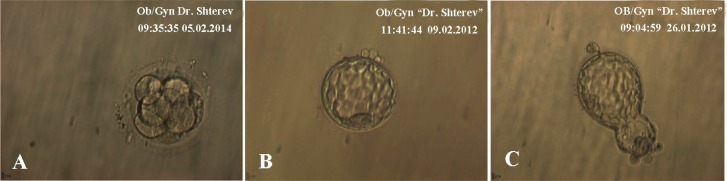
Table 1 Criteria for defining RIF
| Author | Number of ET * | Number of embryos ** |
|---|---|---|
| Coulam, 1995 | several | 12 |
| Tan et al., 2005 | 2-6 | ≥10 |
| PGD Consortium | ≥3 | ≥10 |
| Margalioth et al., 2006 | 3 | 3 |
| Rinehart, 2007 | several | ≥8 8-cell embryos ≥5 blastocysts |
| Coughlan et al., 2014 woman under the age of 40 years | ≥3 | 4 |
Fresh or frozen ET procedures
High-grade embryos
The transfer of good quality embryos should be a necessary pre-requisite for RIF diagnosis in infertile patients treated with ART. According to the recommendations of the Istanbul Consensus, good quality embryo evaluation should include morphokinetic assessment and also ploidy status (12). RIF should be distinguished from the recurrent IVF-failure which seems like its subgroup. Most commonly, RIF is associated with unexplained infertility but in fact, it also can be observed in patients with well-known causes of infertility (tubal factor, male factor, etc.). A number of excellent reviews discussing the idea that RIF is related to different factors such as endometriosis, undetected genetic defects, various uterine pathologies, etc. have been published recently (5, 6, 13, 14).
In some cases, RIF can be defined as a unique condition due to unidentified abnormalities or damage of the endometrium which would not even allow the initial steps of embryo implantation (apposition, attachment). If that is the case, the endometrium and its ability to provide, in a timely restricted manner, an environment suitable for embryo implantation should be regarded as a crucial factor and such an idea has been proposed by Salker et al. (2010) and Teklenburg et al. (2010) (15, 16). Nevertheless, another alternative would be the existence of a combined deficiency of both the embryo and the endometrium which would transform the cross-talk between the mother and the embryo in an ineffective or unsynchronized way. This would create a total blockade or disarrangement of the sophisticated cascade of molecular signaling needed in both embryo and endometrium for successful implantation and pregnancy. The immunological relationship between mother and conceptus still remains a mystery, although the recent advances in molecular biology have lightened a lot of parameters that participate in feto-maternal cross-talk during implantation (17).
Trying to summarize the above facts and causes of implantation failure, the following classification of RIF seemes to be helpful which allows taking correct therapeutic approaches for these patients (Figure 2).
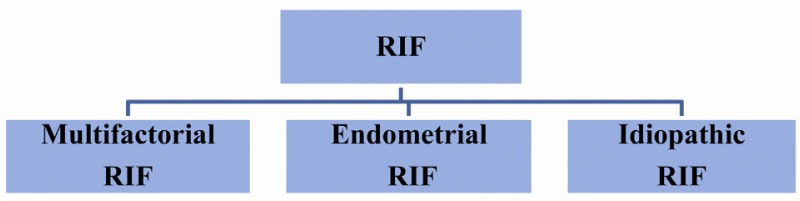
I. Multifactorial RIF (wide variety of reasons for RIF):
II. Endometrial RIF (impaired endometrium): unsuccessful attempts with the transferring of high grade embryos, due to thin (≤6 mm) endometrium, with or without variations in vascularity.
III. Idiopathic RIF (impaired cross-talk between endometrium and embryo): unexplained failure to achieve pregnancy after ET of good quality embryos, without any anatomical and histological changes in uterine cavity and endometrium, without any other disturbances in patient, patient-partner and embryos.
Human endometrium is a complex, multicelular tissue that is regulated by steroid hormones (estrogens, progesterone, androgens and glucocorticoids) and has different characteristics in the various phases of the menstrual cycle. These changes include restructuring of the cellular architecture, expression of specific cell-surface molecules as well as a secretion of biologically active factors such as cytokines, chemokines and growth factors. The process of the regeneration of the endometrium is currently viewed as a process of cell proliferation and a consequent differentiation of endometrial multipotent stem cells. The presence and the characterization of multipotent stromal stem cells (18–21), epithelial progenitor cells (22) and endothelial progenitor cells (23) in the human endometrium and decidua have been reported by a number of research groups. These cells reside in both basal and functional layers of the endometrium (24) and can be identified and isolated even from menstrual blood (25). It was recently demon-strated that endometrial stem/progenitor cells can induce proliferation (26) and this report substantiates the hypothesis on the role of the stem cells in endometrial regeneration.
Indisputable biological purpose of the endometrium is to secure the successful development of pregnancy. Embryo-implantation is only possible for a short period of time when the hostile uterine lining transforms to a hospitable surface to accept the embryo. The newly acquired capacity of the endometrium to welcome the embryo is termed “endometrial receptivity” and it is viewed as a dynamic process of genotypic and phenotypic changes of the endometrial cells. The result is that they are capable of participating in two-way cross-talk with the embryo which may or may not lead to successful apposition, attachment, penetration and implantation and possibly development and growth of a viable conceptus. The short period of time in the menstrual cycle, when the endometrial receptivity is optimal and embryo implantation is possible, is called “window of implantation” (WOI). Studies with donor embryos in humans have shown that this receptive period starts at day 6 post ovulation and continues 4-5 days that is days 20-24 of the cycle (27). The molecular mechanisms behind this complex and sophisticated process have been studied using animal models and knock-out (KO) mouse studies have positively identified genes for receptivity (leukemia inhibitory factor-LIF, Homeobox protein X3), responses to embryo (Cyclooxygenase 2-COX 2) and decidualization (Interleukin 11 Receptor-IL-11R) (28). Additional information has derived from in vitro studies with human endometrial cells and explants cultures, human trophoblasts and placental explant cultures.
Extensive research has been carried out in a search for markers which can be used clinically to define the exact time of the WOI which would be very important for determination of the right time for embryo transfer. Members of the cell adhesion molecules family (integrins, etc.) are expressed on the surface of the epithelial cells during the WOI in humans. Extensive studies are being currently carried out on the timed restricted expression of a number of molecules such as mucin (MUC-1), trophinin, L-selectin, Wingless (Wnt) family members, etc. in reference to the possibility of using them as biomarkers for endometrial receptivity (29). In addition to exploring the value of endometrial secretion analysis, N. Macklon has employed a human co-culture model, consisting of decidualizing endometrial stromal cells and single hatched blastocysts to identify the soluble factors involved in implantation and to correlate these to embryo development (30). The cytokines and chemokines produced and secreted by the endometrial cells have been discussed in an extensive review. It is pointed out that numerous cytokines such as IL-11, LIF, IL-15, IL-1 and members of the superfamily of the transforming growth factor (TGF) are important factors in establishing the optimal interactions between the embryo and the endometrium (31).
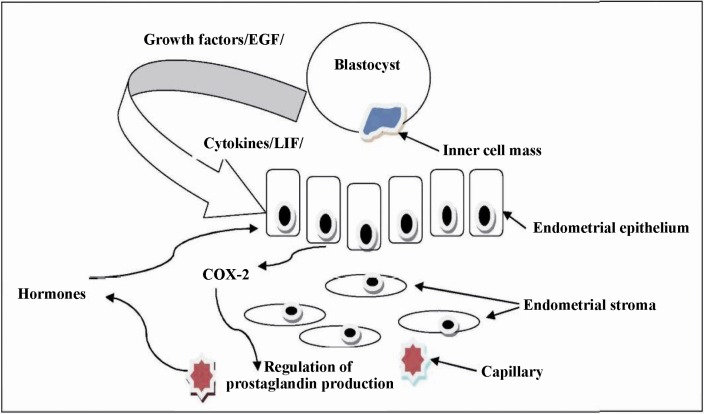
The process of implantation as a scheme is presented in Figure 3, where the diagram shows a preimplantation stage of embryo and some important factors thought to be necessary for uterine receptivity: COX-2 (cyclooxygenase-2), EGF (epidermal growth factor) and LIF (leukemia inhibiting factor) (Figure 3).
Recently, using sophisticated modern methods of analysis, it has been shown that the luminal epithelial cells express a number of molecules which have been tested in the search for a marker of the endometrial receptivity. Significant efforts are focused on application of proteomic and lipidomic methods to search for noninvasive biomarkers of endometrial receptivity in endometrial fluid (32–35). In a recent study, it was reported that proteomic analysis of endometrial biopsies collected between LH + 5 to LH + 10 revealed a distinct proteomic “fingerprint” which seemed to distinguish between fertile patients and RIF patients. Apolipoprotein A-I (Apo A-I) was identified as an anti-implantation protein which is secreted by differentiating endometrium and seemed to have higher expression in ectopic secretory endometrium in patients with endometriosis. Thus dysregulation of the Apo A-I secretion might be a significant factor in pathogenesis of endometriosis and a crucial point for RIF (36). Data collected by these techniques will lead to a new understanding of endometrial receptivity and its relation to infertility treatment. The use of “omics” as molecular tools to determine the effects of stimulation protocols on endometrial gene expression and clinical outcome have also been investigated (37). There is increasing evidence that endometrial function in stimulated cycle is adversely affected by supraphysiological levels of oestrogen and premature secretion of progesterone and these result in dysregulation of the endometrial receptivity and subsequent implantation failure (38–40).
Gene-array methods are applied to analyze the global gene profiling in endometrial cells collected on the 21st day of the menstrual cycle from patients with RIF as compared to fertile patients. Altered expression of genes was detected in RIF patients. More than 90% were found to be down-regulated and they were predominantly involved in regulation of three major pathways-cell cycle, cell-to-cell contact and Wnt pathway. On the other hand, at least two genes, Slug and DKK1 were found to be up-regulated. DKK1 gene is known to be a potent inhibitor of Wnt pathway and it is a pro-apoptotic agent. Wnt signaling regulates Slug activity and links epithelial-mesenchymal transition. Obviously, there is a general dysregulation of gene expression in the endometrium of RIF patients, however, the clinical significance of all changes in the gene expression is not evident yet (41). The same research group continued their search with studies on the changes in the profiles of microRNA in the endometrium of RIF patients. MicroRNAs are known to be posttranscriptional regulators of the gene expression which are in-volved in a number of physiological and patho-logical events. Recently, it was reported that at least 13 miRNAs are expressed quite specifically in endometrium samples as the expression of 10 of them were found to be up-regulated and 3 miRNAs were down-regulated. Since the expressed miRNAs specifically seem to regulate over 3800 genes, subsequent experiments to assess the levels of miRNAs showed that members of the cell adhesion molecules, Wnt signaling pathway and cell cycles were lower in RIF patients (42). It is obvious that the microarray techniques are very sensitive and informative but the data obtained are difficult to interpret as clinically meaningful parameters and criteria.
Human endometrial transcriptomic methods have been applied to study the expression of numerous genes during the different phases of the natural cycle in fertile women or in patients with RIF. Samples were collected by endometrial biopsy at different phases of natural cycles and based on the results obtained and applying the bioinformatics approach, an endometrial receptivity array (ERA) test was developed that can be applied in clinical practice (43). Further trials have shown that the ERA test is a reliable and reproducible method for determination of the exact time of the WOI that can be used with better results in comparison to histological dating of endometrial receptivity (44). In patients with RIF, the endometrial receptivity was identified by ERA test and embryo transfers done according to the ERA data resulted in a 62.8% pregnancy rate. The authors have developed a clinical algorithm that will make it possible to apply a personalized embryo transfer in patients with RIF (45).
Another study compiled a Human Gene Expression Endometrial Receptivity database (HGEx-ERdb) containing 19 285 genes expressed by the endometrium. It was shown that 179 genes could be defined as Receptivity Associated Genes (RAGs) which might be useful for defining the endometrial receptivity (46). This new approach to investigate the expression and secretion of various biologically active factors that favour the embryo implantation provide new perspectives for researchers but have still a long way to go before they can achieve a place in clinical practice.
The postovulatory rise of progesterone triggers profound changes in the epithelial cells, stromal cells and the matrix and blood vessels of the endo-metrium (47). The process of remodeling triggered and controlled by progesterone is termed “decidualization” and consists of changes of the stromal cells to secretory phenotype, angiogenesis and influx of uterine NK cells which are the dominant cell types. Formation of decidua is still a poorly understood process in mammalian pregnancy. Firstly, there are no suitable or easily obtainable models for the study of this process called “an enigmatic transformation” (48). Human decidua is unique because a conceptus does not need to be present to initiate decidualization of the stro-mal “predecidual cells” (49). Secondly, the effect of progesterone for longer time results in a general transfromation of the stromal cells over the whole surface of the uterus into cells secreting specific factors such as prolactin, insulin-like growth factor binding protein-1 (IGFBP-1) (50), vascular endo-thelial growth factor (VEGF) (51) etc., IGFBP-1 is the predominant protein in decidualized cells and is considered to be a biochemical marker of decidualization.
Prostaglandins are secreted by decidual cells and are actively engaged in the complex inter-play between progesterone, prolactin, relaxin and other cytokines and growth factors. Data have been published that defective synthesis of prostaglandin by endometrial cells on days 21-24 of the cycle of patients with RIF has been detected at both mRNA and protein level. A number of components of the prostaglandin synthesis system-cyclo-oxygenase-2 (COX-2), secretory phospholipase A2 group: IIA, V, and IB (sPLA2-IIA, sPLA2-V, sPLA2-IB), glypican-1, PG-E synthase, PG-E receptors, and lysophosphatidic acid receptor 3 (LPA3) have been estimated and very low levels of sPLA2-IIA and COX-2 were measured in 85% of RIF patients. These enzymes are of key import-ance for the synthesis of prostaglandins and it is quite acceptable that the levels of endometrial prostaglandins are low too. It has been suggested that defective prostaglandin synthesis might be a key factor in proper development of the endo-metrial receptivity (52). These findings make logical conclusion that prostaglandin supplementation previous to embryo transfer may have some beneficial effects for a selected group of RIF patients.
Cells, resembling but still different from peripheral NK cells, were identified in human decidua and were initially designated large granulated lymphocytes. These cells called uterine NK (uNK) cells are characterized by a high expression of CD56 (CD56brihgt), lack of CD16 expression, high secretion of cytokines and rather low cytotoxic activity. It has been shown that uNK cells increase in number during the late secretory phase and during early pregnancy (53). Uterine NK cells are the major leukocyte population in decidua and they account for about 70% up to 83.2% of the CD45+ cells in the mid- to late luteal phase and first trimester of pregnancy (54, 55). Discordant data have been published about the alterations of the uterine NK cells sub-types in infertile patients. Some reports describe a decrease in CD56bright CD16dim and an increase in concentrations of CD56dim, CD16bright cells when endometrial bi-opsies from patients with habitual abortions were analyzed by flow cytometry (56). On the other hand, it has been recently reported that the con-centration of CD56bright NK cells in the endome-trium of infertile women analyzed by flow cyto-metry is similar to that of normal fertile women. Moreover, in young patients with RIF, the mean percentage of CD56bright CD16- and CD56+CD16- cells in the late secretory did not differ from the mean percentages in normal endometrium of healthy women (57). Immunocytochemical methods have been used to assess the number of uterine NK cells in peri-implantation endometrium from patients with RIF and an increase of CD56+ cell density was found as compared to control healthy women (14% versus 5%). However, the density of CD16+ and CD69+ in endometrium of RIF pa-tients was not very different from those of control patients thus showing that there was no activation of this cell subtype (58).
The treatment offered should be evidence based and aimed to improve endometrial receptivity. Several therapeutic approaches have been described as options to improve the functions of the endometrium as an important factor for pregnancy and they include immunomodulatory agents, local endometrial injury, autologous adipose derived stem cells, anti-oxitocyn preparations, etc. Immunological factors have been implicated in the pathogenesis of RIF for a long time and different immunomodulatory agents and approaches have been applied for the treatment of these patients. For these purposes, immunomodulation IVIG (intravenous immunoglobulin IgG) has been widely used with rather conflicting results reported. Initially, positive effects of IVIG application in RIF patients were reported as far as the pregnancy rates were concerned (59–62). A systematic review of the papers through PubMed made the overall conclusion that immunotherapy with IVIG or intralipids when applied in patients with abnormal immunological risk factors might increase the live birth rates (63). However, a multicenter randomized placebo-controlled trial confirmed the statement that application of IVIG in patients with recurrent miscarriages showed no significant beneficial effects (64). Similarly, in a double blind placebo controlled trial including 51 couples with RIF, no positive effects were recorded on the live birth rates (65). Extensive discussions on the efficacy of application of immunomodulatory agents have not led to one definite conclusion so this immunomodulatory approach is left to the discretion of each clinical setting.
A positive effect of local endometrial injury (LEI) on the pregnancy and live birth rates was published by Barash et al. (66). Infertile patients with good response to controlled ovarian hyper-stimulation (COH) but with one or two unsuccessful IVF/ET attempts were treated at least 4 times by endometrial biopsy using a biopsy catheter (pipelle device) during the menstrual cycle, before the next IVF-ET cycle. The reported results showed that after 4 injuries of the endometrium, the pregnancy rate reached 66.7% versus 30.3% in the control group and live birth rates were 48.9% per ET versus 22.5% in the control group (66). These initial results have been confirmed in a number of studies reported later which demonstrate the posi-tive effect of LEI (67–69). The general under-standing is that LEI would induce upregulation of inflammatory cytokines, chemokines and growth factors. Detailed studies have shown that following LEI monocytes are recruited to the injury sites which can differentiate in monocytic dendritic cells/macrophages which secrete a number of cytokines, chemokines and growth factors. In patients treated by LEI, increased expression is detected for growth-regulated oncogene-a (GRO-a), IL-15, and macrophage inflammatory protein 1B (MIP-1B), tumor necrosis factor-α (TNF-α), osteopontin, αvβ3 integrins and most of these bio-logically active factors are involved in the interactions between the embryo and the maternal endometrium (70).
As far as clinical aspects of LEI treatment are concerned, it is still not clear when and how many manipulations should be done in order to achieve the best effects from these treatments. Initially, up to 4 manipulations (“scratches”) have been applied (66). Later on, some research groups preferred to do the endometrial biopsies twice where the first one was during the proliferative phase (day 7-10) and the second one was during the secretory phase (day 24-25) of the menstrual cycle prior to COH (71). Others reported that a single endo-metrial biopsy done during hysteroscopy on days 4-7 of the cycle before the embryo transfer cycle leads to a significant increase in clinical pregnancy and live birth rates (72).
A recent systematic review of published literature and meta-analysis of the included papers provided strong evidence that endometrial injury done in the cycle before ovarian stimulation and IVF/ET increased the pregnancy rate in RIF patients. Effects of LEI are associated with induction of new cascades of inflammation with the participation of various cytokines and growth factors and all these improve the process of decidualization (73). Another advantage of LEI could be a combination of this procedure with the embryo co-culture system with autologous endometrial epithelial cells (EEC) as a therapeutic approach with proven effectiveness (74). It is quite clear that LEI is a beneficial procedure for patients with RIF, but further well designed studies are needed where a strictly defined procedure is applied in selected patient groups, enlisting a larger number of women.
The most significant endometrial changes occurr during the process of implantation. This review focused on the dysregulation of the endometrial cells at both cellular and molecular levels as a major reason for the lack of implantation when a good quality embryo is transferred into a uterus free of any pathology, in the presence of optimal hormonal levels, i.e. idiopathic RIF. Tailoring stimulation protocols and individual approaches are some of the steps that could be offered to RIF-patients. It is our opinion that the concept of the crucial role of the endometrium for embryo implantation and for the repeated failures of implantation deserves a detailed discussion. RIF patients should be enrolled in well designed studies in order to expand our understanding. Repeated implantation failure is a problem for every IVF clinic because the unsuccessful IVF/ET attempts impose a significant psychological, emotional and financial burden on the infertile couples and are frustrating for the doctors trying to help them.
