
Anethum graveolens L. is a member of umbelliferae family. Many properties of dill such as antibacterial (1), antioxidant (2), antihypercholesterolemic (3), and cancer chemo-preventive effects (4) have been reported. In folk medicine, it is commonly used to improve gastric irritation, indigestion, stomachache, insomnia, and colic (5). Dill decreases sexual potency and spermatogenesis in males (6, 7). Our previous studies revealed effects of different doses of Anethum graveolens on the male and female reproductive systems (8–12). High doses of Anethum graveolens seed aqueous and ethanol extracts caused significant increase in duration of the estrous cycle, diestrus phase and progesterone concentration (8, 9). The stereological study did not reveal any significant changes in the volumes of ovaries, primary, secondary and graafian follicles (8). Ultrastructrual examination of corpus luteum revealed smooth endoplasmic reticulum (SER), rough endoplasmic reticulum (RER), and mitochondrial elevations of granulosa cells (9). Studying different fractions of a medicinal plant helps us understand which extract components act on target organs. The study of different fractions such as ether, ethanol, chloroform and water fractions of Anethum graveolens on female rats revealed that only water fraction of aqueous extract caused infertility (12). Also, there is no other research about the effect of this herb on fertility. The oocyte changes after Anethum graveolens treatment could be one of the probable reasons of infertility. Therefore, this study was designed to investigate morphometrical, ultrastructural and cell membrane terminal sugar alteration of oocyte in Anethum graveolens treated rat as an animal model.
Anethum graveolens L. seeds were purchased from a market in Shiraz, Fars Province, Iran, and evaluated by a botanist in the Biology Department of Shiraz University, Shiraz, Iran. A voucher number (1015) was kept as reference in the Herbarium of the Biology Department. Seeds were washed, dried, and powdered. Then, to prepare the aqueous extract, 100 g of powder were percolated in 300 ml of distilled water for 25 hr. The mixture was filtered and concentrated by a rotary evaporator under reduced pressure. The yield (w/w) of the extract was 8.2% (g/g).
A total of fifty nine Wistar female rats, weighing between 180 to 200 g, were obtained from the animal house of Razi Institute of Shiraz. For adaptation to laboratory conditions, animals were kept in the laboratory for two weeks prior to the beginning of the experiments. Animals were kept at controlled temperature (22-24°C) and experienced periods of 12 hr light and 12 hr darkness. Rats had free access to food and tap water. The weight of each rat was recorded before and after the experiment. The study was approved by the Institutional Animal Ethics and Health Committee of the Biology Department of Shiraz University, and was performed according to the principles of the care and use of laboratory animals established by the National Institutes of Health (13). Estrous cycle changes were determined by preparation of vaginal smear at a distinct time in the morning (7-8 AM) during the experimental period. Female rats in the estrous phase were divided into 3 groups of control (CON), low dose (0.5 g/kg) of dill seed aqueous extract (LDE), and high dose (5 g/kg) of dill seed aqueous extract (HDE) administered groups. Mentioned doses were suspended in 1 ml distilled water and administrated orally by gavages for 10 days (2 regular estrous cycles) in the morning (8-9 AM). The control group received an equal volume of distilled water in the same way.
At the end of the experiment, while the animals in the 3 groups (8 in each) were in the estrous phase, they were anesthetized using diethyl ether and a blood sample was taken from dorsal aorta. Blood samples were centrifuged for 20 min (2000 rpm) and serum portions were separated. The progesterone concentration was determined by solid phase radioimmunoassay method.
Sacrificed animals of 3 groups (8 in each) were dissected and standard weights of ovaries, oviducts and uterine horns were calculated by the following formula: [organ weight (g)/ body weight (g)]×100.
The left ovaries of 3 groups (8 in each) were fixed in 10% buffered formalin solution, dehydrated with ethanol, cleared with xylol, impregnated, and embedded in paraffin. Paraffin blocks were sectioned at a thickness of 6 µm using rotary microtome (Zeiss, Germany) and stained with hematoxylin and eosin. Any histological changes were examined by light microscope.
The other twenty rats were divided into 4 groups (5 in each) of CON, LDE, HDE and sham. Animals were gavaged in the same way as mentioned. On the 11th day of the experiment, 20 IU of Pregnant Mare's Serum Gonadotropin (PMSG) hormone (Sigma, USA) were injected IP. On the 13th day, 20 IU of Human Chorionic Gonadotropin (hCG) hormone (Organon, Holland) was injected IP. To assess the effects of PMSG and hCG, 5 rats were not injected with these hormones, thereby comprising the sham group. After 14 hr from hCG injection, the animals were sacrificed under deep anesthesia. Both oviducts in each animal were kept separately in normal saline at 37 °C in a petri dish. Each oviduct was opened by needle under stereo microscope (Leitz, Germany) and oocytes were extruded from oviducts via oviductal flashing. Granulosa cells surrounding oocytes were removed in 1% (w/v) trypsin for 5 s. Denuded oocytes of left oviducts were placed on poly-L-lysine coated slides and their images were taken using an invert microscope equipped with digital camera (Sony, Japan). The diameters of the zona pellucida and oocyte were measured by Java Image software.
Some denuded oocytes of left oviducts on poly-L-lysine coated slides were placed in 10% buffered formalin solution as a fixator for 20 min and washed in PBS (phosphate buffered saline) solution (3 times, each 10 min). To neutralize endogenous peroxidase activity, slides were kept in 1% H2O2 in methanol for 5-10 min and washed in PBS solution for 30 s. Then slides incubated with Ulex europaeus agglutinin (UEA-I) and peanut agglutinin (PNA) peroxidase conjugated lectins at room temperature for 2 hr, were washed in PBS solution for 20-30 min, then placed in DAB-H2O2 (diaminobenzidine) for 5-10 min. Finally, the slides were washed with tap water (5-10 min), dehydrated, cleared and mounted under routine procedures, and were examined under a light microscope. Some slides were stained with FITC-conjugated Dolichos biflorus agglutinin (DBA) lectin and were examined by fluorescent microscope (Zeiss, Germany) (14). Photographs were taken with a digital camera and the images were examined with Image Java software to measure the reaction intensity of each oocyte.
The oocytes of right oviducts were used for ultrastructural studies. Each oocyte was fixed in 2% buffered formalin and Karnovsky solution at 0-4°C for 3-4 hr, then washed in PBS solution four times, each 30 min. Oocytes were postfixed in 1% osmium tetroxide (1.5 hr), dehydrated in ethanol (70%, 95%, 100%, each 10-15 min), cleared in propylene oxide twice for 10-15 min, impregnated and embedded in pure resin (TAAB resin 50 ml, dodecenyl succinic anhydride 45 ml, methyl nadic anhydride 5 ml, dimethylaminomethyl phenol 2 ml) in an incubator at 60°C temperature for 24-48 hr. Blocks were sectioned at a thickness of 1 µm using ultamicrotome (C. Reichert (om U3), Austria) and semithin sections were stained with 1% toluidine blue. Then ultra-thin sections at 70 nm thickness were prepared and stained with uranyl acetate, counterstained with lead citrate, and examined by transmission electron microscope (Philips CM10, Germany) (15).
The other fifteen female rats in 3 groups (n = 5) after 10 days of treatment and when they were in estrous phase, mated with untreated male rats. After confirmation of the pregnancy of the female rats, the male rats were separated. The duration of pregnancy of the female rats was recorded, and the weight and crown-rump length (CRL) of their newborns were measured every 6 days (on days 1, 7, 13, and 19).
The concentration of progesterone hormones, variation of estrous cycle, changes of body weight before and after the experiment, and standard weight of the total reproductive system, left ovary and left oviduct, as well as the number, weight and CRL of newborns in different groups were analyzed by one-way ANOVA and post hoc Scheffé test using SPSS 11.5 software. The p ≤ 0.05 was considered significant. The normal distributions of data were examined by SPSS software before analysis.
Data had normal distribution and were used to find any significant differences between groups.
Body weight of the animals at the beginning and the end of the experiment showed no significant difference in any group (Table 1). In addition, the standard weight of the total reproductive system, left ovary and left oviduct, had no significant changes in the experimental groups when compared to the control group (Table 1).
Table 1 The effects of Anethum graveolens (dill) seed aqueous extract on body and organs’ weight (g) of different groups
| Body weight at the beginning | Body weight at the end | Total reproductive system weight | Left ovary and oviduct weight | |
|---|---|---|---|---|
| CON | 212.27±39.96 | 218.39±33.89 | 0.32±0.10 | 0.14±0.42 |
| LDE | 202.63±35.29 | 214.14±38.10 | 0.30±0.12 | 0.13±0.05 |
| HDE | 199.43±19.80 | 206.12±19.56 | 0.30±0.16 | 0.12±0.06 |
Control group (CON), low dose of dill aqueous extract-treated group (LDE) and high dose of dill aqueous extract-treated group (HDE)
Data showed as Mean±SD
The concentration of progesterone hormone increased significantly in LDE and HDE groups compared to the control group (p < 0.05) (Table 2). The duration of two estrous cycles increased significantly in experimental groups compared to the control group (p < 0.05) (1.26 times in the LDE group and 1.32 times in the HDE group). The longer estrous cycle resulted from a longer diestrus phase, and shorter estrus and proestrus phases of the two experimental groups, as compared with the control group (p < 0.05) (Table 2).
Histological studies of ovaries in the control group showed different types of follicles at all stages of folliculogenesis (primordial follicles, primary follicles, secondary follicles, mature follicles), and corpus luteum. The ovarian histological structure of experimental groups consisted of greater number and larger size of corpus luteum but it was more prominent in HDE group than LDE group (Figure 1, upper row). In HDE group, luteinized granulosa cells showed larger and clearer cytoplasm in comparison to the control and LDE group. It confirmed that these cells secreted more progesterone hormone (Figure 1, lower row). Diameter of zona pellucida and oocyte showed no difference between control and experimental groups (Table 3 and Figure 2). UEA stained oocytes showed lower intensity in the LDE and HDE groups compared to the control group, but it was not significant (Table 3 and Figure 3A–H). Intensity of reaction of oocyte with PNA lectin revealed no significant difference in experimental groups compared to the control group, but oocytes reacted with PNA lectin less intensely in the LDE and HDE groups than in the control group (Table 3). DBA-FITC stained oocytes showed higher intensity in the LDE and HDE groups compared to the control group, but it was not significant (Table 3 and Figure 3I–L).
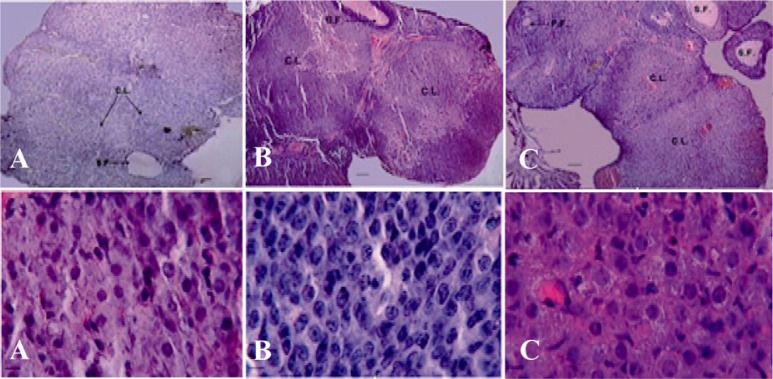
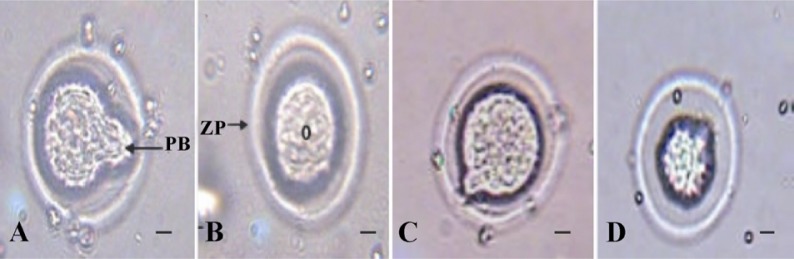
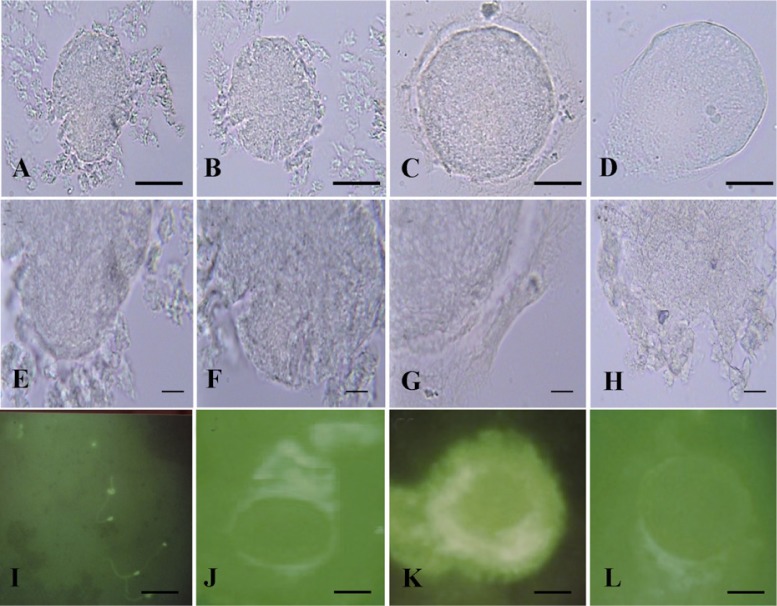
Table 2 The effects of Anethum graveolens (dill) seed aqueous extract on progesterone concentration and duration of different phases of two estrous cycles of different groups
| Parogesterone concentration (pg/ml) | Two estrous cycles(day) | Diestrus phase(day) | Estrous phase(day) | Proestrus phase(day) | |
|---|---|---|---|---|---|
| CON | 18.35±5.51 | 12.40±1.17 | 6.90±0.87 | 3.40±0.69 | 2.10±0.73 |
| LDE | 31.53±5.79*** | 15.60±2.06** | 12.60±2.45* | 2.40±0.51 | 0.60±0.69** |
| HDE | 46.12±12.32*** | 16.40±2.67** | 14.00±2.62* | 2.10±0.31* | 0.30±0.48** |
Significantly different from control group
p < 0.05
p < 0.01
p < 0.001
Control group (CON), low dose of dill aqueous extract-treated group (LDE) and high dose of dill aqueous extract-treated group (HDE)
Data showed as Mean±SD
Table 3 The effects of Anethum graveolens (dill) seed aqueous extract on oocyte and zona pellucida diameter and oocytes reaction with UEA, PNA and DBA lectins of different groups
| Oocyte diameter (µm) | Zona pellucida diameter (µm) | UEA | PNA | DBA | |
|---|---|---|---|---|---|
| CON | 35.10±3.59 | 6.58±1.32 | 79.49±7.76 | 134.54±1.68 | 139.5±0.00 |
| LDE | 36.80±3.56 | 6.69±1.40 | 72.23±2.74 | 112.26±12.49 | 166.66±9.50 |
| HDE | 36.71±3.31 | 6.41±1.26 | 76.13±3.18 | 108.88±9.91 | 141.49±0.73 |
Control group (CON), low dose of dill aqueous extract-treated group (LDE) and high dose of dill aqueous extract-treated group (HDE)
Lectin reaction expressed as intensity reaction (pixels)
Data showed as Mean±SD
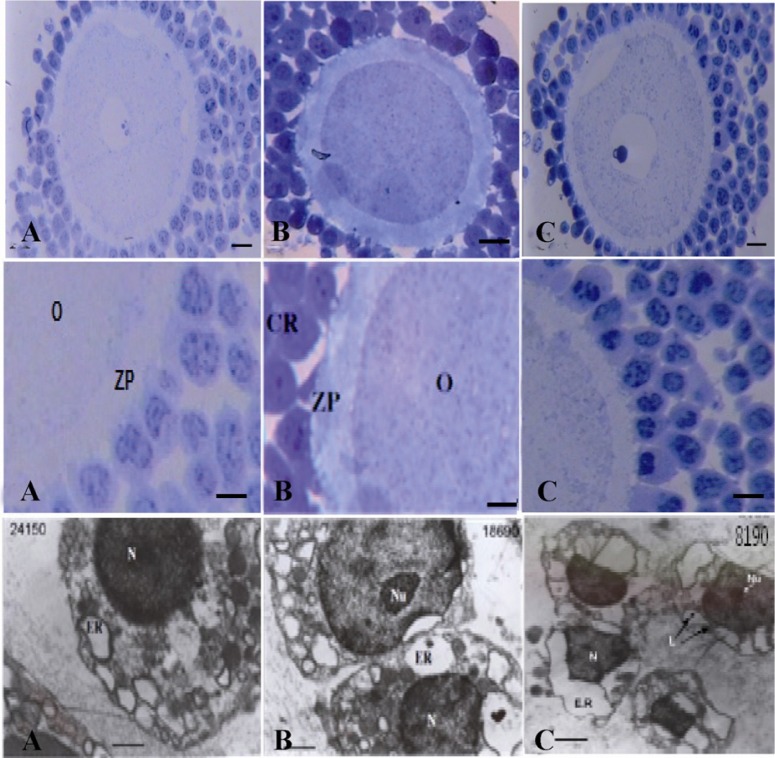
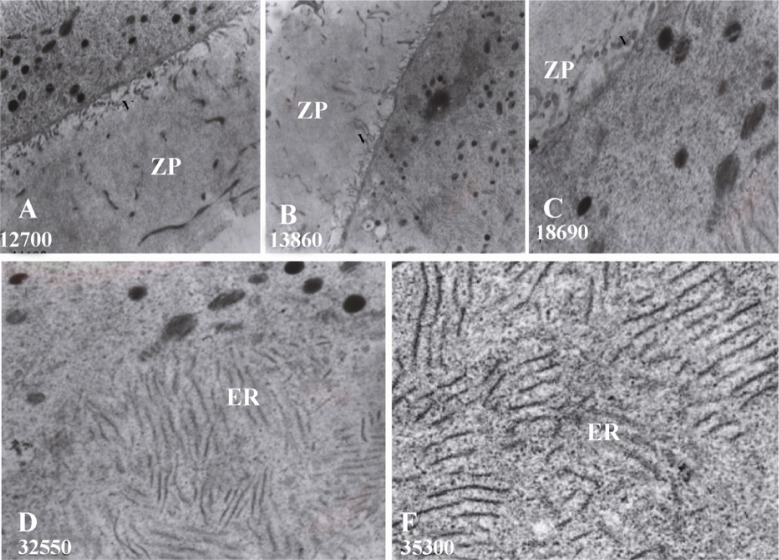
Semi-thin sections of corona radiata cells in the control group revealed some vacuoles in their cytoplasm that were larger in the HDE group. There were no significant changes in zona pellucida thickness or appearance (Figure 4, upper and middle rows). Ultra-thin sections of follicular cells showed highly dilated endoplasmic reticulum in the experimental groups but they were more distinguishable in HDE group (Figure 4, lower row). The number of mitochondria in the control group was greater than the experimental groups (Figure 4). There were many microvilli on oocyte membrane and some cortical granules in the cortex of oocytes in all groups (Figure 5A–C). The zona pellucida density or thickness and oocytes’ cytoplasm of experimental groups showed no changes compared to the control group (Figure 5A–E).
The duration of pregnancy was equal in all groups (about 20 days), but the female rats in two experimental groups were pregnant one or two weeks later in comparison to the control group in spite of the fact that vaginal plaque and sperm were observed in next morning vaginal smear when they were coupled with untreated male rats (p < 0.05) (Table 4).
Table 4 The effects of Anethum graveolens (dill) seed aqueous extract on duration of mating to pregnancy and newborns criteria in different groups
| Duration of matingto pregnancy (day) | Number ofnewborns | Weight of newborns (g) | CRL of newborns (cm) | |||||||
|---|---|---|---|---|---|---|---|---|---|---|
|
| ||||||||||
| Day 1 | Day 7 | Day 13 | Day 19 | Day 1 | Day 7 | Day 13 | Day19 | |||
| CON | 0.00±0.00 | 11.33±0.57 | 5.58±0.46 | 10.24±0.87 | 19.00±1.83 | 52.69±2.58 | 5.17±0.26 | 7.01±0.27 | 7.56±0.31 | 10.14±0.13 |
| LDE | 6.00±3.46* | 10.33±3.51 | 5.73±0.31 | 10.22±1.84 | 19.74±2.59 | 52.64±4.18 | 5.07±0.10 | 6.90±0.21 | 7.46±0.20 | 10.15±0.13 |
| HDE | 11.66±4.93* | 7.33±2.30 | 4.06±0.83* | 8.20±0.64* | 17.74±2.59* | 54.05±3.77 | 4.90±0.36** | 7.02±0.13 | 7.45±0.19 | 10.16±0.14 |
Significantly different from control group
p < 0.05
p < 0.001
Control group (CON), low dose of dill aqueous extract-treated group (LDE) and high dose of dill aqueous extract-treated group (HDE)
Data showed as Mean±SD
Weight of newborns on days 1, 7, and 13 was significantly lower in the HDE group compared to the control group (p < 0.05). CRL of newborns on day 1 in the HDE group was significantly lower compared to the control group (p < 0.05) (Table 4).
Treatment of adult female rats with Anethum graveolens extracts did not affect body and reproductive organs’ weight as seen in our previous studies in both male and female rats (8–12).
Any changes in ovarian tissue affecting the hormonal balance and hormonal balance alteration lead to ovarian abnormal structure and function. According to our data, ovarian histological structure in the HDE group characteristically showed hypertrophic corpus lutea with larger and clearer cytoplasm of luteinized granulosa cells. In addition, our previous study reported increased SER, RER and mitochondria in granulosa lutein cells of female rats treated with aqueous extract of Anethum graveolens (9). It is thought that these changes caused more secretion of progesterone hormone in the experimental groups.
Normally, the estrus cycle in rats lasts 4-5 days (16), but in the present study a high level of progesterone concentration in LDE and HDE groups enhanced the duration of estrous cycles due to longer duration of diestrus phase and shorter duration of estrus and proestrus phases in these groups. These are similar to our previous research as well (8, 9). It may be suggested that this extract affects the hypothalamus-hypophysis-gonadal axis and leads to higher activity in the corpus luteum, higher progesterone secretion, and prolonged luteal phase of estrus cycle (17). Also, these effects may be related to phytoestrogenic components of dill extracts. This herb consists of some monoterpen such as carvone, limonene and trans-anethole and some flavonoids such as kaempferol and vicenin. Kaempferol, trans-anethole and limonene exhibit phytoestrogenic properties as well (18). Phytoestrogens can compete with endogenous estrogen and bind to enzymes related to estradiol synthesis and metabolism (19). Phytoestrogens are structurally and functionally identical to 17 - β oestrol and have shown agonistic and antagonistic effects depending on estrogen concentration (20).
Zona pellucida, a cellular glycoprotein layer that surrounds the oocyte and early embryo, is made by oocyte and granulosa cells and has crucial roles in oocyte maturation, folliculogenesis, binding of oocyte to capacitated spermatozoa, fertilization, embryo transport, and pre-implantation development of the embryo (21, 22). In this study, the diameter of oocyte and zona pellucida did not change in the experimental groups. Furthermore, our previous study revealed no alteration in the volume of ovary, unilaminar primary follicles, multilaminar primary follicles, secondary follicles, and graafian follicles in the experimental groups (9). Therefore, dill extract is safe and has no side effects on oocyte and zona pellucida.
In most species, zona pellucida is composed of three kinds of glycoproteins, ZP1, ZP2, and ZP3, which play important roles in recognizing and binding to capacitated sperm (23). Therefore, the clinical researchers have special interest in investigating zona pellucida's glycoconjugates. Lectins are proteins or glycoproteins extracted from plants or invertebrates with ability to bind to carbohydrates, specifically on the surface of cells. Consequently, lectins are widely used to determine the location and distribution of carbohydrate residues in tissues or on the cells specifically (24–28). PNA lectin is among the most specific lectins that bind to galactose/N-acetylgalactoseamine (Gal/GalNAc). DBA lectin binds to α-N-acetylgalactoseamine (GalNAc) and UEA lectin binds to glycoproteins and glycolipids content of α-fucose. According to our histochemical studies of PNA, UEA, and DBA lectins, administration of aqueous extracts of Anethum graveolens decreases glycoconjugates with Gal/GalNAc residues in a dose-dependent manner and has no effect on glycoconjugates with α-fucose residues. Since these glycoconjugates are important for binding oocyte to capacitated sperm, it may consequently be considered that Anethum graveolens aqueous extract changes the production and distribution of zona pellucida glycoconjugates, and so prevents sperm from penetrating and fertilizing the oocyte.
Ultrastructural studies of corona radiata cells in the HDE group revealed such highly dilated endoplasmic reticulum and it showed that more secretion of steroidal hormones is from these cells. Such changes were reported in a similar study in granulosa cells of the corpus luteum (10). SER dilated in follicular cells of experimental group especially in HDE-treated group caused the number of mitochondria in the control group to be greater than two experimental groups. On the other hand, the cytoplasm of follicular cells occupied by SER overlapped with other organelles. There were more cortical granules in the cortex of oocytes in the HDE group, which may prevent polyspermy process. The zona pellucida in all groups did not show any changes in density, thickness, or appearance.
The results of animal mating revealed that treatment of female rats with Anethum graveolens aqueous extracts delays the fertilization process. This has been confirmed because the duration between mating and pregnancy increased significantly in the LDE and HDE groups compared to the control group. Monsefi et al. (2012) reported no fertility in female rats treated with the same doses of Anethum graveolens aqueous and ethanol extracts (12). It is suggested that these changes are mediated by the effects of Anethum graveolens aqueous extract on the glycoconjugates residue of oocyte. Thus, it cannot be recognized and fertilized by sperm. The weights of newborns on days 1, 7, and 13, and their CRL on day 1, were significantly lower in the HDE group compared to the control group. These effects of Anethum graveolens on the growth of newborns can be attributed to the effects of this herb on gametes and then embryo at both the cellular and molecular levels. Also, these effects may be related to this herb's phytoestrogen contents especially in high doses of treatment on mammary gland alveolar buds that decreased milk production temporarily or have showed antagonistic effect. Underweight newborns in the HDE group were recovered after 3 weeks, and their low CRL was corrected after 1 week. The newborns did not display any abnormality such as craniofacial or limb defects.
It is concluded that Anethum graveolens seed aqueous extract both in low dose and high dose increased estrous cycle duration and progesterone concentration and induced infertility without any significant adverse effects on oocytes’ developmental potential such as structural and chemical changes. Therefore, dill has the potential for study as the herbal extract with contraceptive property.
This study was financially supported by a research grant from the Vice Chancellor of Shiraz University, Shiraz, Iran.
