
As a site for implantation of semiallogeneic fetus, endometrium possesses all requirements for controlling devastating immune responses against developing embryo and at the same time hinders outgrowth of ascending pathologic microorganisms by mounting effective innate and adaptive immune responses (1–3). In contrast to the lower parts of female reproductive tract (FRT), endometrium is a microorganism-free environment, a condition which is necessary for safe guarding the embryo (4). Nevertheless, endometrium is potentially susceptible to the ascending expansion of microbes residing in the external genitalia of the pregnant women and such infections could potentially lead to such pregnancy complications as abortion, preterm labor, infertility, and ectopic pregnancy (5–7). Although endometrium is an immunocompetent tissue equipped with different immune cells of adaptive arm of immune system (8–10), such defense mechanisms usually need the rapid action of preset arm of immune system such as Toll-like receptors (TLRs).
TLRs are evolutionarily conserved innate receptors with specificity to microbial determinants and are expressed in different immune and non-immune cells. The main function for TLRs is recognition of pathogen associated molecular patterns (PAMPs) of invading microbes. After ligation, the majority of TLRs induce downstream activation of NFκB and cytokine production in MyD88-dependent pathway (11).
Not only immune cells, but different non-immune cells at the maternal-fetal interface, mainly trophoblasts, express TLRs (12–14). In contrast to placental tissue, data about the expression of TLRs in the human endometrium is limited. Gene expression analysis demonstrated the presence of TLRs in human endometrium (15, 16), a finding which was confirmed by immunohistochemical localization at different regions of human female reproductive tract (16, 17).
Several studies have demonstrated a firm association between pregnancy disorders and intrauterine infections (18, 19). Functional TLR4 has been implicated in preterm labor triggered by administration of heat-killed Escherichia coli to mice (20). There are also some reports on functional consequences of endometrial TLR activation in animal models (21, 22). However, a big gap is present for such data in humans. So, the present study tested the TLR2, TLR4 and MyD88 expression in endometrial stromal cells (ESCs) and whole endometrial cells (WECs) and the inflammatory upshot of TLR2- and TLR4-dependent activation of these cell populations by LTA and LPS, respectively. Furthermore, feedback regulatory mechanism of TLR2, TLR4 and MyD88 expression after ligation with their cognate ligands was scrutinized in primary endometrial cells.
Endometrial tissues were obtained from fifteen apparently normal women under 45 years of age referring to a gynecology clinic for hysteroscopic tubal ligation who had no evidence of pathology in their hysteroscopic evaluations. These women had no history of infertility or miscarriage, stillbirth and preeclampsia in their previous pregnancies. Also, participants had no sign of vaginal infection or confounding pathology such as myoma in their endometrium as judged by clinical and ultrasound examinations. All subjects had regular menstrual cycles and had not used hormones for at least 3 months. This study was approved by the institutional review board and ethics committee of Avicenna Research Institute and Tehran University of Medical Sciences and informed consent was taken from all subjects enrolled in the study.
Endometrial biopsies were obtained using endometrial biopsy curette in proliferative phase of menstrual cycle and immediately transferred on ice to the laboratory in tissue culture medium containing antibiotics. Tissue samples were divided into three parts. A small fragment was processed for pathologic examination. The remaining tissue fragment was immersed in RNAlater and frozen at −20°C for RNA extraction. From remaining tissue, single cells were obtained by enzymatic digestion.
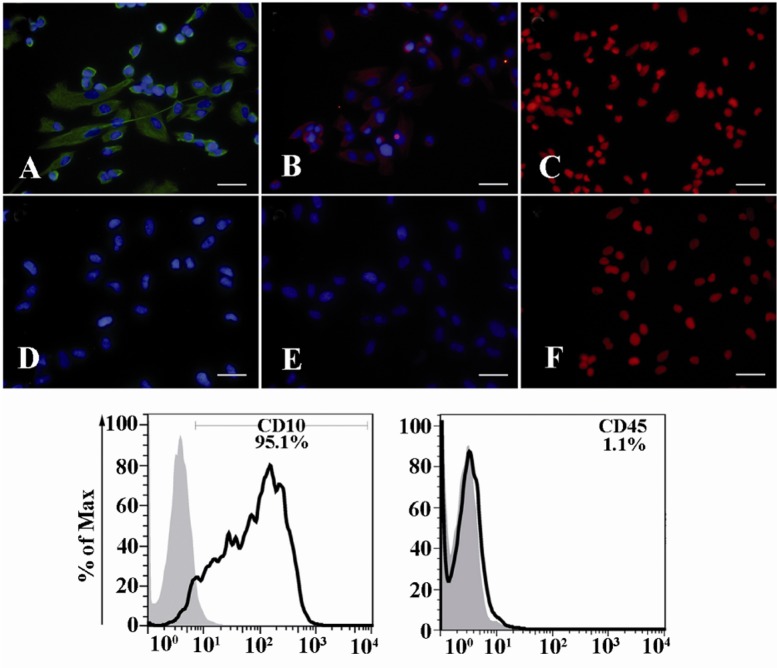
Whole endometrial cells (WECs) and endometrial stromal cells (ESCs) were separated by enzymatic digestion according to the established protocol. In brief, endometrial tissues were minced into small pieces and digested at 37°C for 1.5 hr in collagenase D 0.2% and DNAse 0.03%. Viability of single cell suspension was determined by trypan blue exclusion. Digested single cell suspension was used as WECs. For isolation of ESCs, cells were cultivated in 24-well culture plate at 37°C, 5% CO2 in DMEM-F12 supplemented with 10% fetal calf serum (FCS) and additives. Non-adherent cells were removed by several washes and adherent stromal cells were allowed to propagate. The ESCs were characterized as vimentin+, nestin+, cytokeratin-, CD10+ and CD45- cells (Figure 1) (23).
RNA extraction, cDNA synthesis and RT-PCR were performed according to the protocols published elsewhere (24, 25). Oligonucleotide primers used in this study were as follows: β-actin: F;5'-GTG-GGG-CGC-CCC-AGG-CAC-CA-3', R; 3'- CTC- CTT- AAT-GTC-ACG- CAC- GAT-TTC-5', TLR2: F; 5'-GTA-CCT-GTG-GGG-CTC-ATT-GT-3', R; 3'-CTG-CCC-TTG-CAG-ATA-CCA-TT-5', TLR4: F; 5'-GAG-CTT-TAA-TCC-CCT-GAG-GCA-3', R; 3'-GAT-TGG-ATA-AGA-TTG-TGA-GCC-5' and MyD88:F;5'-GAC-CCA-GCA-TTG-AGG-A GG-ATT-G-3', R;3'-GCT-TCT-GAT-GGG-CAC-CTG-GAG-AG-5'. After initial heating at 94°C for 3 min, PCR was performed for 30 (for β-actin) or 35 cycles (for TLR2, TLR4 and MyD 88) with annealing temperatures of 62°C, 54.8°C, 60°C and 60°C for TLR2, TLR4, MyD88 and β-actin, respectively. For all PCR programs, denaturation and extension temperatures of 94°C and 72°C, respectively were applied for 30 s. Final extension for 7 min was performed for all amplifications. PCR systems devoid of template cDNA and no amplification controls (no reverse transcriptase added) were included as negative controls. cDNA prepared from PBMCs served as the positive control.
For TLR2 staining, 5×10⁵ living cells were incubated with 5 μg/ml of Alexa fluor 488-conjugated anti-TLR2 antibody (BD) diluted in PBS-BSA for 30 min. All incubations were performed on ice. For TLR4 staining, cells were first incubated with biotin-conjugated anti-TLR4 (BD) for 60 min. After three washes, cells were stained with PE-Cy5.5-conjugated streptavidin (Invitrogen, USA) for 30 min. In negative reagent control tubes, isotype matched irrelevant antibodies (BD) were used instead of primary antibodies. Monocyte gate of PBMC served as the positive control. After three washing steps with PBS-BSA, cells were analyzed by Partec flowcytometer (Partec, Germany).
Western blotting of TLR2 and TLR4 in ESCs was performed according to the protocol published recently with some modifications (25). Blots were incubated for 2 hr with agitation in goat anti-TLR4 antibody (R&D, USA) at 1 μg/ml or 1:100 dilution of goat anti-TLR2 (Santa Cruz, USA) followed by 45 min incubation in HRP-conjugated rabbit anti-goat Ig (Sinabiotech, Iran). Bands were detected using an ECL Western blotting substrate kit and digital images were obtained with a Gel Logic 2200 imaging system (Kodak, Tokyo, Japan). Membranes were later stripped using Western Re-Probe (Calbiochem, SanDiego, CA, USA), re-incubated for 2 hr with agitation in polyclonal rabbit anti-beta actin antibody (Sigma) as loading control followed by 45 min incubation in HRP-conjugated sheep anti-rabbit Ig (Sinabiotech, Iran) and processed as above. In negative control blots, primary antibodies were substituted by equivalent dilutions of species-matched normal sera. Band densities of PCR and Western blot experiments were quantified as described elsewhere (25).
Immunofluorescent staining of TLR2 and TLR4 was performed as described elsewhere (26). Briefly, cells were cyto-spinned and fixed with either ice cold acetone (for TLR2) or natural buffered formalin (for TLR4). Primary antibodies (goat anti-TLR2, 1:100 for overnight or goat anti-TLR4, 10 µg/ml for 3 hr) were added followed by 1:50 dilution of FITC-labeled rabbit anti-goat Ig for 60 min. Cells were then washed and counterstained with 4'-6-diamidino-2-phenylindole (DAPI) for nucleus staining. Fluorescent signal was visualized and photographed by a BX51 Olympus microscope equipped with a DP71 CCD camera.
Based on the results of gene and protein expression analysis, WECs were stimulated separately with both LPS and LTA, while ESCs were treated only with LPS. To study the effect of TLR engagement on cytokine production, cells (1×10⁵/well in 96-well plate) were treated with different concentrations of LPS (0.1 ng/ml-10000 ng/ml) or LTA (0.1 ng-1000 ng/ml) for 24 hr and after that cell culture supernatants were collected, centrifuged and stored at −70°C for future analysis. Indeed, to evaluate the effect of LPS and LTA stimulation on TLR4, TLR2 and MyD88 gene expression, WECs were stimulated with LPS (100 ng/ml) or LTA (10000 ng/ml) for 8 hr followed by cell harvesting and gene expression analysis as described above. Control cells received PBS only. ESCs, however, were treated with LPS for extended time periods of 2 hr, 4 hr, 8 hr, 12 hr and 24 hr.
Concentrations of TNF-α, IL-6 and IL-8 in supernatant of cultured cells were measured using ELISA according to the protocol provided by the manufacturer. The sensitivity of the assays for TNF-α, IL-6 and IL-8 were 7.5, 3.1 and 3.1 pg/ml, respectively.
All data are presented as median±range. Pairwise comparisons of gene expression and cytokine production after TLR stimulation was performed using non-parametric Wilcoxon rank test and statistically significant differences were accepted at p < 0.05.
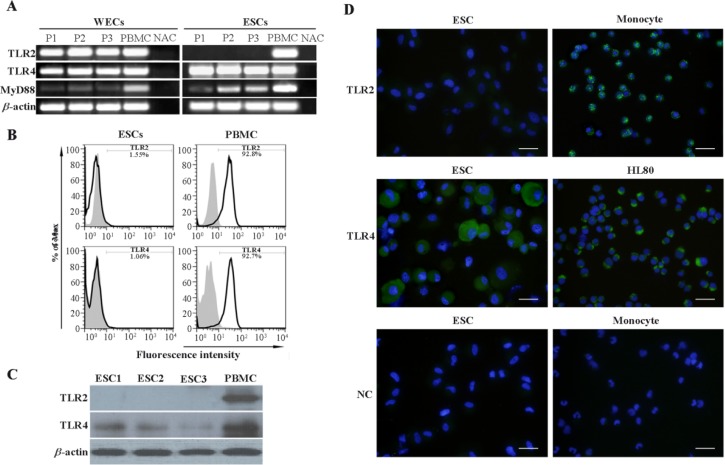
TLR4, TLR2 and MyD88 transcripts were detected in samples derived from human endometrium. Likewise, it was demonstrated that ESCs expressed TLR4 and MyD88 at mRNA level but failed to express TLR2 transcript (Figure 2A). To confirm the results of gene expression analysis of TLR4 and TLR2, three readout systems, flow cytometry, Western blotting and immunofluorescent staining were used. The results of flow cytometric analysis showed that ESCs expressed neither TLR4 nor TLR2 at their surface (Figure 2B). Western blotting clearly demonstrated TLR4, but not TLR2 protein expression by ESCs (Figure 2C). Consistent with flow cytometry results, no surface expression of TLR4 was observed; instead TLR4 was localized in perinuclear compartment. In line with Western blot results, ESCs failed to express TLR2 protein in immunofluorescent staining (Figure 2D).
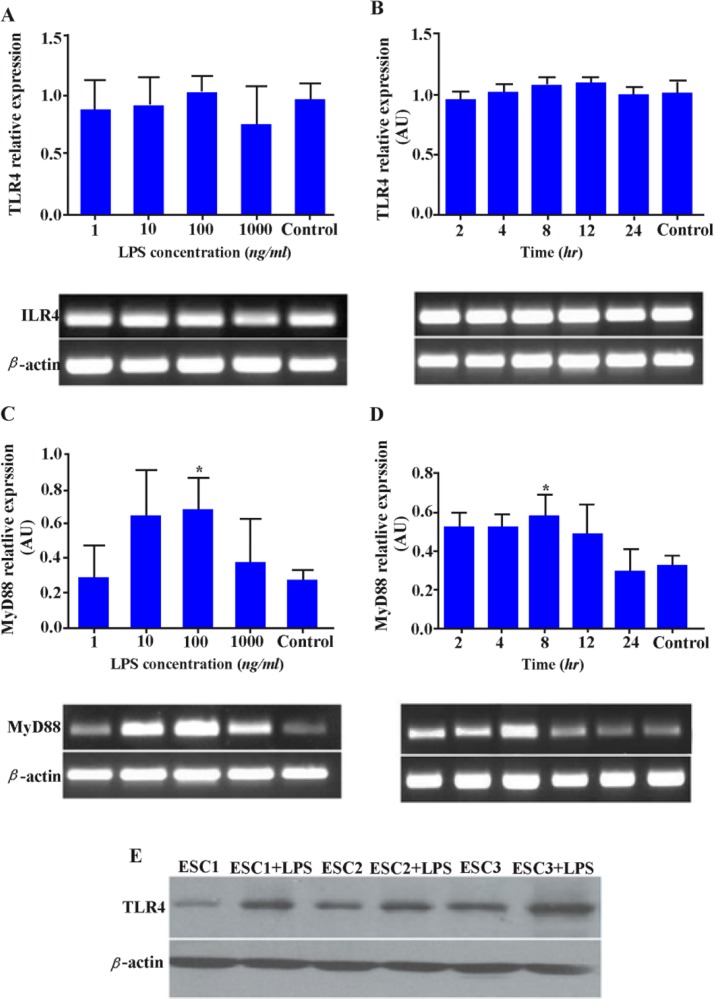
The results showed that different concentrations of LPS at different time intervals had only marginal effect on TLR4 gene up-regulation (Figures 3A, B). At the protein level, however, expression of TLR4 was significantly increased by LPS activation (p < 0.05) (Figure 3E). Treatment of this cell type with 100 ng/ml of LPS significantly increased MyD88 expression up to 8 hr after LPS stimulation (p < 0.05) (Figures 3C, D). More importantly, effect of LPS stimulation on MyD88 expression was gradually subsided thereafter reaching to the control level after 24 hr.
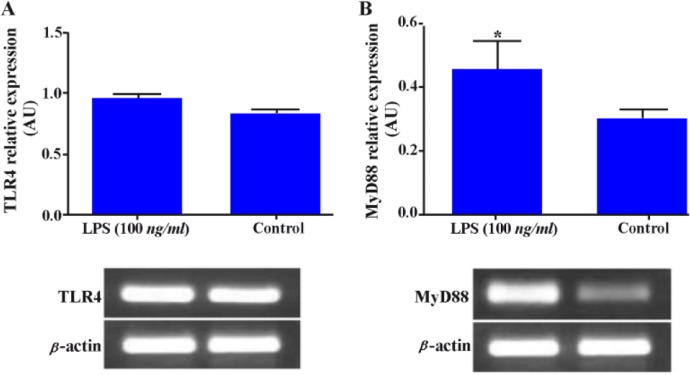
Akin to ESCs, expression of TLR4 and MyD88 in WECs was investigated after LPS stimulation. Whole endometrial cells were treated with 100 ng/ml LPS for 8 hr and the expression of TLR4 and MyD88 transcripts were then investigated. In parallel with the results from ESCs, it was demonstrated that LPS treatment marginally increased TLR4 gene expression but significantly intensified the expression of MyD88 transcript (p < 0.05) (Figures 4A, B).
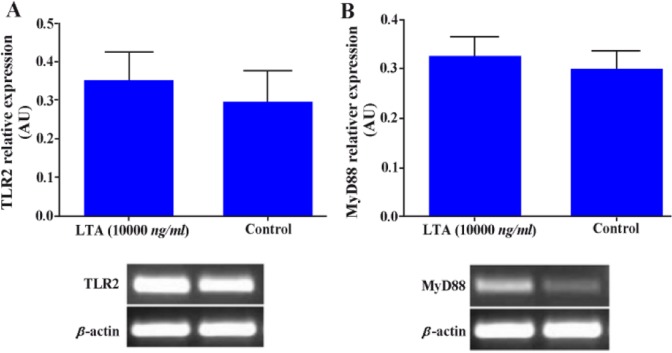
Lower female reproductive tract is more frequently populated with Gram positive bacteria. With this end in view, WECs were also stimulated with LTA to see the effect of such treatment on TLR2 and MyD88 expression. Although such treatment increased the levels of TLR2 and MyD88 gene expression, but this did not reach statistically significant level (Figures 5A, B).
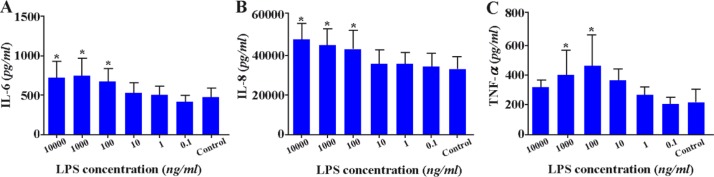
Endometrial stromal cell cultures were established and analyzed for the potential effect of LPS at different concentrations on pro-inflammatory cytokine production by this cell population. The results showed that ESCs produce significantly higher amounts of IL-6, IL-8 and TNF-α in response to LPS stimulation in a dose-dependent manner (p < 0.05) (Figures 6A–C).
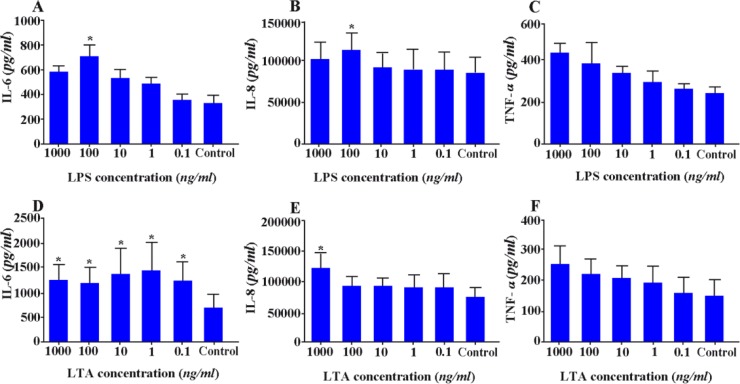
Stimulation with 100 ng/ml LPS and all concentration range of LTA significantly increased production of IL-6 in WECs (p < 0.05) (Figures 7A, D). Similar results for IL-8 production were also achieved when WECs were stimulated with the same concentration of LPS or 1000 ng/ml LTA (p < 0.05) (Figures 7B, E). Although LPS and LTA stimulation increased TNF-α production by WECs, the results were not statistically significant (Figures 7C, F).
Ascending bacterial infection of the upper FRT is considered to be a major cause of pelvic inflammatory disease (PID) in women (27). Bacterial infection of FRT during pregnancy is also an important cause of abortion and preterm labor (6, 7, 22, 28). Therefore, the present study revealed some new aspects of functional consequences of TLR4 and TLR2 activation by Gram negative and Gram positive bacterial LPS and LTA in human endometrium and endometrial stromal cells. It was demonstrated that ESCs expressed TLR4 and MyD88 transcripts, while WECs also expressed TLR2 mRNA. This finding implies that cells other than ESCs in endometrium express TLR2. Endometrium contains such immune cells as macrophage and dendritic cells (8, 9, 29) that are known to express TLR2 (30, 31).
No specific report was found on TLR2 protein expression by human endometrial stromal cells. Hirata et al. (15) reported TLR2 message expression by ESCs. Fazeli et al. (17) characterized immunolocalization of TLR1-6 in human endometrium by immunohistochemistry. However, they did not specify TLR2 protein expression by this cell type. Interestingly, TLR2 protein was shown not to be expressed by ESCs of dogs at all stages of estrous cycle (32).
In line with our findings, previous studies showed TLR2 and TLR4 genes (3, 16, 33) and proteins (3) expression in primary endometrial tissues. It has been reported that endometrial glands and epithelial cells express TLR4 protein, (17) but the levels of expression were higher in endometrial stromal cells than in endometrial epithelial cells (15), a finding that is in line with what was found in this study.
Positively-identified TLR4 expression in human ESCs by Western blotting was not accompanied by cell surface expression. We found no report on immunolocalization of TLR4 in ESCs. While TLR4 is usually expressed on the cell surface of immune cells, there are a number of reports on intracellular expression of these receptors in various cell types such as intestinal epithelial cells (34). Interestingly, LPS-induced TLR4 signaling in intestinal epithelial cells occurs at the site of the Golgi apparatus and LPS-mediated cellular activation requires ligand internalization that occurs via a lipid raft-dependent formation of clathrin-coated pits and intracellular transport to the Golgi compartment (34). Taken together, these findings on spatial patterns of TLR2 and 4 expressions may imply fine-tuning of innate immunity in the endometrium.
WECs expressed MyD88, a common adaptor protein for TLRs that mediates intracellular signal transduction. Regardless of lacking TLR2 expression, ESCs also exhibited this molecule that might be due to the unique attribute of MyD88 that is not specific to TLR2.
Next, the putative function of bacterial LPS and LTA was tested following engagement with their cognate receptor in WECs and ESCs. The results of the present study showed that LPS increased production of IL-6 and IL-8 in ESCs and WECs and also TNF-α in ESCs. WECs also exhibited increased production of IL-6 and IL-8 in response to LTA.
Endometrium is able to secrete a broad array of cytokines and chemokines including IL-8, MCP-1, macrophage inflammatory protein-1b (MIP-1b), IL-6, TNF-α, granulocyte colony-stimulating factor (G-CSF), granulocyte- macrophage colony-stimulating factor (GM-CSF), and migration inhibitory factor (MIF). These mediators, in turn, recruit and stimulate the immune cells. In response to these cytokine stimulation, immune cells up-regulate the secretion of these and other pro-inflammatory cytokines and induce differentiation of leukocytes to a more functionally active cell, such as phagocytosis for macrophages or antigen presentation for DCs (1). More importantly, such cytokines as IL-6, IL-8 and TNF-α are reported to be constitutively produced and secreted by human endometrial epithelial cells allowing for immediate responsiveness to pathogenic microbes (35). Despite these necessary immunological functions, pro-inflammatory cytokines and chemokines are among the important insults for the developing embryo. High levels of IL-6, IL-8 and MCP-1 in cervicovaginal fluid and amniotic fluid from patients with preterm labor and premature rupture of membranes have been correlated well with amniotic microbial infection (36–38). Increased levels of TNF-α have been associated with pregnancy complications such as menorrhagia, endometriosis, chorioamnionitis, miscarriage, preterm labor, preeclampsia and intrauterine growth retardation (IUGR) (39). Taken together, stimulatory activity of TLR2 and 4 ligands on proinflammatory cytokine production by WECs in general and ESCs in particular may be considered as one mechanistic explanation of bacterial infection-associated pregnancy complications.
To investigate regulatory effect of ligand stimulation on TLR expression, endometrial cells were treated with LPS and LTA and the expression of TLR4, TLR2 and MyD88 was then quantified. It was demonstrated that LPS treatment significantly increased MyD88 gene expression in WECs and ESCs as early as 8 hr. Impotently, LPS treatment of ESCs significantly increased TLR4 expression at the protein level and not at the gene level. Such discrepancy in the levels of TLR4 gene and protein expression in ESCs following LPS activation could be due to instability of some sorts of mRNA. Importantly, because MyD88 resides in the common signaling pathway of many TLRs, it is conceivable to imagine that increased expression of this adaptor protein following LPS stimulation not only increases the responsiveness of TLR4, but also positively affects the response of other TLRs with the same signaling pathway to their cognate ligands. Fazeli et al. reported that TLR5 stimulation in endometrial cell lines acted to up-regulate TLR5 expression (40). Whether alteration of TLR and MyD88 expression in endometrial cells following activation by TLR ligands is beneficial or harmful for developing embryo is not clear at present and warrants further investigations.
In conclusion, our results provided further evidence of initiation of inflammatory processes following endometrial TLR activation by bacterial components which could potentially be harmful to the developing fetus. TLR-mediated immune responses at the fetomaternal interface may act as a double-edged sword and depending on the condition could result in beneficial or harmful consequences.
The present research study is a part of M.Sc. thesis of Mrs. Nesa Rashidi. The authors would like to thank the women participated in this study. This work was supported by grants from Avicenna Research Institute and Tehran University of Medical Sciences.
