
Chlamydia trachomatis is the etiology of most of the sexually transmitted diseases (STDs) worldwide (1–4). C. trachomatis initially infects the cervix and urethra, causing vaginal discharge and dysuria. When not diagnosed and treated, the infection can reach the fallopian tubes, causing pelvic inflammatory disease, such as cervicitis, endometritis, and salpingitis (5). Infections of C. trachomatis are 80–90% asymptomatic (1, 6). The highest prevalence of C. trachomatis infection has been reported among young female population, a reservoir for further transmission (7).
In pregnant women, colonization of C. trachomatis in the genital tract during early gestation has been associated with spontaneous preterm birth (PTB), preterm premature rupture of the membranes, prematurity, spontaneous abortion, perinatal morbidity and mortality (1–4). In addition, the pregnancy may increase the risk of C. trachomatis colonization due to changes in the host immune responses (8).
The suggested mechanisms by which C. trachomatis can trigger PTB or abortion are invasion of chlamydia into the choriodecidual space and subsequent immune responses (6) and placental inflammation, especially chorioamnionitis (9). Chorioamnionitis can influence protease release, which leads to the premature rupture of the membranes, activation of arachidonic acid cascade, uterine contractions and preterm delivery or abortion (1).
In a survey of studies published during 1998–2005, the prevalence of C. trachomatis infection among different countries in Europe was presented. The result was complicated due to different diagnostic methods and samples used. The prevalence of C. trachomatis infection was variable between 4.1% and 25% among young women (10). Prevalence of this infection was 14.99% in women in Tehran, as 20.76% in symptomatic group, compared with 9.23% in asymptomatic group using urine samples and PCR method (5). Recently, C. trachomatis was detected by PCR in 48(32%) infertile women and 13(8.7%) among the healthy women using endocervical samples in Iran (11).
A meta-analysis showed that chlamydia infection during pregnancy increased the risk of preterm birth, low birth weight and perinatal mortality. But no increased risk was associated with premature rupture of membranes and abortion (8). Some studies concluded that C. trachomatis infection in pregnant women was an important causative agent of spontaneous abortion. For example, women after spontaneous abortion were enrolled in a study in Poland. C. trachomatis infection diagnosis was performed by PCR among 76 women with 1 miscarriage and 44 women with ≥2 miscarriages. In women with 1 miscarriage, C. trachomatis was detected in 11.8% of cases (p=0.029), in women with ≥2 miscarriages in 9.1% (p=0.198) and in the comparative group in 2.2% (1). A case-control study was done using direct immunofluorescence on PAP smears in Hormozgan, Iran during 2004–2005. The C. trachomatis was positive in 56 out of 220(25.45%) women with abortion, comparing to 13 out of 200(5.20%) women in control group; the difference was statistically significant (12). Out of 121 women with spontaneous abortion, 16 (13.2%) were infected with C. trachomatis in Iran (13). Also, prevalence of C. trachomatis was 13.25% in endocervix of women with spontaneous abortion in Tehran, Iran (14).
The aims of this study were to evaluate the frequency of C. trachomatis infection among two groups of pregnant women (normal pregnancy and spontaneous abortion) and its association with spontaneous abortion.
In this case-control study conducted from August 2012 until January 2013, pregnant women referring to the midwifery practices in obstetrics, gynecology wards and prenatal clinic in Be’sat Hospital, Sanandaj, Iran were included.
According to the reported prevalence of C. trachomatis infection in Iranian women (5), sample size was calculated with 95% confidence and 80% test power and at least 106 patients in each group were included.
Totally, 109 women with spontaneous abortion were selected with gestational age between 10–20 weeks (cases), and 109 women with normal pregnancy with gestational age between 20–30 weeks (controls).
Demographic data such as age, place of residence, education, occupation and obstetrical and medical data such as number of childbirth, gestational age, history of miscarriage, premature delivery, genital infection, urinary infection, smoking before and during pregnancy, the use of contraceptives before pregnancy and urinary tract infection (UTI) in their husbands were gathered.
In addition to asking the date for the first day of last menstrual cycle, ultrasound scans were done for estimation of gestation age. To eliminate the role of chromosomal abnormalities and probability of genetically miscarriage, fetal health assessment tests were done between 11–13 weeks of gestation, including nuchal translucency (NT), double tests such as pregnancy associated plasma protein A (PAPPA) and free βHCG. In addition, at 13–16 weeks of gestation, the confirmatory triple tests (alpha fetoprotein, βHCG and unconjugated estradiol) were performed for elimination of probable neural tube defects and chromosomal anomalies.
Inclusion criteria were pregnancy at the age above the mentioned gestational age, having sexual activity, and negative results of double and triple marker in screening test. Exclusion criteria were using of antibiotics two weeks before sampling, immunodeficiency, chronic diseases (diabetes, endocrine disorders, and hypertension), vaginal infections and recurrent miscarriage due to anatomic complications.
Women were selected according to inclusion and exclusion criteria in two groups. The groups were matched by age, gestational age, and numbers of pregnancies. Endocervical swab specimens were taken from all women before any pregnancy outcomes in sterile tubes containing 5 ml of PBS (phosphate buffered saline). Specimens were transported to the laboratory in a cold box and stored at −20°C until DNA extraction.
Tubes containing cervical swab specimens were centrifuged at 6000 rpm for 30 min. Then, the supernatant was discarded and the sediment poured into the 1.5 ml microtube. The sediments were used for DNA extraction using DNA extraction kit (High pure PCR Template Preparation, Roche, Germany). To prevent DNA degradation, DNA samples were aliquoted into separate 0.2 ml microtubes and were maintained at −20°C until time of conducting PCR test.
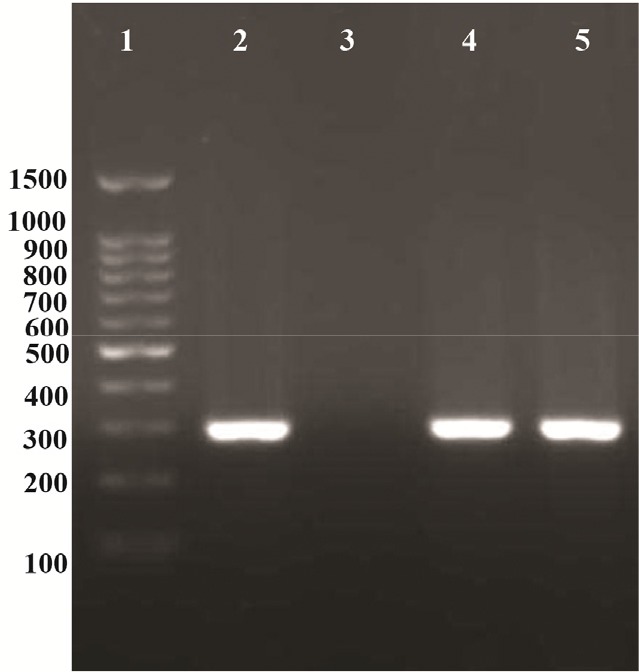
Two specific primers were designed for 16 s ribosomal gene of Chlamydia trachomatis genome (GeneBank). The primer sequences were as: Forward: 5′-TGG CGG CGT GGA TGA GGC AT-3′ and Reverse: 5′-CTC AGT CCC AGT GTT GGC GG-3′ and the length of PCR target was 300 bp. PCR reaction was done in a total volume of 25 μl PCR master mix (SinaClon, Iran).
Initial denaturation at 94°C for 5 min, followed by 30 cycles of denaturation at 94°C for 30 s, annealing at 64°C for 30 s, extension at 72°C for 25 s; and final extension at 72°C for 5 min. PCR products were separated by electrophoresis in 1.5% gel agarose, stained with ethidum bromide and visualized by UV light. Chlamydia trachomatis, L2 type strain 434/Bu (ATCC VR-902B) was used as the PCR positive control.
The data were entered into SPSS statistic software version 20, and analyzed. Independent T-test and Chi-square were used for comparison of quantitative and qualitative variables, respectively, and p<0.05 was considered significant.
Total prevalence of C. trachomatis infection in two women groups (normal pregnancy and spontaneous abortion) was 38 out of 218 (17.43%). The prevalence of C. trachomatis infection was 25 out of 109 (22.9%) in the case group (spontaneous abortion), and 13 out of 109 (11.9%) in the control group. The difference of prevalence was statistically significant among two groups (OR= 2.198, CI 95%: 1.058–4.56, p=0.031).
Age of women ranged between 19 to 43 years (29.6±5.9) in case group and 19 to 42 years (27.8±4.87) in control group. The median age of women in two groups was 25. The frequency of C. trachomatis infection among <25 year old and among ≥25 year old women in case and control groups are shown in table 1.
Table 1. Demographic data and prevalence of Chlamydia trachomatis infection in women with spontaneous abortion (cases) and women with normal delivery (controls)
| Variables | Cases (spontaneous abortion) n=109 | Controls (normal delivery) n=109 | P-value |
|---|---|---|---|
| C. trachomatis in women<25 years old | 5 (19%) | 4 (14%) | 0.02 |
| C. trachomatis in women ≥25 years old | 20 (24%) | 9 (10%) | |
| Education | |||
| Illiterate | 5 (4%) | 3 (2%) | 0.08 |
| Primary education | 49 (45%) | 33 (30%) | |
| High school education | 36 (33%) | 44 (40%) | |
| Academic education | 19 (18%) | 29 (28%) | |
| Occupation | |||
| Housewife | 97 (89%) | 97 (89%) | 1.00 |
| Employee | 12 (11%) | 12 (11%) | |
| History of smoking | 0 (0%) | 3 (2%) | 0.43 |
| History of preterm delivery | 4 (3%) | 0 (0%) | 0.044 |
| History of preterm premature rupture of the membranes | 5 (4%) | 1 (1%) | 0.084 |
| History of vaginal infection | 11 (10.1%) | 5 (4.6%) | 0.115 |
| History of urinary infection | 9 (8.3%) | 8 (7.35%) | 0.801 |
| C. trachomatis infection | 25 (22.9%) | 13 (11.9%) | 0.031 |
The number of cases with the history of UTI in husbands of women in the case and control groups was two and zero, respectively. The number of cases with the history of alcohol consuming was zero in two groups.
All women included in the study resided in urban areas. The range of gestational age in case and control groups was 10–20 weeks (mean=15±1) and 20–30 weeks (mean=28±1), respectively. None of women have reported a history of miscarriage in their previous pregnancies. Contraceptive methods before pregnancy was as following: in case group, withdrawal 55%, condom 7%, oral contraceptive pills (OCP) 27%, withdrawal+OCP 6%, no measure 5% and in control group withdrawal 64%, condom 6%, OCP 13%, withdrawal+OCP 7% and no measure 10%. Numbers of pregnancies in case and control group were similar. Average number of children was two in the families of both groups. Summary of the results in both groups are presented in table 1.
A representative stained gel electrophoresis following PCR assay is shown in figure 1 .
The PCR assay has been used to detect C. trachomatis infections in women, because PCR has proved to be more sensitive, specific, rapid and inexpensive than the conventional microbiology methods for the investigation of infectious agents lying in the genital tract (15–16). In addition, detection of fastidious bacteria is very difficult in medical laboratory. Therefore, molecular methods such as PCR provide more positive results than conventional methods.
In our study, prevalence of C. trachomatis in endocervical specimens from all women was 17.43%. The prevalence of C. trachomatis infection has been 4.7% among pregnant women at an urban medical center in USA (17). The prevalence of C. trachomatis infection was variable between 4.1% and 25% among young women from different countries of Europe (10). The reason for differences in the prevalence rate of our study and studies in other countries is unknown. But, this could be attributed to socioeconomic and demographic factors.
In studies conducted in Iran, endocervical specimens were used for detection of C. trachomatis. Overall frequency of C. trachomatis infection among women with cervicitis was 17% (21/123) tested by PCR-EIA method in Tehran, Iran (18). Cervical specimens were collected from 650 women with symptomatic genital infection. The prevalence of infection in different age groups of women was 18.1% by screening of C. trachomatis plasmid using PCR in Ahvaz, south west Iran (19). Endocervical swabs were collected from 80 women in Isfahan, Iran. The rate of C. trachomatis infection by PCR was 27.2% and 18.9% in asymptomatic and symptomatic women, respectively (20). Endocervical samples were taken from women suffering from cervicitis in Tehran. Twenty two (15.5%) of 142 samples were Chlamydia positive according to PCR (21). Our result of 17.43% prevalence rate is compatible with those studies according to relatively similar sample sizes and diagnostic method.
In some studies, urine specimens were used to detect C. trachomatis according to PCR method in Iran. Prevalence of C. trachomatis was 14/9% in women in Tehran, Iran (22). A study was performed on 991 married women in Tehran. C. trachomatis was positive in 12.8% of women (23). A study was performed in Tehran during 2003. 12.3% of women with urethritis had C. trachomatis (24). C. trachomatis was positive in 15.81% of pregnant women in Sabzevar, north east of Iran (7). Two hundred sixty urine samples of women in two groups (symptomatic and asymptomatic) were collected in Tehran. Overall prevalence of infection was 14.99% with 20.76% in symptomatic group and 9.23% in asymptomatic group (5). In our study, by using cervical swabs prevalence of 17.43% is somewhat higher than those studies conducted in Iran. It seems that the use of noninvasive urine specimens would be an alternative method of sampling.
In a study, the prevalence of C. trachomatis was the highest (25%) among women aged 25 to 29 and 35 to 39 years (21). In other studies, the range of C. trachomatis frequency among various age groups was 12–25%. The 31–40 year old group comprised the majority (49%) of C. trachomatis positive samples, followed by 20–30 year old group (33%) (18). In our study, median age was 25 years old in two study groups. The number of cases with C. trachomatis infection was 5 (19%) among <25 year old and 20 (24%) among ≥25 year old women in case group, and 4 (14%) among <25 year old and 9 (10%) among ≥25 year old women in control group (Table 1 ). Our result is compatible with them and it is clear that reproductive ages are ≥25 years old. The age ≥25 is the most popular for pregnancy. C. trachomatis can transfer by sexual contact. Therefore, these bacteria are prevalent in this age group and have more chance to cause infection and abortion.
In our study, the prevalence of C. trachomatis infection in case and control groups was 22.9% and 11.9%, respectively. Association between chlamydia infection and spontaneous abortion was statistically significant (p<0.05). Association between chlamydia infection and spontaneous abortion has been reported in other studies (25–26). In a study, chlamydial cervical infection was in 11.8% of women with one miscarriage, 9.1% of patients more than two miscarriages and in 2.2% of the comparative normal group (1). A case-control study was done using direct immunofluorescence on PAP smears in Hormozgan, Iran. The C. trachomatis was positive in 56 out of 220 (25.45%) women with abortion, comparing to 13 out of 200 (5.20%) women in control group; the difference was significant (12). In endocervical samples, out of 121 women with spontaneous abortion 16 (13.2%) were infected with C. trachomatis using nested PCR in Tehran (13). Also, using nested PCR, prevalence of C. trachomatis was 13.25% in endocervix of women with spontaneous abortion in Tehran (14). C. trachomatis was studied in 125 women with habitual abortion by direct and indirect immunofluorescence and culture method, compared with 250 normal persons. C. trachomatis was detected in 9 (7.2%) of cases and 2 (0.8%) of control groups (p=0.0002) (27). In women with spontaneous abortions, the incidence of C. trachomatis was 21.0% compared with 8.9% for women with term pregnancies using immunofluorescence. When both partners of the couples were considered, the incidence rose to 68.8% (28).
In some studies, there was no association between C. trachomatis infection and pregnancy outcomes. The prevalence of C. trachomatis infection was 4.7% but not associated with preterm birth (29). There was no substantial difference in the level of chlamydial infection between women with and without spontaneous abortion using ligase chain reaction DNA amplification assay (30). In an analysis, chlamydia infection was not associated with an increased risk of preterm birth by ligase chain reaction. Also, treatment of chlamydia was not associated with a decreased frequency of preterm birth (31). C. trachomatis infection was found in 13.6% of mothers with full-term deliveries and 6.4% with abortion (32).
It seems that the differences in the results of association between C. trachomatis and abortion depend on the type of sampling, diagnostic methods used, sexual behavior, hygiene, using of contraception during intercourse, coinfection with viruses or other microorganisms, treatment practices and population.
“While other sexually transmitted infections (STIs) such as syphilis and gonorrhea are declining due to detection and treatment in the world, place of them has been taken by other infectious agents such as C. trachomatis” (33). Detection and treatment of C. trachomatis infections at early weeks of gestation may reduce the risk of preterm birth and perinatal morbidity and mortality (4, 6). Some studies suggested evaluating the efficacy of C. trachomatis screening by sensitive molecular methods, and treatment in pregnant women to prevent adverse pregnancy outcomes (8, 34–35). Screening and treatment of STIs such as C. trachomatis is important in sexually active women (5). In our study, the number of cases with C. trachomatis infection and history of vaginal infections in case group was more than the control group (Table 1).
It has been found that the main risk factors for C. trachomatis infection are age, irregular sexual activities and having multiple sexual partners, failure to use or irregular use of barrier during intercourse, and insufficient knowledge about sexual health (10). Our findings improve the insight regarding the detection of C. trachomatis in high risk population and screening in community.
Our study showed that C. trachomatis infection was associated with spontaneous abortion. Thus, screening and treatment of pregnant women may prevent this adverse pregnancy outcome.
We appreciate obstetrics and gynecology wards and prenatal clinic, Be’sat Hospital, Sanandaj, Iran, for providing endocervical swab specimens and the data. This study was part of the thesis of a medical microbiology student. We would like to thank Kurdistan University of Medical Sciences for financial support.
