
Since the first successful pregnancy after frozen embryo transfer (FET) in 1983, FET has been designated as a principal component of assisted reproductive technology (ART) (1–5). There are two major problems associated with in vitro fertilization (IVF), including ovarian hyper-stimulation syndrome (OHSS) and multiple pregnancy (6). Also, diminished pregnancy rate in IVF and/or embryo-transfer (ET) cycles is the consequence of uterine refractoriness due to higher estrogen levels (7, 8).
Therefore, cryopreservation of embryos is a required strategy to avoid iatrogenic problems (6, 9), which is one of the methods currently used as a safe approach to improve pregnancy rates (6, 10). The pregnancy outcome of FET is identified to be dependent on some clinical and embryological features such as the age of woman at the time of cryopreservation (2, 11), cause of infertility (11), the technique of oocyte fertilization (12), the developmental phase of embryos at freezing (13), the embryo quality before freezing (11, 14), the level of estradiol and endometrial thickness at the time of transfer (11), the degree of embryo damage after thawing (15) and the resumption of post-thaw blastomere divisions (2, 16).
Implantation is one of the key stages for the success of ART (17, 18). Its success depends on three main factors including embryo quality, endometrial receptivity (ER), and synchrony between embryo and endometrium (19). Cryo-thaw cycles are done with various regimens of exogenous estrogen and progesterone used for endometrial preparation.
Different methods have been tried to prepare the endometrium in FET cycles, but the best regimen is not known yet (20). Endometrial receptivity can be affected by exogenously administered estrogen (E2) and progesterone (P) in various regimens and in either way, oral or parenteral (20). Estradiol priming has been shown to cause proliferation of endometrial cells in the basal layer that induce p receptors (17, 20). Adequate E2 priming of the endometrium results in endometrial proliferation and the induction of appropriate P receptors to induce endometrial receptivity (20).
The oral route of estrogen is simple and well-tolerated (20). After oral administration, E2 is extensively metabolized by the intestinal mucosa and then the liver. Ingested E2 is easily converted to estrone (E1) and estrone sulfate (E1S), with steady-state E1 levels around 3–6 folds higher than those of E2 (20–22). Significantly less of transdermally absorbed E2 is converted to E1, with E1/E2 ratio of 1 to 2 (20).
The first-pass hepatic metabolism can be avoided by using parenteral routes of transdermal, intramuscular (IM), or vaginal type (20, 21). The transdermal route is easy and rather useful with low side effects and can be exploited by patients themselves (23). Transdermal routes were used extensively in hormone replacement therapy in menopausal patients (24). In addition, the transdermal route yields the most steady-state levels and has been proposed to be preferred over oral routes for induction of endometrial receptivity (21).
The aim of this prospective randomized clinical trial was to compare two methods of endometrial preparation for FET, oral estradiol and 17ß-estradiol transdermal patch.
This prospective randomized clinical trial was approved by the ethics committee of Yazd Research and Clinical Center for Infertility affiliated to Shahid Sadoughi University of Medical Sciences. The registration ID number, IRCT2012112610328N2, was recorded on Nov 14, 2012.
A total number of 90 patients who underwent frozen -thawed embryo transfer cycles were enrolled in this study. They referred to Yazd Research and Clinical Center of Infertility between April 2012 and Jan 2013.
The patients were given sufficient information to provide written informed consent. All the women underwent either conventional IVF or intracytoplasmic sperm injection (ICSI). Also, embryo cryopreservation was done. It is to be noted that, in the embryo freezing and thawing protocols, the catheters used for embryo transfer were the same.
Eligible women were randomly assigned to two groups in a ratio of 1:1 by means of computer-generated random numbers. As for the inclusion criteria, all the women who had frozen embryos from previous IVF cycles and had at least two top-quality embryos appropriate for cryopreservation were included in the experiment. Top-quality embryos were defined as day-2 embryos having four or more equally sized and shaped blastomeres, with <10% fragmentation without multinucleation (25). Age over 20 and under 40 years and FSH less than 12 were the other inclusion criteria.
Exclusion criteria included polycystic ovarian syndrome, endocrine or metabolic disorder, endometriosis, embryos derived from donated gametes, any underlying diseases (kidney, liver or heart diseases), and bad-quality embryos.
All the patients selected for the research were primed for a frozen transfer using two different ways of exogenous steroid therapy. In the study group with transdermal route (21) (n=45), 100 μg of 17-B estradiol transdermal patch (Novartis, Turkey) was applied every other day from the second day of menstruation cycle, and each patch was removed after four days. In the control group with oral route (22) (n=45), at the time of cycle, 6 mg of oral estradiol valerate (Aburaihan, Iran) was started daily. In both groups, clinical monitoring was done by transvaginal ultrasound from the 11th day of the cycle to measure endometrial thickness. If endometrial thickness was less than 7.5 mm, oral estradiol dosage was increased to 8 mg and transdermal patches to 200 μg every other day. If endometrial thickness was 7.5 or more, 100 mg of progesterone in oil (Aburaihan, Iran) was administered IM on a daily basis. ET was done after three days.
Cryopreservation and thawing protocols were used through vitrification by the Cryotop method on days 2 or 3 after retrieval. In this study, embryos were morphologically similar in both groups before cryopreservation.
Cryopreserved early cleavage (EC)-stage embryos were thawed one day before the transfer and cultured overnight. If at least 50% of the blastomeres were intact on the day of thawing and overnight cleavage of at least one blastomere took place, embryo transfer was done.
Both the embryo stage (i.e. number of blastomeres ) and grade (i.e. degree of fragmentation and blastomere regularity ) were recorded for each transferred embryo. The number of transferred embryos depended on the embryo quality and the patient’s age. One to three embryos were transferred by a Labotect catheter (Labotect, Germany).
For luteal support in the control group, the patients received estradiol valerate 6 mg/day and progesterone 100 mg IM per day. In the study group, the patients were given transdermal patches 100 μg every other day as described and progesterone 100 mg IM per day. Serum B-hCG level was checked 14 days after ET. If it was positive, vaginal or abdominal sonography was performed two to three weeks later to identify the number of gestational sacs and presence of any fetal heart beats. Luteal support was continued up to the 10th week of gestation.
The primary outcome measure was endometrial thickness on the day of progesterone administration. The secondary outcome measures were chemical and clinical pregnancy, abortion rate, day of embryo transfer, and cycle cancellation rate. Through transvaginal sonography, endometrial thickness was measured as the distance between the two layers of endometrium. Chemical pregnancy was defined as the presence of serum B-HCG ≥25 IU/L 14 days after embryo transfer. Clinical pregnancy was determined as the presence of a gestational sac with heart beats identified by vaginal or abdominal ultrasound 4–5 weeks after embryo transfer. The implantation rate was determined as the ratio of gestational sacs to the number of embryos transferred. Finally, abortion was regarded as pregnancy loss before twenty weeks of gestation.
The SPSS 19 package program (SPSS Inc, an IBM Company) was used to do all the statistical analyses. The normality of distribution of variables was tested by using the Kolmogorov-Smirnov test. Independent sample t-test was used for quantitative variables which were normally distributed and Mann-Whitney test for data which were not distributed normally. Also, Chi-squared and Fisher exact tests were used for qualitative variables. A two-sided p-value of <0.05 was considered statistically significant. Data is shown as the mean±standard deviation and percentages.
The results were reported in accordance with the CONSORT statement. Of 188 women candidates for FET, 90 patients were enrolled in our study. There were no women lost to follow-up. However, due to an endometrial polyp, one patient was excluded of the study group. In the control group, three patients were excluded due to their thin endometrium. Therefore, totally four women were excluded from the final analysis. No cycle was cancelled due to the failure of the embryos to thaw or cleave successfully. The CONSORT statement flow diagram is presented in figure 1 .
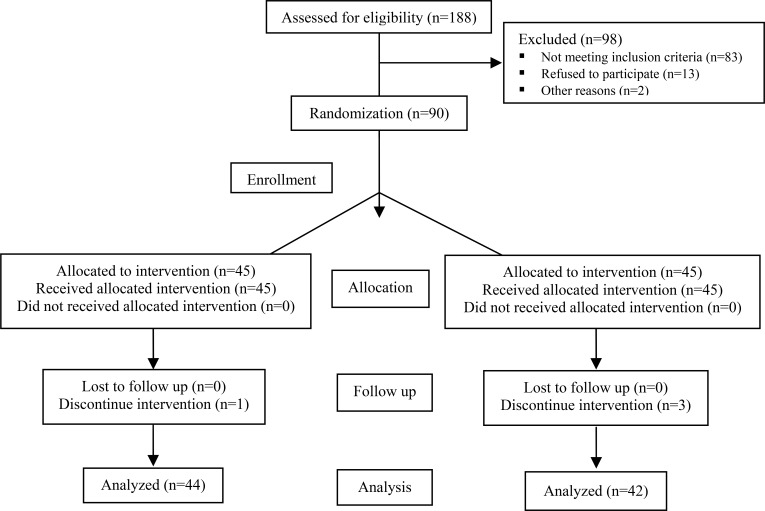
Table 1 presents the demographic characteristics of the patients in terms of age, cause and type of infertility, and basal FSH level. There were no significant differences between the two groups in these cases. The most common cause of infertility was a male factor in both groups.
Table 1. Basic and demographic characteristics of patients in study and control groups
| Parameters | Transdermal patch (n=45) | Oral (n=45) | P-value |
|---|---|---|---|
| Female age (years, Mean±SD) | 28.35±4.31 | 28. 82±4. 31 | 0.61 |
| Basal FSH (IU/L, Mean±SD) | 5.64±1.72 | 5.83±2.01 | 0.64 |
| Duration of infertility (years, Mean±SD) | 4.93±3.47 | 6.38±4.41 | 0.8 |
| 4±4* | 6.2±6.5* | ||
| Infertility kind | |||
| Primary | 37(82.2%) | 34(75.6%) | 0.3 |
| Secondary | 8(17.8%) | 11(24.4%) | |
| Infertility cause | |||
| Male factor | 40(88.9%) | 41(91.1%) | |
| Tubal factor | 4(8.9%) | 4(8.9%) | 0.6 |
| Unexplained | 1(2.2%) | 0(0%) |
Median±IQR
Table 2 compares the cycle characteristics in the study and control groups. According to the comparison, the two groups were not significantly different in the endometrial thickness on the day of progesterone administration (8.48±0.9 vs. 8.75±1.28, respectively, p=0.25). Also, they were not different in the mean number of transferred embryos. In fact, as the data (2.47±0.8 vs. 2.46±0.63 respectively, p=0.94) suggest, the mean number of transferred embryos was similar in the groups (n=3).
Table 2. Cycle characteristics in study and control groups
| Parameter (Unit) | Transdermal patch (n=45) | Oral (n=45) | P-value |
|---|---|---|---|
| Mean±SD | Mean±SD | ||
| Endometrial thickness on day of progesterone injection (mm) | 8.48±0.9 | 8.75±1.28 | 0.250 |
| Peak E2 on day of progesterone injection (pg/ml) | 124.55±48.85 | 232.75±8031 | <0.001 |
| Day of embryo transfer | 15.35±0.85 | 17.06±1.85 | <0.001 |
| 17±2* | 15±1* | ||
| No. of embryos transferred | 2.47±0.84 | 2.46±63 | 0.940 |
| 3±1* | 3±1* | ||
Median±IQR
As expected, the mean E2 level was higher with a significant difference in the oral group than in the transdermal patch group (232.75±80.31 pg/ml vs. 124.55±48.85 pg/ml, respectively, p=0.001). There was a significant difference between the study and control groups regarding the day of embryo transfer (8.48±0.9 vs. 8.75±1.28, respectively, p=0.001). The survival rates of the embryos cryopreserved did not differ significantly. The total cancelation rate was not significantly different between the groups (4.4% vs. 6.7%, p=0.5). The doses of drug consumption were 553.33±94.38 μg and 82.22±17.7 mg in the transdermal route and the oral route groups, respectively.
In addition, the pharmacological effects of oral and transdermal patch administrations were assessed in both groups; the oral route had no side effect in 60% of cases, but there were gastrointestinal symptoms in 40% of cases. In the transdermal group, 35.6% of the cases had no complaint, but topical effects such as mild itching was observed in 20% of the cases, moderate itching in 15.6%, and severe itching in 28.9%. The itching in all the cases was improved by topical ointment. The outcome of FET in the study and control groups is shown in table 3. In this regard, the implantation rate showed a better record in the study group, but it did not achieve a statistical significance (20.45% vs. 11.7%, respectively, p=0.13).
Table 3. Outcome measures of cycles in study and control groups
| Parameter (Unit) | Transdermal patch (n=45) | Oral (n=45) | P-value |
|---|---|---|---|
| Implantation rate | 20.45% | 11.7% | 0.13 |
| Chemical pregnancy rate/cycle | 16 (36.4%) | 13 (31%) | 0.65 |
| Clinical pregnancy rate/cycle | 16 (36.4%) | 12 (28.6%) | 0.29 |
| Clinical abortion rate | 0 (0%) | 2 (4.8%) | 0.23 |
There was no difference between the study and control groups regarding chemical pregnancy (36.4% vs. 31%, respectively, p=0.65) and clinical pregnancy rate per transfer (36.4% vs. 28.6%, respectively, p=0.29). Also, there was no difference between these groups with regard to abortion rate (0% vs. 4.8%, respectively, p=0.23).
Cryopreservation permits the transfer of embryos at a point in time far from ovarian stimulation and offers a variety of choices for the timing of embryo transfer and the way of endometrial priming (25). Implantation of embryos is critical in determining the success of assisted reproductive technology (ART) (17). A crucial factor for implantation in FET is accurate synchronization between endometrial maturation and embryo development (26). This is in spite of transfer of high-quality embryos, the pregnancy rate may remain disappointingly low (7, 27). Receptivity of the endometrium is dependent on the hormonal status of the endometrium at the time of implantation (28).
Our results showed a better rate of implantation in the study group, but it did not achieve statistical significance. In addition, there was no difference between the study and control groups regarding chemical and clinical pregnancy rate. On the other hand, different routes of oestrogen administration had a similar effect on endometrial thickness. Banz et al. (23) evaluated artificial cycles with a transdermal estradiol patch in combination with the vaginal progesterone Crinone 8%. They concluded that, by this method, additional pregnancies can be achieved with minimal burden on the patients. Also, this method was suggested as a method of choice for endometrial preparation in FET cycles.
Joels et al. compared the effects of oral micronized E2 and transdermal estradiol on endometrial receptivity and concluded that endometrial glandular histology in the oral protocol was delayed by averagely 1.6 days in comparison to women that were given transdermal E2. Also, they revealed that the supra physiological levels of serum E2 may have unfavorable effects on endometrial receptivity (21).
Luca et al. examined the efficacy of endometrial preparation with exogenous steroids, with/without pre-treatment using gonadotropin-releasing hormone (GnRH) agonist in women with a normal ovarian function. They administered depot GnRH agonists for luteal phase support with 17ß-estradiol transdermal patches at steadily increasing dosage from 100 to 300 μg. This treatment was given for at least 12 days. In another group, patients received 17ß-estradiol transdermal patches alone by starting at a dose of 200 μg. This was increased to 300 μg after 7 days. It was concluded that the difference was not significant with regard to pregnancy (19.7% and 24.1%), abortion (17.8% and 11.7%), and implantation rate (10.4% and 11.9%) (26).
As for our results, no significant difference was seen in pregnancy rate in the two groups, but there emerged a lower pregnancy rate in the control group associated with a higher serum E2 level. The better implantation rates in the study group may be suggestive of higher synchronization between embryo and endometrial development, which improved the endometrial receptivity in this group (27). Our findings are in agreement with those of Joels who showed a high level of E2 may have unfavorable influences on endometrial receptivity (21). However, they are in contrast to Banz’s study in which he concluded that the estradiol serum level could not predict success (23).
The question is whether or not these higher E2 levels influence pregnancy rate. A high concentration of estrogen has mostly been viewed responsible for a lower pregnancy rate (3). A high E2 level in the proliferative phase leads to the regulation of progesterone receptors in the endometrium (29). Furthermore, the gene expression profiles of human endometrium might be adversely affected by high levels of E2 serum and/or progesterone. Endometrial receptivity and, consequently, implantation can be, thus, impaired (27).
Recent evidence also proposes that “on-time” implantation is vital to successful pregnancy establishment in both humans and mice. Thus, a critical level of estrogen is essential in regulating the window of uterine receptivity for implantation in a P4-primed uterus by changing gene expression (7).
This proposes that uterine gene expression responsible for blastocyst implantation is sustained at a proper estrogen concentration and becomes refractory at higher levels of circulating E2 (3, 11).
So, these results support the theory that the window of uterine receptivity in ART cycles would be open for a prolonged period at lower estrogen levels but rapidly closes at higher endogenous estrogen levels (7, 11), hence, limiting the time for the transferred embryos to implant successfully (11).
Since the first-pass hepatic metabolism can be avoided by the transdermal route, and significantly less of transdermally absorbed E2 is converted into E1, it yields the most steady-state levels of E2 and has been proposed to be preferred over the oral route for induction of endometrial receptivity (21).
Shortening the time for endometrial preparation and subsequently early embryo transfer in our study resulted in decreased anxiety, duration of treatment cycle, cancellation rate, and costs. These results are in contrast to those gained by Navot et al. who reported a shortened preparation period (5–10 days) led to lower pregnancy rates (30). On the other hand, our findings are in agreement with Krasnow’s study, which concluded that the endometrial glandular histology in the oral protocol was delayed by an average of 1.6 days in comparison to the one among women given transdermal E2 (21). In our study, the drug was consumed at lower doses as compared to that reported by Banz and Krasnow (21, 23).
This study showed no significant differences in implantation, biochemical and clinical pregnancy rates between the two examined groups. However, it provided enough evidence that estradiol transdermal patches can be used instead of oral estradiol in FET cycles. This is due to the reduced costs, drug dosage and emotional stresses as well as the simplicity of the protocol for patients.It is hope that by further improvement in this area, this strategy will be of use in all FET cycles.
The authors would like to thank the vice chancellor of Yazd Research and Clinical Center for Infertility who supported this project financially. We are also very grateful to the nurses, embryologists and staff of the Yazd Research and Clinical Center for Infertility for their assistance.
