
Endometriosis, is a chronic, inflammatory disease affecting 5–10% of women at reproductive age, this gynecological disorder histologically characterized by growth of endometrium-like tissue at abnormal locations and outside the uterus cavity (1, 2). Considering its severe and long-term health effects including chronic pelvic pain, and infertility, as well as other issues such as difficult diagnosis and lack of definitive treatment, endometriosis has become a great health-care challenge (3).
Concerning the pathogenesis of the endometriosis, it has been indicated that any blockage of the menstrual flow may increase the possibility of endometriosis (4) suggesting the importance of Sampson's theory of reflux menstruation in endometriosis etiology. According to the theory, endometrial debris may adhere to the uterus and proliferate and next be translocated outside the uterus by the retrograde blood flow (4, 5). However, it is worth considering that although in most women, retrograde menstruation occurs, endometriosis develops only in up to 10% of cases. Accordingly, other explanations for endometriosis etiology are existence of extrauterine stem cells such as those brought in the abdominal space by blood or lymphatic vessels, as the main source for development of endometrial lesions (4). It was hypothesized that the altered peritoneal microenvironment as a result of immunological disorders in genetically susceptible patients may lead to the disease development (6, 7).
Progressive endometriosis shares some aspects with cancer. Immortalized endometriotic stromal cells have been extensively used in studies for endometriosis pathophysiology (8). Endometriotic cells can invade adjacent tissues, metastasize to distal organs, recur after treatment, and often, after inducing chronic wounds, the resultant lesions never heal (9, 10). Accordingly, increased cell proliferation and resistance to apoptosis (11, 12), incidence of epithelial–mesenchymal transition (EMT) in endometriotic stromal cells, great potential for migration and invasion (13, 14), and higher ability of attachment and angiogenesis (15), are considered typical characteristics of endometriotic stromal cells. Currently, endometriosis is being managed by available treatments including suppression of inflammation, hormonal inhibition of menstruation, and surgical harvest of ectopic endometrial lesions. However, both medical and surgical interventions are considered sub-optimal due to the high likelihood of disease recurrence and infertility challenge that remain unresolved and necessitate development of novel treatment strategies (16, 17). Considerable evidence introduced inflammation as a key factor playing a significant role in occurrence of the endometriosis (18–20). Endometrial lesions were found to have elevated levels of various inflammatory mediators including estradiol (E2), prostaglandin E2 (PGE2), TNF-α, interlukin-1β, etc. which form positive feedback and support both the induction and persistence of inflammation followed by fibrosis, pelvic pain, and infertility (21, 22). These key inflammatory mediators were shown to be involved in development of invasive activities of ESCs including proliferation, adhesion, and invasion (23, 24). It was demonstrated that the orchestration of common phenotypes in endometriosis and cancer such as metastasis and angiogenesis, apoptosis suppression, and treatment resistance is carried out by NF-kB signaling pathway (24, 25) that appears to be overexpressed in endometriotic cells and tissues (26, 27).
Literature review shows that most biological or chemical agents blocking NF-kB can effectively modulate endometriosis-associated symptoms and disrupt its progression (28). So, suppression of NF-kB seems to result in promising outcomes in endometriosis management. Therefore, in the current study, the therapeutic effects of aloe-emodin (AE; 1,8-dihydroxy-3-hydroxyl-methylanthraquinone) and aspirin (Asp; acetylsalicylate) were investigated on invasive activity of endometriotic cells. AE, the major bioactive phytochemical of rhubarb (Rheum palmatum) and aloe vera, which has been widely used in traditional Chinese medicine, is well known for its anti-inflammatory and anti-proliferative effects in different types of cancer (29, 30). Asp, as the next choice for this purpose, is a chemically synthesized compound that serves as one of the most effective globally used medications with the least complications in treatment of fever, inflammation, and pain in patients during the last century. It has been revealed that Asp can halt fibrogenesis, decelerate the epithelial-to-mesenchymal transition phenomenon, reduce cells migration/invasion capacity, and regulate apoptosis (31, 32). In this study, the effect of Asp and AE on NF-kB expression, proliferation, invasion, adhesion, and migration capacity of eu-topic endometrial stromal cells (EuESCs) derived from endometrial biopsy of patients with severe endometriosis (Stage IV) was compared with control endometrial stromal cells (CESCs). In addition to blocking the NF-kB signaling, the invasive activity of ESCs following treatment with TNF-α, as a known inducer of the pathway, was evaluated to lay the ground for discussing the role of NF-kB in pathogenesis of endometriosis.
Eutopic endometrium tissues were obtained from 12 patients with primary infertility (23–35 years old) and ovarian endometriosis at stage IV (Proliferative phase; no LH timing; ectopic peritoneal lesions: n=8; and ovarian cysts: n=8) through laparoscopy. The biopsies of control endometrial tissues were obtained from 10 non-endometriosis women with primary infertility (25–35 years old) with laparoscopy indication for ovarian simple cyst or pelvic pain/uterine malformation (proliferative phase). None of the patients had received hormonotherapy during 6 months before laparoscopy. All patients gave their written informed consent and the study was approved by the ethical committee of Royan Institute (Code: IR.ACECR. ROYAN.REC.1397.161). Four patients out of the 12 patients included in the eutopic endometriosis group as well as two patients out of 10 patients included in the control group, were excluded from the study due to lack of sufficient cells in the collected biopsies.
According to the objectives of the study, five groups were designed. Eutopic endometrial stromal cells were derived from endometrial biopsy of patients with severe endometriosis (Stage IV) and formed EuESCs group. In EuESCs+ASP group, the EuESCs were treated with 2.5 mmol/l of aspirin. In EuESCs+AE group, the EuESCs were treated with 20 μmol/l of AE. Accordingly, the control endometrial stromal cells (CESCs) were obtained from endometrial biopsy of patients whose normal uterine endometrium was confirmed by laparoscopy. In CESCs+TNF, the CESCs were treated with 20 ng/ml of TNF-α.
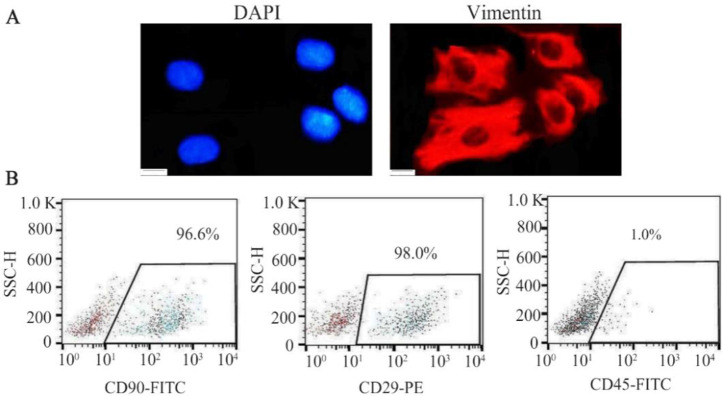
The endometria were washed in PBS solution (Phosphate buffered-tablet, Sigma-Aldrich, USA) and digested using collagenase 0.25% (Thermo Fisher Scientific, USA) for 1 hr at 37°C for isolation of the ESCs. Removal of undigested tissues was performed using filtration of cell suspension through a 100-μm filter mesh (Falcon, USA); also, to purify the ESCs, the epithelial cells were removed using supernatant filtration through a 40-μm sieve (Falcon, USA). The cell suspension was centrifuged at 1000 rpm for 5 min. Isolated cells were then cultured with 5% carbon dioxide at 37°C in Dulbecco modified Eagle medium F-12 (DMEM/F12; Gibco, Sweden) containing 10% fetal bovine serum (FBS; Gibco, Sweden) and 1% penicillin-streptomycin (Pen-Strep; 10,000 units of penicillin and 10 mg of streptomycin/ml, Sigma-Aldrich, USA). At passage 3, the purity of ESCs was 95% as determined by flow cytometry evaluation of the cells’ immunophenotype. For this aim, the harvested cells were stained with mouse anti-human CD29 (BD, USA), FITC-labelled mouse anti-human CD90 (Daco, USA), and CD45 (BD, USA) antibodies to ensure the mesenchymal origin of the cells, as well as PE-conjugated mouse anti-human vimentin (Santa Cruz, USA) antibody, to identify the stromal phenotype of the isolated cells. Characterized ESCs were used for subsequent experiments.
The MTT assay was performed to check possible deleterious effects of TNF-α (Sigma-Aldrich, USA), Asp (Sigma-Aldrich, USA), and AE (Sigma-Aldrich, USA) on ESCs viability. Briefly, 7×10 3 ESCs were seeded in a 96-well flat-bottomed cell culture plate in a final volume of 100 μl of DMEM/F12 (Gibco, Sweden) supplemented with 5% FBS, then incubated overnight. After incubation, the medium was removed and the ESCs were incubated for different time periods (24, 48 and 72 hr) with AE, Asp or TNF-α. Then, 50 μl of MTT solution (Sigma-Aldrich, USA) was added to each well and the ESCs were further incubated for 2 hr. The absorbance of the wells at 570 nm was measured for evaluation of ESCs viability.
Manual extraction of total RNA from ESCs was done using TRIzol (Thermo Fisher Scientific, USA). Concentration of RNA was determined by NanoDrop (Thermo Scientific NanoDrop One/OneC). Human GAPDH reactions were amplified for 40 cycles. Polymerase chain reaction (PCR) was done in Mastercycler Pro S (Eppendorf, Germany) in a 96-μl reaction system. Next, 1% aga rose gel was used for separation of reaction products. Subsequently staining with SYBR Green PCR Master Mix (Applied Biosystems, UK) was done for visualization. Calculation of the gene expression level was performed using the threshold cycle (CT) method (2 −ΔΔct). Table 1 shows the sequences of primers and fragment lengths, used in this study.
Table 1. Sequences of PCR primers and length of PCR product
| Gene | PCR primers (5' → 3') | Length of PCR product ( bp ) |
|---|---|---|
| NF-kB | 5'GTGGGGACTACGACCTGAATG3' | 121 bp |
| 5'GGGGCACGATTGTCAAAGATG3' | ||
| Ki-67 | 5'GTGCTCAACAACTTCATTTCCA3' | 231 bp |
| 5'ACTGAAGAACACATTTCCTCCA3' | ||
| PCNA | 5'TGAACCTCACCAGTATGTCC3' | 136 bp |
| 5'TCATAGTCTGAAACTTTCTCCTG3' | ||
| C-MYC | 5'ACACATCAGCACAACTACG3' | 140 bp |
| 5'CGCCTCTTGACATTCTCC3' | ||
| V-CAM | 5'GAAATGACCTTCATCCCTACC3' | 197 bp |
| 5'ATATTCACAGAACTGCCTTCCT3' | ||
| I-CAM | 5'GTGACCGTGAATGTGCTCTC3' | 132 bp |
| 5'TCTGTATTTCTTGATCTTCCGCT3' | ||
| CD133 | 5'GCATCCATCAAGTGAAACGT3' | 199 bp |
| 5'GGTTTGGCGTTG TACTCTGT3' | ||
| MMP-9 | 5'GCCACTACTGTGCCTTTGAG3' | 121 bp |
| 5'CAGAGAATCGCCAGTACTTCC3' | ||
| GAPDH | 5'CTCATTTCCTGGTATGACAACGA3' | 122 bp |
| 5'CTTCCTGTGCTCTTGCT3' |
Semiquantitative evaluation of protein expression was performed using immunofluorescence staining. For this aim, the EuESCs and CESCs were fixed using 4% paraformaldehyde in PBS (Sigma-Aldrich, USA) for 20 min at room temperature. Then, the cells were washed with PBS and were blocked using 10% goat serum diluted in PBS for 1 hr and incubated with primary antibodies for NF-kB (1:50 dilution; Santa Cruz, USA), C-MYC (1:200 dilution; BD, USA) and I-CAM (1:50 dilution; Santa Cruz, USA) at 4°C overnight. Then, goat anti-mouse IgG conjugated to Alexa Fluor 488 (Invitrogen, USA) for C-MYC and goat anti-mouse IgG conjugated to Alexa Fluor 594 (Invitrogen, USA) were added and kept for 1 hr at room temperature, followed by mounting the cells with DAPI and microscopic imaging (ix71, Olympus, Japan).
The in vitro migration capacity of ESCs was examined by wound healing (wound closure) assay. For this purpose, 24 hr before the assay, the untreated EuESCs and EuESCs treated with AE/Asp, as well as CESCs were seeded in DMEM/F12 plus 10% FBS in a six-well plate. At 90% confluence, a low dose of the proliferation inhibitor, 0.1 mg/ml of mitomycin C (Sigma Aldrich, USA) was added (To further avoid the risk of cell proliferation). A wound was created using 200 μl plastic cell scraper on the center of the wells containing confluent cell monolayer. The cells were incubated for 24 hr and ESCs migration was measured 0, 6, 12, 18, 24 and 48 hr after wounding. Wound closure at each time point was evaluated as follows:
Wound closure %:
([At=0h−At=Δh]×100%)/(At=0h)
Statistical analyses were performed using GraphPad Prism v6.0 software (GraphPad Software, USA). TNF-α production was compared using t-test, whereas one-way analysis of variance (one-way ANOVA) and the Bonferroni post hoc were used to compare proliferation, adhesion, invasion, and migration as well as NF-kB expression. The level of significance was set at p≤0.05.
ESCs obtained from digestion of both endometriotic cells and healthy endometrium (EuESCs and CESCs, respectively) exhibited a fibroblast-like morphology (flat and spindle-shape). At the third passage, the purity and identity of human ESC cultures were confirmed by flow cytometry evaluation of specific markers for stromal cells with mesenchymal but not hematopoietic origin (Figure 1).
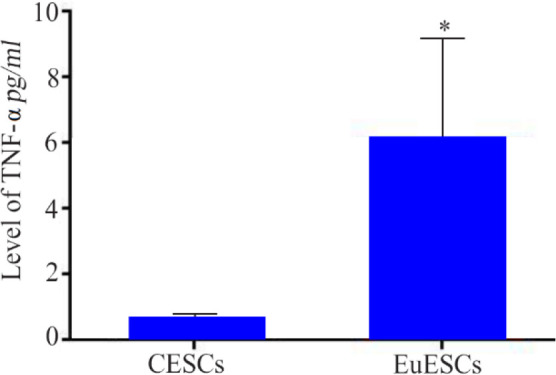
The EuESCs supernatant showed different patterns of TNF-α secretion. Using ELISA method, EuESCs at third passage secrete higher concentrations of TNF-α compared with the control (CESCs) (Figure 2). This result indicates that EuESCs express aberrant levels of TNF-α compared with CESCs.
Using MTT assay, the safety of Asp and AE on the ESCs was examined. Up to a concentration of 2.5 mmol/l of Asp and 20 μM of AE, these compounds did not affect viability of ESCs (Figure 3). In addition, TNF-α, as a known inducer of NF-kB, was used to improve the experiments.
![Figure 3. The ESCs viability was determined after treatment with 0. 1, 2.5, 5 and 10 mmol/L of Asp (A) 0, 5, 10, 20 and 40 μM of AE (B) and 0, 20, 40 and 60 ng/ml of TNF-α (C) using the MTT (3-[4,5-dimethylthiazol-2-yl]-2,5-diphenyltetrazolium bromid](/data/jri/fulltext/figures/PMC8669405/JRI-22-227-g003.jpg)
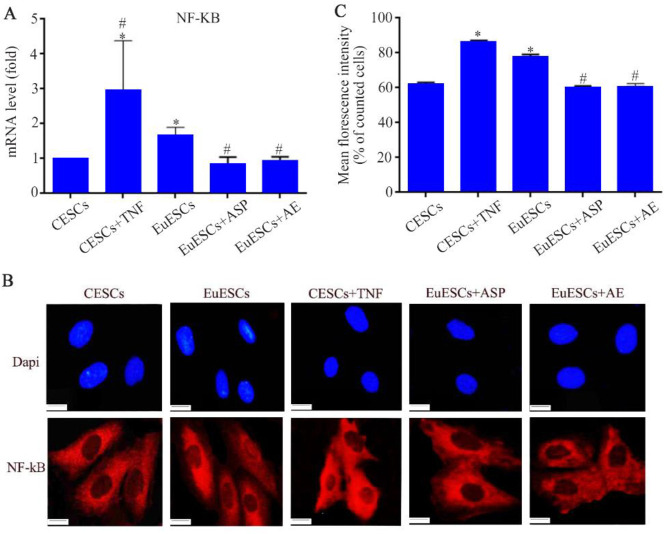
EuESCs expressed increased levels of NF-kB mRNA and protein compared with CESCs, but treatment of CESCs with TNF-α for 24 hr further increased these values (Figure 4A, 4B). Significantly, Asp and AE saved the EuESCs from excess transcripts and proteins of NF-kB.
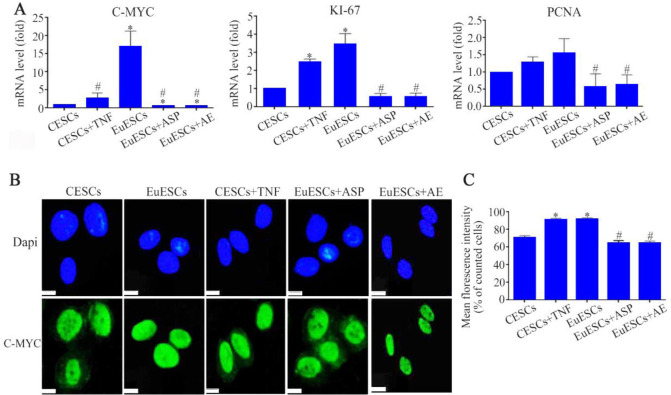
Cell proliferation is a well-known phenotype of endometriotic stromal cells. Three proliferation markers (KI-67, C-MYC, and PCNA) were examined in cells of all five groups. Based on our results, EuESCs displayed elevated proliferation capacity which was significantly higher than that of TNF-α-treated CESCs at gene (Figure 5A) and protein expression level (Figure 5B). Moreover, our suggested NF-kB regulators, Asp and AE, decreased the proliferative capacity of endometriotic cells to the level of the control stromal cells.
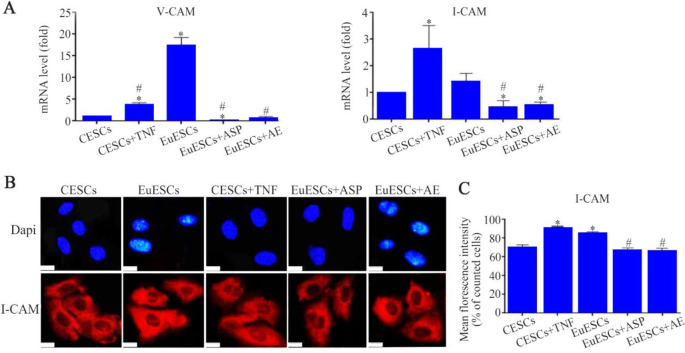
Adhesion of EESCs to any ectopic site outside the uterus is likely a landmark in formation and progression of endometrial lesions. Using quantitative assessment of I-CAM and V-CAM gene expression (Figure 6A) and semiquantitative evaluation of I-CAM protein (Figure 6B), adhesive capacity of EuESCs with and without Asp or AE treatment was investigated and compared with CESCs. The expression level of adhesion gene markers and protein was reduced in Asp or AE-treated EuESCs versus the untreated EuESCs.
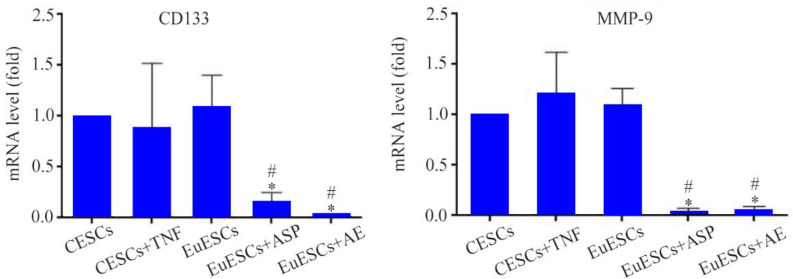
Endometriosis as a benign disease is not expected to express the invasion markers; however, it shares some features with cancer such as metastasis. Here, the expression pattern of two specified markers (CD-133 and MMP-9) contributing to cancer progression and metastasis was investigated. Both genes had the same response in our studied groups. Figure 7 shows there was no significant difference in expression levels of CD-133 and MMP-9 between EuESCs and CESCs. Nevertheless, Asp and AE decreased gene expression to levels even lower than that of the healthy CESCs.
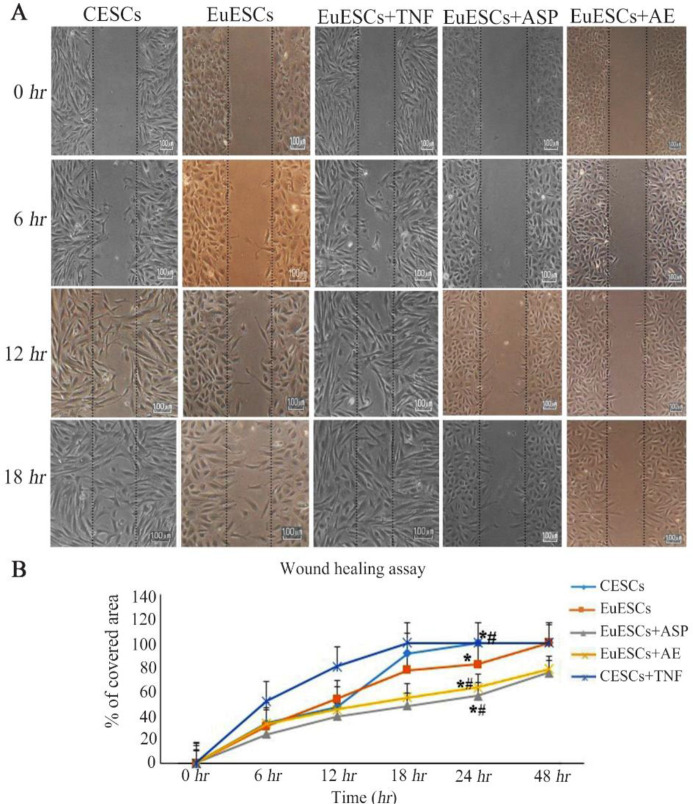
Specifically in endometriosis, the endometrial stromal cells or endometrial lesion cells move and migrate outside the uterus cavity or toward other ectopic sites, leading to formation or progression of the disease. Assuming that the EuESCs have higher migration ability, unexpected results were obtained. Figure 8 displays the migration potential of different groups as assessed by wound healing (scratch) assay. While induction of NF-kB signalling in CESCs by TNF-α increased the migration capacity, the EuESCs with higher level of NF-kB expression had lower ability of migration compared to control that was further reduced after treatment with Asp/AE.
Considerable evidence demonstrated that NF-kB signaling and its reported ligand, TNF-α, have the most significant effect on endometriosis (33, 34). TNF-α, as an inflammatory cytokine, contributes to inflammation induction through activating several transcription factors such as NF-kB (35). In this study, an attempt was made to investigate whether TNF-α could be associated with inflammatory responses in EuESCs. First, it was shown that EuESCs compared with CESCs secrete higher levels of TNF-α. Next, higher levels of NF-kB gene expression in EuESCs were displayed compared to CESCs. These observations confirmed the hypothesis that NF-kB and TNF-α contribute to formation of an autocrine self-booster cycle and sustain inflammatory reaction including increased capacity of ESCs for adhesion to ectopic sites, neo-vascularization, apoptosis resistance, and proliferation (36). The association between endometriosis and NF-kB signaling was confirmed by the fact that most treatments for endometriosis target NF-kB signaling (37). Therefore, drugs suppressing NF-kB pathway appear to potentially affect endometriosis progression.
In our study, Asp and AE similarly reduced the level of NF-kB gene expression in EuESCs. In contrast, treatment of CESCs with TNF-α significantly increased NF-kB expression to levels even higher than those observed in EuESCs, confirming the synergistic role of TNF-α and NF-kB to form the mentioned self-booster cycle. For Asp, it was revealed that its NF-kB-inhibiting role is mainly mediated by preventing the IKK activity. IKK separates the NF-kB from its inhibitor (IKB) and facilitates the NF-kB activation (38). AE also reduces the nuclear translocation of NF-kB and decreases its DNA binding activity (39). In this way, AE stops NF-kB signaling, disrupts the autocrine amplification cycle, and ultimately, reduces NF-kB gene expression.
Our results implied that EuESCs and those CESCs treated with TNF-α have a high capacity for proliferation, whereas, EuESCs in the presence of Asp/AE, showed much lower proliferation. Studies on the effect of NF-kB inhibition in a mouse model produced similar results and revealed that both the number and size of the ectopic endometriosis lesions were decreased (40, 41). These results showed that high proliferative capacity of endometriotic cells appears to be controlled by synergistic effect of increased NF-kB, as a main regulator of cell proliferation, and high concentration of TNF-α in these cells. Treatment with Asp/AE had the same effect on EuESCs proliferation and reduced its level to that of the controls.
Asp, as an efficient medication for treatment of several cancer types (42, 43), is likely to act through adjustment of NF-kB signaling and simultaneous inhibition of proliferation and regulation of apoptosis (44, 45). AE was also shown to exert an anti-cancer effect in different types of cancer cell lines (46). The therapeutic function of emodin is supposed to be caused by inhibiting EMT and subsequent suppression of cell proliferation and migration (47, 48), all of which are attributed to the NF-Kb inhibition.
Our finding for the higher adhesive capacity of EuESCs and CESCs treated with TNF-α compared with the untreated CESCs is consistent with previous reports. It was illustrated that endometriosis, as well as TNF-α alone, can significantly increase the expression of cell adhesion genes in ESCs probably through induction of NF-kB pathway at early stage of inflammation (49, 50). In addition, increased level of I-CAM and V-CAM expression was also shown to be associated with development of invasive activity in cancer cells, including increased cell capacity for migration and proliferation (51).
As expected, the upregulated levels of I-CAM and V-CAM found for EuESCs were significantly suppressed when the EuESCs were treated with Asp and AE. The role of low-dose Asp on preventing the adhesive phenotype of rat platelets was reported previously (52) which confirms our results. Emodin was also revealed to inhibit cancer through reduction of I-CAM, V-CAM, and angiogenesis in human monocytes (53). Furthermore, the expression of I-CAM and V-CAM in EuESCs treated with ASP or AE was even lower than that of the healthy CESCs, although protein expression did not vary significantly. Considering the main physiological role of adhesive molecules which are highly distributed throughout the endometrium during menstruation (54) and implantation (55), there is the possibility of abnormal suppression of these molecules in endometrial cells after treatment with ASP or AE.
Unexpectedly, our findings showed that the invasive capacity of the EuESCs in stage IV endometriosis is not much different from that of the CESCs cells. This result was not consistent with some previous reports indicating higher invasive phenotype of ESCs in endometriosis patients compared with healthy controls (11, 56). Considering the important role of MMPs in metastasis and induction of neo-angiogenesis, they were supposed to have a critical role in pathogenesis of endometriosis (57). However, involvement of MMPs in etiology of endometriosis seems to follow a stage-dependent pattern. In terms of CD133, as a tumor-initiating cell marker, there is little evidence showing the association between certain subsets of endometriosis development and CD133 expression (58). Nevertheless, the results reported by D'Amico et al. confirm our finding, suggesting that CD133 cannot be used as an appropriate cell marker for endometriosis (59).
Our data on cell migration were also somewhat unexpected, except for those obtained for the TNF-α. It was shown that CESCs, when treated with TNF-α, exhibit higher migration capacity. In contrast, EuESCs displayed lower migration potential compared with the controls, and when treated with ASP or AE, their low ability for migration was further reduced. Nevertheless, contradictory reports showed that the endometriotic cells demonstrate higher migration capacity (60) which is regarded as the main cause for ectopic endometrial growth and wound expansion (61).
In this study, EuESCs at this severe stage have a quite invasive migratory profile. Consistent with our result, Uzan et al. showed that the ovarian endometrioma in women with advanced endometriosis has lower levels of invasive cell markers (MT1-MMP and MMP-2) (62). Accordingly, Liu et al. indicated that the endometriotic cells at different stages of disease display distinct behavior (57). Considering these reports, in the early stages of the disease, cells require higher migration capacity and invasion while following the formation of wounds, the cell is likely to show a higher proliferative capacity. This explains why, despite the intrinsic ability of endometriotic cells to grow and invade, the growth of ovarian endometrioma cysts occurs gradually and over a long period of time.
Here, the effects of AE, as a known member of traditional medicine, as well as Asp, a chemical cure with less complication on human EuESCs (at stage IV endometriosis) activity were investigated and compared with that of healthy CESCs. It was demonstrated that the compounds have a similar effect in terms of inhibiting NF-kB activation and controlling the invasive behavior of endometriotic cells. This evidence suggests the effectiveness of such anti-inflammatory drugs in controlling endometriosis. Based on the results of this study, AE or Asp at tested doses, reduced the expression levels of adhesion and invasion genes, as well as the immigration capacity of the EuESCs compared to control levels. Due to cyclic pattern of the growth and abscission in the normal ESCs during the menstrual cycle, a threshold level of migration and adhesion is required for their accurate functioning as any changes in these functions in ESCs can be more important than other somatic cells. Therefore, more detailed safety assessments on healthy CESCs are recommended.
In conclusion, considering obvious proliferative and adhesive phenotype of EuESCs beside their low capacity for migration and invasion, the term “semi-invasive” instead of “invasive” is suggested for description of EuESCs activity. Furthermore, it is hypothesized that human ESCs at stage IV of endometriosis are more involved in developing the old lesions rather than creation of new ones. This may be a cause for the slow progression of endometriosis, as a benign disease, in advanced stages. Our results clearly showed that inhibition of NF-kB, as a master regulator of inflammation, can be considered an effective treatment strategy to control endometriosis. A chemical-and an herbal-based inhibitor was used in this study and our results may further confirm the wonderful healing effects of Asp and importance of traditional medicine in management of this disease. However, any possible toxic effects of these prodrugs on ESCs should be checked. In addition, further studies on cells at different stages of the disease are needed to first examine the exact behavior of the cells and then the effects of inflammatory inhibitors on the endometriotic cells’ activity at each stage.
Authors thank all the patients who participated in this study and staff of Arash Women's Hospital and Royan Institute for their help in patient’s management and sampling, particularly Dr Reihaneh Hosseini and Dr Mehri Mashayekhi, Mrs Morovati and Ms Ahmadi.
