
Ovarian cancer ranks the “seventh” amongst the most prevalent female cancers worldwide (1). Every year, 239,000 new cases are detected and 152,000 deaths are reported annually world over (2). Malignant ovarian germ cell tumors (MOGCTs) although rare, follow an aggressive course contributing to ovarian cancer deaths if not intervened timely (3, 4). They account for 2–6% of all ovarian malignancies, typically affecting adolescent girls and young women who are in prime of their reproductive life (5, 6). World health organization (2003) (7) has classified these tumors into broad categories of primitive germ cell tumors, biphasic or triphasic teratoma, monodermal tumors, and somatic type with biphasic or triphasic teratoma. Common histological varieties include dysgerminoma, endodermal sinus tumor (Yolk sac tumor), immature teratoma, embryonal carcinoma, non-gestational choriocarcinoma, and the mixed type (8–10). Surgical removal of the tumor with optimal debulking is the treatment of choice (6). Multidrug chemotherapy following surgery is associated with high remission rates (7). Since MOGCTs are mainly affecting the young girls, fertility conservation becomes the main concern in these patients. With initial fertility-sparing surgery followed by platinum-based combination chemotherapy, survival rates up to 60–80% have been reported even in the advanced stages of the disease (11, 12). On extrapolating the data from the literature, it can be inferred that fertility-sparing surgery followed by multiagent chemotherapy is a reasonable treatment option in these patients. Owing to the rarity of these cancers and lack of any randomized controlled trials, accumulative experience from different institutions is required for optimal management of MOGCTs. The aim of this study was to report the clinicopathological features, the prognostic factors, and treatment outcome in patients suffering from this type of cancers.
In the present case series, data of all the patients with malignant ovarian germ cell tumors who were managed between September 2009 and March 2019 in the department of Obstetrics and Gynecology, Guru Gobind Singh Medical College and Hospital, Baba Farid University of Health Sciences in India was retrieved from the central record room. Ten patients of pure MOGCTs were managed in the above mentioned time period. Patients records were collected retrospectively up to year 2013 and then the study was continued prospectively after obtaining permission from the institutional ethics committee. Data pertaining to the demographic profile, i.e. age, parity, background (Rural/urban), and occupation was recorded in a performa. Presenting symptoms, duration of the symptoms, clinical signs, imaging, level of tumor markers (Alpha fetoprotein-AFP, lactate dehydrogenase-LDH, beta human chorionic gonadotropin-bHCG, CA 125, CEA), intraoperative findings, size and site of residual disease, histological subtypes, and complications were noted. Data pertaining to adjuvant chemotherapy regimen and its complications was also analyzed. Treatment response was assessed by: 1) monitoring improvement in presenting symptoms, 2) imaging modalities indicating the size of the residual disease, and 3) serial measurement of tumor marker levels. As per the departmental protocol, the patients in whom fertility conservation was not the concern, complete surgical staging laparotomy with total abdominal hysterectomy and bilateral salpingooophorectomy was performed. Optimal cytoreduction was the aim of the surgery in the advanced diseases. In young girls for whom fertility preservation was a consideration, complete surgical staging with unilateral salpingo-oophorectomy was undertaken in stage 1 disease. In cases where the tumor had spread beyond the involved ovary but the uterus and the contralateral ovary were not involved by the tumor, unilateral salpingo-oophorectomy with conservation of uterus and the uninvolved ovary with optimal debulking surgery was the goal. After the surgery, three to four cycles of multidrug chemotherapy were planned for all patients. The chemotherapy regimen used was bleomycin, etoposide, and cisplatin (BEP) combination.
In this study, 15 patients of malignant germ cell tumors of the ovary were managed in a time frame of ten years and three months. Five patients were of mixed variety MGCOTs (Data already published) (6). Ten patients with pure malignant germ cell tumors were included in the present study. Histological subtypes included dysgerminoma (n= 3), endodermal sinus tumor (n=4), and immature teratoma (n=3). The median age of the patients at presentation was 23 years (Range of 11 to 35 years). One of the patients was premenarcheal. Four patients were unmarried and were not sexually active. Two of these patients were primigravida, in mid-trimester pregnancy, complaining of abdominal pain and right-sided disproportionate enlargement of abdomen, without any history of previous antenatal/medical checkups. Four patients were married and had formed their families. All the patients had presented with abdominal pain associated with abdominal distension. Two patients complained of breathlessness along with abdominal pain and distension. Majority (75%) of the cases had presented to the center within 3 months of having symptoms. On examination, abdominopelvic mass was noted in all the patients. Six patients also demonstrated presence of ascites and pleural effusion was noted in one of the patients.
Ultrasound findings were suggestive of unilateral right-sided ovarian mass in all the patients. The findings were confirmed with CECT (Contrast enhanced computed tomography) except in pregnant cases where MRI (Magnetic resonance imaging) was done. Advanced imaging was suggestive of retroperitoneal lymphadenopathy in two girls (P-III, P-VI). Tumor markers were measured in nine patients only, as one of the patients could not afford the cost. Alpha fetoprotein (AFP) was raised in patients with pure yolk sac tumor (189.6 ng/ml–940 ng/ml). Patients with dysgerminoma had raised serum LDH (1694–2345 IU/L) but the values were not reliable in pregnant cases. None of the patients had raised CA125, βHCG, CEA levels. Tumor markers were negative in patients with immature teratoma.
One of the patients (P-V) had presented in a debilitated state with massive ascites and pleural effusion. A very poor prognosis in undergoing surgery was predicted and a tru-cut biopsy was performed which revealed endodermal sinus tumor. She was put on palliative treatment and died of the disease two days after admission. All four unmarried young girls and two pregnant women underwent unilateral salpingo-oophorectomy with complete surgical staging. The other three patients underwent total abdominal hysterectomy and bilateral salpingo-oophorectomy (TAH-BSO) with complete surgical staging. Even after optimal debulking, one of the patients had a residual disease >1 cm. Two patients (P-III, P-VI) with retroperitoneal lymph node enlargement underwent lymphadenectomy along with the primary surgery. P-III had involvement of both pelvic and para-aortic nodes while P-VI had only pelvic lymph node involvement. There were no significant intraoperative and postoperative complications. Surgical staging was stage 1a (n=2), 1c (n= 5), and stage III (n=2). Combination chemotherapy with BEP (Bleomycin, etoposide, and cisplatin) was given to all the patients following surgery but two of our patients (P-VIII, P-X) had refused chemotherapy. On follow up, two patients (P-III, P-IV) had developed recurrence within six months of the surgery. Second line treatment modalities were started but both of them faced demise. On median follow-up of 5.6 years, seven patients had survived with no evidence of disease.
Malignant ovarian germ cell tumors are among the rare cancers and many authors have contributed in research on these cancers. While managing these tumors, several unique findings, contrary to the literature, were obtained. The novel findings pertain to the reported incidence, the most common histologic type, survival rate, and risk factors influencing the patient survival.
As per our hospital data, the incidence of MGCOTs was reported to be 4.5% of all ovarian malignancies, whereas in the Asian population the literature reports the incidence as 8–19% of all carcinoma ovary cases (2, 5, 6). Pure dysgerminoma is reported to be the most common histological subtype, accounting for 35% to 54% of the cases followed by immature teratoma and endodermal sinus tumor (8, 9, 13). Solheim et al. documented that one third of cases of MOGCTs are dysgerminomas, one third are immature teratomas followed by all other types including the mixed variety (14). In contrast to the evidence, endodermal sinus tumor was the most common subtype seen in 40% of the patients in our study.
Consistent with the literature (5–7), 70% of the patients had stage I disease while 30% were in advanced stage at the time of presentation. This indicates the aggressive growth pattern of these tumors. Hence, patients become symptomatic earlier which accounts for early diagnosis (Stage I) in majority of the cases. The presenting symptoms of the patients in our study are in agreement with the findings of Bilici et al. (9) where 80% of their patients with germ cell ovarian tumors presented with abdominal pain, abdominal distension, and abdominal mass. Menstrual irregularities are reported in previous researches (10); however, our patients did not have such complaints. These tumors are predominately unilateral confining to one ovary in two thirds of cases (11). Dysgerminomas exhibit bilateral involvement in 15–20% of cases (7). In the present study, all the patients had unilateral tumor involving the right ovary.
Tumor markers, i.e. AFP, LDH, and beta hCG, are used as adjuncts in making the initial diagnosis, monitoring the response to treatment, and post treatment surveillance. Royal College of Obstetrician and Gynaecology (RCOG) green top guideline and The National Academy of Clinical Biochemistry warrant measurement of AFP, LDH and hCG levels in women presenting with an ovarian mass (Age <40 years) (15) and also in older women with scan suggestive of germ cell tumor (16). Mazumdar et al. (17) suggest that elevated AFP (>10,000 ng/ml) and βHCG (>50,000 mIU/ml) correlate with advanced stage disease and reduced survival (5 year survival rate <50%), which is independent of the stage.
In the present series, tumor markers became negative in those with clinical and radiological remission. In recurrence cases, there was a rise in the levels after an initial decline. Regression of tumor marker is a good prognostic predictor.
Concern regarding fertility conservation is of paramount importance while treating these young patients since there is unilateral involvement of the disease in two thirds of the cases and combination chemotherapy offers a cure rate of up to 80–85% (7, 11, 12). If in these patients, fertility conversing surgery is not considered, the survivors desiring their genetic offspring will be deprived of the parenthood, which will impose a detrimental effect on their emotional health.
Literature supports the safety of fertility-sparing surgery in the form of unilateral salpingo-oophorectomy in malignant ovarian germ cell tumors (4, 11, 12, 18–21). The standard operating protocol includes unilateral adnexectomy with surgical staging that involves peritoneal washing cytology, infracolic omentectomy, peritoneal biopsy from suspicious areas, and retroperitoneal (pelvic and para-aortic) lymphadenectomy of enlarged lymph nodes followed by combination chemotherapy (22). In our series, four young girls were selected for unilateral salpingoophorectomy because of their willingness to preserve future fertility. Two of these patients had stage I disease (P-I, P-VIII) while the other two had stage III disease (Figure 1) with healthy looking uterus and contralateral ovary (P-III, P-VI). Vazquer and Rustin (13) reported that fertility-sparing surgery can be adopted in cases with bulky metastases, provided that the contralateral ovary and the uterus appear normal. Surgical principles for MOGCTs suggest that there is no evidence that removing the uninvolved ovary improves the survival rate (7). It was further documented that optimal cytoreduction must be achieved in advanced disease if at all possible.
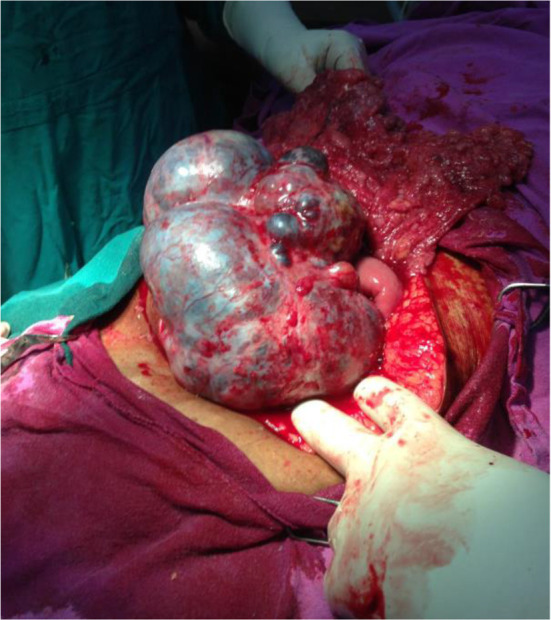
Mahdi et al. declared that routine systematic lymphadenectomy is not indicated and removal is only mandatory if the nodes are enlarged (23).
Dysgerminoma is the most common ovarian tumor diagnosed during pregnancy and needs surgical resection due to complications (i.e. feto-maternal compromise) associated with natural pregnancy course (24). The best maternal and neonatal outcome depends on the diagnosis of the tumor at early stages and its excision by immediate laparotomy (25, 26). Although larger studies are not available, Patterson et al. (26) concluded that cases with stage Ia dysgerminomas have over 95% survival rate after unilateral salpigo-oophorectomy with multiagent chemotherapy followed by close surveillance. Our two antenatal patients with dysgerminoma were treated in the similar way and each one had successfully delivered a full term live baby. Chemotherapeutic agents pose teratogenic and mutagenic risk when administered in the first trimester of pregnancy. However, Kim and Park (27) have documented that such risks are alleviated when these agents are used in second and third trimesters. In the present study, there were also no structural and developmental abnormalities in the neonates and on five-year follow up, these children were physically and mentally sound.
Platinum-based combination chemotherapy, comprising of BEP (bleomycin, etoposide and cisplatin) is relatively nontoxic and had dramatically improved the survival rates in malignant germ cell tumors up to 87% to 98% (7, 12, 22, 28). BEP regime is now the international standard of care (22).
Two of patients (P VIII, X) had refused chemotherapy and a close surveillance strategy was followed. No evidence of disease was detected at a median follow up of 3 and 5 years. There is growing evidence for “surveillance only” strategy after tumor resection in stage Ia pure dysgerminoma/low-grade immature teratoma (29, 30). The relapse rates are around 20% in dysgerminomas and 25–30% in non-dysgerminomatous tumors that can be cured by chemotherapy at the time of recurrence (30, 31). Since the data favoring “surveillance only” is limited, women should be given the option for surveillance/BEP chemotherapy in stage Ia/b disease until obtaining more findings.
In the present study, despite conducting optimal debulking and adjuvant chemotherapy, two patients had died. One of the deceased patients (P III) had stage III disease and a residual tumor >1 cm. In this patient, fertility-sparing surgery with adjuvant chemotherapy did not ensure survival.
She was detected with the brain metastasis at five and a half months after surgery. Above finding suggests that advanced stage and residual tumour size are independent prognostic factors.
Literature review suggests that dysgerminoma holds best prognosis amongst MOGCTs with the survival rate of as high as 90% at the early stages. In the present series, one of our patients with stage Ic dysgerminomatous tumor could not survive despite performing complete surgical staging with adjuvant chemotherapy. It can be inferred that germ cell tumor breaching the ovarian capsule behaves aggressively, offering poor prognosis inspite of having a favorable histological type. Another possible explanation could be patient’s age at the time of presentation (P-IV vs. P-X), which might have an impact on prognosis.
In the present study, the overall survival rate was 77.77%. However, literature (32–35) supports a survival rate up to 90–95% after the introduction of cisplatin-based chemotherapy (Table 1). Since MOGCTs are rare cancers, the studies conducted so far have limited sample size and have selection bias. Also, these studies have included the mixed variety as well, but our data regarding malignant mixed germ cell tumors is published separately and the present study includes only the pure malignant germ cell types (6).
Table 1. Showing age, parity, histopathology clinical presentation, tumour markers and imaging (CT, USG findings)
| Parameters | Present study | Vithida et al. (33) | Kumar and Das | Mangili et al. | Low et al. |
|---|---|---|---|---|---|
| Mean age (years) | 23 | 21.6 | 21 | 24 | 20.9 |
| No. of patients | 10 | 76 | 21 | 123 | 74 |
| Range (years) | 11–35 | 4–50 | 14–40 | 11–76 | 10–35 |
| Presenting symptoms | Abdominal pain with abdominopelvic mass | Abdominal pain with abdominopelvic mass | Abdominal pain with abdominopelvic mass | Abdominal pain with abdominopelvic mass | Abdominal pain with abdominopelvic mass |
| Histologic type | EST>DSG=IT | IT>EST>DSG>Mixed> choriocarcinoma | Mixed>DSG>EST>MCT | DSG>IT>EST>mixed | DSG>IT>EST>mixed> embryonal cell CA |
| Early stage | 70% (n=7) | 70% (n=53) | 62% (n=13) | 70% (n=87) | 75% (n=56) |
| Advanced stage | 30% (n=3) | 30% (n=23) | 38% (n=8) | 30% (n=36) | 25% (n=18) |
| Fertility-sparing surgery | 60% (n=6) | 80.3% (n=61) | 71% (n=15) | 75% (n=92) | 100% (n=74) |
| Complete surgical staging | 30% (n=3) | 39.4% (n=15) | 19% (n=4) | 25% (n=31) | none |
| Biopsy only | 10% (n=1) | none | 10% (n=2) + neoadjuvant chemo | none | none |
| Adjuvant chemotherapy | 90% (n=9) | 71% (n=54) | 76% (n=16) | 65.8% (n=81) | 63.5% (n=47) |
| Recurrence | 10% (n=1) | 15.7% (n=12) | 19% (n=4) after 2 years of treatment | 17.8% after 9 months of treatment | 9.5% (n=7) after 2.1 years of treatment |
| Survival rate | 77.77%, 5 year survival rate | 86.2%, 5 year survival rate, 9 patients had lost to follow up | Not declared, 2 patients lost to follow up | 88.8%, 5 year survival rate, 95.6% in early stage, 73.2% in advanced stages | 98.2% in stage I, 94.4% in advanced stages after 2.1 years of treatment |
IT: Immature teratoma, EST: Endodermal sinus tumor, DSG: Dysgerminoma new_doc15_002.JPG
Several prognostic factors have been reported in the literature. Histologic type (Dysgerminoma vs. non-dysgerminomatous, p<0.0001), FIGO staging (I–II vs. III–IV, p=0.001), the residual tumor after the salvage surgery (<1 cm vs. >1 cm, p=0.0014), lymph node involvement, and tumor recurrence are associated with poor prognosis (35–37). In the present study, ascites was demonstrated in deceased patients (P-III, P-IV) and P-III had advanced stage tumor, residual disease >1 cm, and recurrence as poor prognostic markers. These observations indicate the need for a more radical surgical approach in such patients.
One of the strengths of the present study is that it is a single institute study, which removes the treatment bias. Small sample size due to the rarity of the disease is the limitation of this study.
Management of pregnancy associated with dysgerminoma by surgery followed BEP chemotherapy offers favorable prognosis. The most common tumor type in our study was endodermal sinus tumor. Fertility sparing surgery followed by adjuvant chemotherapy is presently the treatment of choice in young girls but conducting risk stratification is necessary. This study highlighted that “surveillance only” strategy after tumor resection at stage Ia pure dysgerminoma/low-grade immature teratoma ensures promising results but more evidence is needed to prove it as a safe option. The option for oocyte cryopreservation must be discussed with patients desiring future fertility.
