
Polycystic ovary syndrome (PCOS) is the most common endocrine disorder among reproductive period women (1). The pathophysiology of PCOS appears to be multifactorial and polygenic (2). Genetics, environmental factors, chronic inflammation, oxidative stress, and lifestyle have been reported to be involved in the occurrence and development of PCOS (3). It is mainly characterized by polycystic ovaries, oligo-/anovulation, hyperandrogenism, and elevated serum luteinizing hormone (LH) levels (4). PCOS patients are usually women in reproductive age suffering from an abnormal menstrual cycle, obesity, hirsutism, and/or sub/infertility (5).
Despite the high prevalence and marked impact of PCOS in the community, the precise mechanism underlying the pathogenesis of this syndrome is still not fully understood (6).
Researchers propounded that a number of inflammatory cytokines and some oncogenic genes were dysregulated in patients diagnosed with PCOS (7). In these patients, circulating levels of Tumor Necrosis Factor-alpha (TNF-α), Interleukin 6 (IL-6), and C-reactive protein (CRP), as well as white blood cell (WBC) and neutrophil counts were elevated compared with age- and/or body mass index (BMI)-matched controls women (8).
The balance in reactive oxygen species (ROS) plays an important physiological role in several processes of the female reproductive system, including oocyte maturation, ovulation, fertilization, and endometrial damage (9). Oxidative stress (OS) is associated with a higher risk of infertility in patients biochemical parameter related to OS with PCOS. Many studies have shown that biochemical OS-related parameters such as malondialdehyde (MDA), glutathione peroxidase (GPx), catalase, and superoxide dismutase (SOD) are abnormal in patients with PCOS (10).
Various therapeutic such as lifestyle changes, surgery, and medication using clomiphene citrate, metformin, letrozole, and tamoxifen have been suggested in this disorder (11). Considering side effects of these drugs (lactic acidosis, thromboembolic episodes, hepatotoxicity, cancer incidence, or pregnancy loss), preparation of alternative drugs such as use of herbal plants and their derivatives due to low invasiveness, low cost, and more usefulness in comparison to other approach has received a lot of attention (12).
The herbs have been used to treat diseases for many centuries, although healing properties and chemical constituents in many of them are still unknown. Various medicinal plants have been used to treat different diseases worldwide (13). Plant materials and their products are rich sources of a variety of biologically active compounds that have antioxidant activity and radical scavenging activities (14).
Crocus sativus L is a perennial stemless herb of the Iridaceae family (15). Saffron is considered a traditional tonic for the heart and nervous system. Also, it is used in chemical pain tests as well as acute and/or chronic anti-inflammatory tests (14). The only usable part of the plant is the stigma, and the other parts are discarded as wastage (16). Petals, which form the major part of saffron flowers are now considered as waste material, although their chemical characteristics are similar to that of the stigmas (17). The color of saffron petals is related to the presence of a compound called anthocyanins. Anthocyanins are a group of natural compounds and secondary metabolites belonging to the flavonoid family (16). Saffron petal contains protein, fat, fiber, minerals and trace elements such as sodium, potassium, calcium, copper, iron, magnesium, zinc, and phosphorus (18). It is also composed of flavanols (kaempferol), carotenoids (crocin and crocetin), anthocyanins, phenolic compounds, terpenoids, and alkaloids (18). Modern pharmaceutical studies have shown that SPE has anti-tumor, antioxidant, antinociceptive, anti-inflammatory, and anti-depressant effects (19, 20). The anti-inflammatory effects of ethanolic and aqueous extracts of saffron petal were investigated in mice. The results showed that ethanolic extract reduced chronic inflammation and did not affect acute inflammation. The observed effects may be related to the presence of compounds such as flavonoids, tannins, anthocyanins, alkaloids, and saponins (18). Petals contain strong antioxidant flavonoids that are bound to albumin in serum and interact with this protein (21). The antioxidant and radical scavenging properties of saffron petals extract could enhance the immune system activity and inflammatory responses (22). A study showed antioxidant activity of SPE in lambs using the 2, 2-diphenyl-1-picrylhydrazyl (DPPH) free-radical method. The extracts of saffron petal were gavaged at doses of 500, 1000, and 1500 mg/kg for 15 days in mice. On the last day of trial, results showed that SPE increased antioxidant content at all doses. The extract did not cause a change in the levels of glucose, uric acid, creatinine, and other indexes (18). Thus, it seems that SPE has therapeutic potential on PCOS.
However, no investigation was focused on the therapeutic effect of SPE on ovarian insufficiency such as PCOS. In the present study, the effects of SPE on a mouse model of PCOS was investigated by PCOS induction using Testosterone Enanthate (TE). The serum level(s) of antioxidant enzymes (GST and GSH) and inflammatory markers (TNFα, IL-1ß, IL-6, IL-18, and CRP) were measured using ELISA kits. Inflammatory-related genes transcripts (NF-κB, NF-κB p65, IκB) were also evaluated in order to determine the potential anti-PCOS effects of SPE.
This experimental study was conducted at the Department of Biology of Islamic Azad University, Mashhad Branch, Iran, between September 2019 and March 2020.
Animal care measures and experiments were performed following guidelines set by the Animal Care and Ethics Committee of Islamic Azad University of Mashhad Branch (No. IR.IAU.MSHD. REC.1398.203). The study was performed on NMRI mice (8 weeks of age, 25–30 g). All mice were maintained in standard cages and the animal house was set to a 12 hr light/dark cycle at 22–24°C and mice were given ad libitum access to food and water. To eliminate stress and regulate light/dark, animals were kept under standard conditions for 2 weeks.
To perform this study, mice were scored for having regular estrous cycles and a vaginal smear was taken on days 12 to 14 of cage keeping. The mice were divided into 3 groups. The animals in the control group (n=12) had no treatment and the animals in PCOS group (n=12) served as a model of PCOS. To induce polycystic ovarian syndrome phenotype, TE (1 mg/kg body weight) (Aboureihan, Iran) was injected into the neck for 4 weeks, once a day (23). Regarding the third group as the treatment group (n=36), after induction of polycystic ovary induction by TE injection, SPE (dissolved in distilled water) was injected intraperitoneally for 15 days once a day at different doses (50, 200, and 600 mg/kg).
At the end of the treatments, the animals were anesthetized by intraperitoneal injection of a combination of ketamine hydrochloride (50 mg/kg) and xylazine hydrochloride (7 mg/kg). Mice in each group were weighed at the beginning and end of the study. The samples of ovarian tissue were removed and then fixed in 10% para-formaldehyde. Ovary paraffin sections (5 μm) were stained with hematoxylin and eosin staining method (H&E). The numbers of cystic (small fluid-filled sacs), primary (a layer of granulosa cells around the oocyte), and preantral follicles (several layers of granulosa cells), and antral (antrum cavity) follicles were counted in every sixth section (30 μm apart) and multiplied by 6 to give the total number of follicles in each ovary. To avoid double-counting, only follicles containing oocytes with a visible nucleus were counted. The number of corpora lutea was scored in a blinded method using one section per ovary and one ovary per mouse.
Next, blood samples were obtained by cardiac puncture, allowed to clot for 10 min at room temperature and centrifuged at 3000 rpm for 20 min. The serum samples were prepared and stored at −20°C until biochemical analysis. Serological analysis was performed to measure serum levels of inflammatory and antioxidant markers.
Levels of IL-6, TNF-α, IL-1ß, IL-18, and CRP in all serum samples were determined by special ELISA kits (Accu-Bind, Monobind Inc., USA) (Table 1).
Table 1. List of primers for real-time PCR
| Gene names | Forward primer (5’-3’) | Reverse primer (5’-3’) |
|---|---|---|
| NF-κB | TGTGGTGGAGGACTTGCTGAGG | AGTGCTGCCTTGCTGTTCTTGAG |
| NF-κB p65 | GATGGCTTCTATGAGGCTGAACTCTG | CTTGCTCCAGGTCTCGCTTCTTC |
| IκB | GAAGGACGAGGATTACGAGCAGATG | ATGGTCAGTGTCTTCTCTTCATGGATG |
| GAPDH | CGACTTCAACAGCGACACTCAC | CCCTGTTGCTGTAGCCGAATTC |
In this study, plasma glutathione S-transferase (GST) and glutathione (GSH) levels were measured using special kits. The value of GAPDH was investigated as a housekeeping gene and measurements were obtained from quantitative real-time RT-PCRs. Total RNA was extracted from the ovary using RNA prep Pure Tissue Kit (Norgen Biotek Corp., Canada).
Meanwhile, RNA was reversed transcribed using high-capacity cDNA of the reverse transcription kit (Pars Toos Company, Iran) following the instructions. PCR reactions were conducted using the SYBR Green master mix on LightCycler (Roche Applied Sciences, USA). Data were calculated by the ΔΔCt method, using GAPDH.
In this study, saffron petals were collected from the saffron processing sites in Gonabad city (Khorasan Razavi Province, Iran). The petals were dried in standard conditions, away from sunlight, moisture, microbial contamination with proper ventilation, and in the shade. The dried petals were powdered by an electric grinder. Extraction of petals was carried out using Soxhlet extractor and 50% (v/v) aqueous solution of ethanol.
Statistical analysis: The results are presented as means±standard error of mean (Mean±SEM). SPSS v16 software (IBM, USA) were used and the results were analyzed using one-way analysis of variance (ANOVA) followed by post hoc multiple comparisons Tukey test for comparison between different treatment groups. Statistical significance was set at p<0.05.
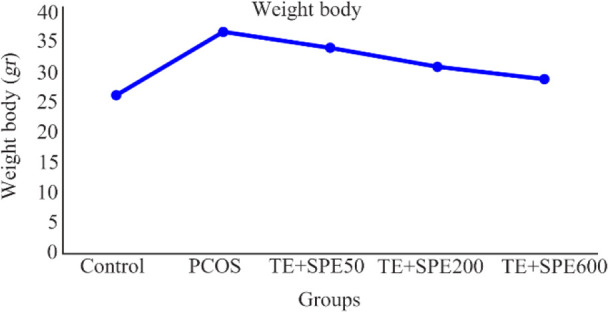
To explore the therapeutic effect of SPE on PCOS, SPE was used to treat mice with TE-induced PCOS. The body weight of PCOS mice increased significantly compared with controls (p<0.001, Figure 1). Notably, SPE at different doses (50, 200, 600 mg/kg) blocked the TE-induced increment in body weight (p<0.001, Figure 1).
Ovaries were isolated for H&E staining. Control mice presented a normal ovarian morphology with follicles at different stages of growth (Figure 2). Multiple enlarged follicles were observed in the ovaries of the PCOS group. The numbers of preantral follicles, antral follicles, and corpus luteum were significantly lower than controls (p<0.001), while the numbers of cystic follicles were significantly higher in PCOS mice than the controls (p<0.001). Notably, the administration of SPE (50 mg/kg) in TE-treated mice could revise the reduction of preantral follicles, antral follicles, and corpus luteum (p<0.05) and the increase of cystic follicles (p<0.05). The injection of SPE (200 mg/kg) in TE-treated mice could the reduction of preantral follicles, antral follicles, and corpus luteum (p<0.01), and the proliferation of cystic follicles (p<0.001). The administration of SPE (600 mg/kg) in TE-induced PCOS mice could modify the reduction of preantral follicles, antral follicles, and corpus luteum (p<0.001) and the increase of cystic follicles (p<0.001, Table 2, Figure 2). The primary follicles of PCOS groups did not show significant changes compared with controls (Table 2).
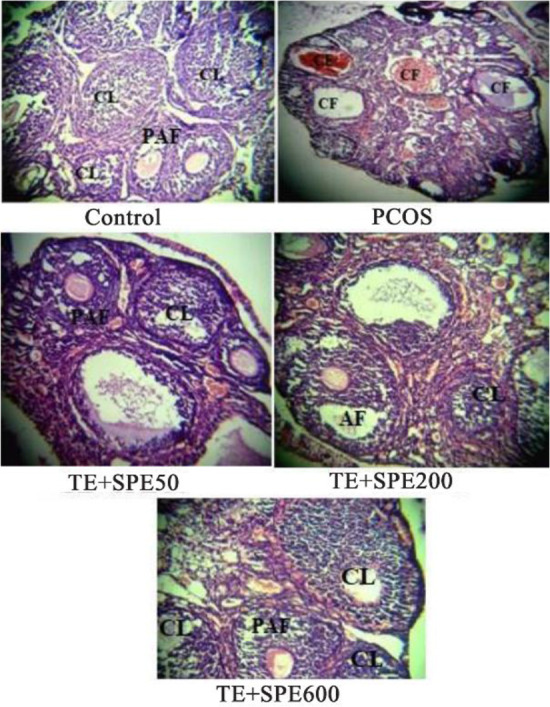
Table 2. The numbers of primary, preantral, antral, cystic follicles, and corpus in the ovaries of TE induced mice in different groups
| Groups | Primary follicle | Preantral follicle | Antral follicle | Cystic follicle | Corpus luteum |
|---|---|---|---|---|---|
| Control | 13.5±1.04 | 17.33±0.66 | 6.5±0.42 | - # # | 5.16±0.30 |
| PCOS | 12.33±1.63 | 8.5±0.42 # | 2.83±0.42 # | 3.66±0.21 # | 0.66±0.21 # |
| TE+SPE50 | 12.16±1.60 | 10.5± 0.22 * | 4.33±0.21 * | 2.66±0.21 * | 2.1±0.30 * |
| TE+SPE200 | 13.16±0.75 | 11.16±0.30 ** | 4.83±0.30 ** | 2±0.36 *** | 2.66±0.42 ** |
| TE+SPE600 | 13.33±0.81 | 13.33±0.49 *** | 5.66±0.30 *** | 1.33±0.21 *** | 3.5±0.42 *** |
In PCOS groups treated with SPE, a significant increase in the number of the follicles (except for the primary follicle group) was observed. In addition, there was a significant reduction in the number of ovarian cysts. All values are presented as the means±SEMs (n=12 per group). TE, Testosterone enanthate; # p<0.001 vs. control, *** p<0.001, ** p<0.01, * p<0.05 vs. TE.
In the control group, as the normal and healthy group, no effects of cystic follicles were observed in histological analysis and cystic follicles were seen only in the groups induced for polycystic ovary syndrome
In this study, PCOS induction led to a significant rise in inflammatory factors (TNF-α, IL-6, IL-1ß, IL-18, CRP) levels (p<0.001) compared with controls (Table 3). However, treatment with SPE (50 mg/kg) showed reduced TNF-α, IL-1ß (p<0.05, Table 3), IL-6, IL-18, and CRP (p<0.001, Table 3). TNF-α, IL-6, IL-1ß, IL-18, and CRP were significantly reduced in SPE-treated PCOS (200 and 600 mg/kg) groups compared with PCOS mice (p<0.001, Table 3). The influence of SPE treatment in PCOS mice model on reactive oxygen species (ROS) scavenging enzymes, glutathione S-transferase (GST), and glutathione (GSH) levels was also investigated.
Table 3. The plasma level(s) of TNF-α, IL6, IL1ß, IL18, and CRP
| Inflammatory factors | Control | PCOS | TE+SPE50 | TE+SPE200 | TE+SPE600 |
|---|---|---|---|---|---|
| TNF-α | 293±3.21 | 373±2.10 # | 355±2.21 * | 348±3.07 *** | 330±6.83 *** |
| IL-6 | 101±1.15 | 241±8.72 # | 201±10.46 ** | 183±5.57 *** | 171±8.72 *** |
| IL-1ß | 31.66±0.84 | 59.50±0.34 # | 55.33±1.17 * | 54.16±0.87 *** | 54±0.99 *** |
| IL-18 | 316±10.54 | 410±8.56 # | 363±9.18 ** | 338±6 *** | 336±4.21 *** |
| CRP | 0.17±0.0004 | 0.32±0.0008 # | 0.28±0.012 ** | 0.26±0.007 *** | 0.21±0.10 *** |
Plasma TNF-α, IL6, IL1ß, IL18, and CRP level(s) were measured by using an ELISA kit. In PCOS groups treated with SPE, a significant reduction in levels of inflammatory factors (TNF-α, IL-6, IL-1ß, IL18, and CRP) was observed. All values are presented as the means±SEMs (n=12 per group).
TE, Testosterone enanthate; # p<0.001 vs. control, *** p<0.001, ** p<0.01, * p<0.05 vs. TE
The results showed that the activity of both two enzymes was decreased in the PCOS group compared with the control group (p<0.001, Table 4). However, treatment of the PCOS mice with SPE (50 mg/kg) resulted in a significant increase in the levels of GST and GSH (p<0.05, Table 4). The treatment of SPE (200 and 600 mg/kg) exhibited a significant increase in the levels of GST (p<0.001, Table 4). However, treatment with SPE (200 and 600 mg/kg) showed a significant increase in the levels of GSH (p<0.01 and p<0.001, Table 4).
Table 4. The plasma level(s) of GST and GSH
| Groups | GST (μmol/g) | GSH (mg/g) |
|---|---|---|
| Control | 296±1.35 | 98.5±0.42 |
| PCOS | 237±2.06 # | 66.08±0.87 # |
| TE+SPE50 | 249±2.47 * | 70.33±0.98 * |
| TE+SPE200 | 266±4.04 *** | 71.16±1.07 ** |
| TE+SPE600 | 279±2.47 *** | 74.16±0.87 *** |
Plasma GST and GSH level (s) were measured by using an ELISA kit. In PCOS groups treated with SPE, a significant increase in levels of antioxidant factors (GST and GSH) was observed. All values are presented as the means±SEMs (n=12 per group). TE, Testosterone enanthate; # p<0.001 vs. control, *** p<0.001, ** p<0.01, * p<0.05 vs. TE
To assess the NF-κB, NF-κB p65, and IκB genes mRNA expression levels, real-time PCR was performed. In PCOS group, higher mRNA expression levels of NF-κB and NF-κB p65 were observed compared with the control (p<0.001, Table 5). However, treatment with SPE (50 mg/kg) resulted in a significant reduction in the NF-κB and NF-κB p65 mRNA expression levels (p<0.05 and p<0.01, Table 5), NF-κB and NF-κB p65 mRNA expression levels decreased in SPE-treated PCOS (200 mg/kg) groups compared to PCOS group (p<0.01 and p<0.001, Table 5).
Table 5. The transcriptional level (s) of Nf-ƙb, Nf-ƙb P65, and IƙB in the ovaries of TE induced cases
| Groups | NF-κB | NF-κB p65 | IκB |
|---|---|---|---|
| Control | 1±0.01 | 1±0.01 | 1±0.02 |
| PCOS | 1.29±0.03 # | 1.36±0.02 # | 0.51±0.01 # |
| TE+SPE50 | 1.2±0.02 * | 1.26±0.02 ** | 0.54±0.008 * |
| TE+SPE200 | 1.19±0.003 ** | 1.23±0.01 *** | 0.56±0.007 *** |
| TE+SPE600 | 1.16±0.008 *** | 1.18±0.01 *** | 0.59±0.003 *** |
The mRNA level (s) of Nf-ƙb, Nf-ƙb P65, and IƙB from the ovaries were assessed with real-time PCR. In PCOS groups treated with SPE, a significant reduction in levels of expression of NF-κB, NF-κB p65, genes and increase in levels of expression of IκB were observed. All values are represented as the means±SEMs (n=12 per group). TE, Testosterone enanthate.
# p<0.001 vs. control, *** p<0.001, ** p<0.01, *p<0.05 vs. TE
The administration of SPE (600 mg/kg) in TE-treated mice could reduce NF-κB and NF-κB p65 mRNA levels (p<0.001, Table 5). In PCOS group IκB mRNA expression level, reduced compared to control (p<0.001, Table 5), However, treatment with SPE (50 mg/kg) resulted a significant increase in the IκB mRNA expression level (p<0.05, Table 5). The administration of SPE (200 and 600 mg/kg) in TE-treated mice exhibited an increase in the IκB mRNA expression level (p<0.001, Table 5).
In the present study, the therapeutic effect of SPE in a TE-induced POCS animal model was investigated for the first time. One of the major features of PCOS is a morphological change in the ovary, characterized by lots of follicular cysts. The assessment of preventive effects of SPE on ovarian tissue showed that injection of SPE in TE-treated mice leads to a reduction of large cysts’ growth in the cortex and a reduced number of small cysts in the medullary region, and an increase in number of corpus luteum compared to PCOS groups. Kalhori et al. induced PCOS in NMRI mice by TE and reported that many cysts were formed in the ovary; they found that the origin of these cysts is from atresia in antral follicles, and they have features such as degenerated granulosa cell layer and thick follicular theca layer compared to the control group and corpus luteum loss was also reported in this study (24). In this study, changes in ovarian tissue in the PCOS mice were consistent with the results of Hu et al.’s and Kalhori et al.’s studies, indicating successful induction of the syndrome and impaired follicle development in adult mice compared with the control group following treatment with medicinal plants (23, 25).
Excessive ROS production in follicles causes oxidative stress and the onset of granulosa cell apoptosis and follicular atresia (26). Researches showed that oxidative stress is one of the main characteristics of PCOS and is thought to play a role in PCOS pathogenesis (27). In the present study, significant changes in oxidative stress parameters were displayed in the PCOS group. In this group, a significant decrease in GSH and GST levels was observed compared to the control. Also, the effects of SPE on reactive oxygen activating enzymes, GSH and GST, showed that SPE could increase the enzymes levels in the PCOS mice model.
It has been previously reported the molecules that can inhibit ROS may be useful in treating PCOS (27). The findings that showed saffron petals can reduce the effects of oxidative stress are also supported by the findings of previous studies (28). According to Boskabady and Farkhondeh’s study on the damage caused by oxidative stress in the ovarian tissue of animals, it was shown that the use of saffron petal extract increases the levels of GSH and GST, which are due to the presence of compounds in this plant such as anthocyanins, kaempferol, and crocetin (22). Other studies on saffron petals have shown that the extract of this plant has high antioxidant activity, which is mainly attributed to the presence of antioxidant-rich compounds such as kaempferol and crocin in this plant (17). The above-mentioned studies showed that antioxidant enzymes (GSH and GST) levels in SPE treatment of PCOS mice increased, consistent with our findings. Since saffron petals are a source of natural compounds (kaempferol, crocin, and crocetin), they may play an important role in protecting against diseases caused by oxidative stress (29). NF-κB has been regarded as a key mediator of the inflammatory process which regulates several genes, including TNF-α, IL-1β, IL-6, and IL-18 (6). It is observed that the phosphorylation of NF-κB was significantly increased in PCOS mice. By contrast, SPE treatment suppressed the phosphorylation of NF-κB. Flavonoids, such as rutin, quercetin, luteolin, hesperidin, and bioflavonoids are the main ingredients of SPE, which are responsible for anti-inflammation in saffron petals. It is reported that these compositions could inhibit the phosphorylation of IκB and block NF-κB p50/p65 transcription factor activation (30). Thus, it is speculated that SPE affects NF-κB activation by inhibiting IκB phosphorylation and blocks the DNA binding ability of NF-κB p50/p65 transcription factor.
In previous studies, IL-6 and TNFα levels have been shown to be higher in women with PCOS compared to healthy women (2). According to Ghowsi et al., weight gain in the PCOS can be attributed to an increase in systemic inflammation in the rat model (31).
This investigation showed that IL-6, TNFα, IL-1ß, IL-18, and CRP levels were increased in PCOS group. Therefore, the results of this study are consistent with the above-mentioned researches. Also, this study showed that in the PCOS mice treated with SPE, these factors decreased. Other studies have shown that various flavonoids, such as rutin, quercetin, luteolin, hesperidin, and bioflavonoids have significant anti-inflammatory properties (30). Thus, it is suggested that improvement of inflammatory symptoms by the petals extract is due to flavonoids, tannins, and anthocyanins. To identify the main active ingredients that are responsible for the therapeutic effect, further studies are needed.
In summary, the results of our study confirmed the attenuation of PCOS induced by exposure to DHT in mice under the treatment of SPE. The therapeutic effect of SPE is likely due to the presence of flavonoids and anthocyanins which may be considered as natural effective compounds that change the serum levels of antioxidant enzymes and anti-inflammatory factors and induce structural and functional changes in ovaries.
We thank the academic staff of Biology Department of the Islamic Azad University of Mashhad, Mashhad, Iran.
