
Chromosomal structural anomalies usually involve two or more chromosomes, and complex chromosome rearrangements (CCRs) indicate three or more chromosome breaks. CCRs are rarely seen and can be familial or de novo. CCRs are classified according to the number of chromosomes involved, the number of chromosome breaks, and the involvement of intrachromosomal or interchromosomal insertions. CCRs are usually classified as three-way rearrangements, double two-way translocations, and exceptional CCRs (1–3). Complex chromosomal translocations involve more than the reciprocal exchange of segments between two chromosomes. These can include double translocation, three-way trans-location, and more complex rearrangements with terminal exchange, inversion, interstitial insertion, deletion, and more than three chromosomes. Carriers of balanced CCRs have a high risk of recurrent pregnancy losses or affected children. Balanced CCR carriers are phenotypically normal; in fact, a low probability of having a child with a normal balanced karyotype was reported. Several studies (4, 5) found a 50% chance of spontaneous miscarriage and a 20% chance of having chromosomally abnormal children. A wide variety of possible gametes are expected due to the number of chromosomes and the number of breakpoints involved. Hu et al. postulated that the odds of balanced or normal embryos in couples with balanced CCRs are very low (less than 6%) (6). Scriven et al. reported that female CCR carriers have a lower proportion of normal/balanced embryos (4.9%) compared with male carriers (19.4%). Preimplantation genetic testing (PGT) is a good option for these CCR carriers to select normal/balanced embryos (7).
Preimplantation genetic testing is performed to analyze embryos for monogenic disorders and chromosomal abnormalities before embryo transfer. PGT is a group of genetic tests that are divided into three categories: PGT for aneuploidy (PGT-A), PGT for monogenic/single gene defects (PGT-M), and PGT for chromosomal structural rearrangements (PGT-SR) (7–9). PGT-SR is used to screen unbalanced embryos for balanced structural chromosomal abnormality carriers (translocation, inversion). The genetic techniques used for PGT are fluorescence in-situ hybridization FISH, array comparative genomic hybridization (array CGH), and next-generation sequencing (NGS) methods. Recently, array CGH and NGS have been commonly used due to their advantage in checking all 24 chromosomes for PGT. NGS and array CGH detect aneuploidies and unbalanced chromosomal structural abnormalities (copy number variants) simultaneously (9, 10).
In this paper, a PGT-SR study of a couple was reported where the wife was a carrier of a balanced translocation. During the NGS study of embryos, it was found that she was a carrier of a 3-way complex translocation and in this translocation, the cryptic involvement of 12p13.33p13.31 was observed.
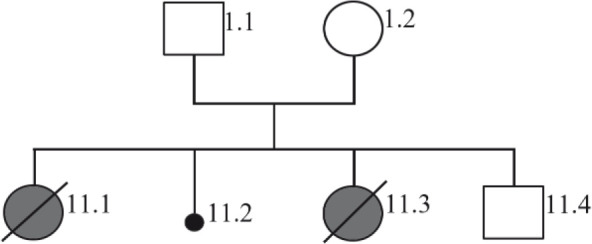
The nonconsanguineous couple was referred from the Genart IVF Center (Ankara, Turkey) to our genetic laboratory (Mikrogen Genetic Diagnosis Center, Ankara, Turkey) in 2020. The couple with a history of two affected children, one spontaneous abortion, three in vitro fertilization (IVF) failures, and one healthy boy was referred to our laboratory for preimplantation genetic testing (PGT) (Figure 1). The wife had been evaluated as a carrier of 46, XX, t (2; 6) (p21; p25); therefore, four IVF treatment cycles supported by PGT for this translocation had been performed in different IVF centers until the couple consulted our laboratory. The first child of the family was an affected girl who suffered from epilepsy and spasticity and died at 7 months old. The second pregnancy resulted in spontaneous abortion. The second child was a girl with bilateral anophthalmia, epilepsy, and multiple congenital anomalies who died at 3.5 years old. After the loss of her second child, it was noticed that the mother was a carrier of the 46,XX,t (2;6) (p21; p25) translocation. Since the mother was found to be a carrier of the translocation, four IVF treatment cycles supported by PGT-SR had been performed in different IVF centers until the couple consulted our laboratory. In their first IVF study, seven embryos had been detected by FISH analysis (using 2p telomeric, chromosome 2 centromeric, and chromosome 6 centromeric probes) and only one healthy embryo had been found. Trisomy 2p in three embryos, monosomy 2p in one embryo, trisomy 2 in one embryo, and monosomy 2 in one embryo have been reported. The family got a healthy boy from this first IVF treatment with FISH-based PGT-SR and their son is 9 years old now. In the second IVF attempt with the NGS-based PGT-SR, 4 embryos had been detected and no healthy embryos had been found (monosomy 6 in embryo 1, monosomy 2 in embryo 2, monosomy 11 in embryo 3 and monosomy 2p, trisomy 6p, and trisomy 12 in embryo 4). In the third IVF treatment with NGS-based PGT-SR, 4 embryos had been detected and no healthy embryos had been found (monosomy 2 in embryo 1, monosomy 2p, trisomy 6p in embryo 2, trisomy 6p in embryo 3, and monosomy 2p, trisomy 16 in embryo 4). In the fourth IVF treatment with the NGS-based PGT-SR, four embryos were evaluated but no healthy embryos were found. Since the report of this study did not reach us, detailed results could not be outlined. The couple was referred to our laboratory to perform NGS-based PGT-SR as their 5th IVF treatment.
PGT-SR study: Ovarian stimulation was performed using standard techniques of gonadotrophin-releasing hormone (GnRH) agonist down-regulation combined with ovarian stimulation using a combination of recombinant FSH (Gonal-f; EMD Serono Inc., Germany) and urinary-derived gonadotrophin stimulation (Menapur; Ferring Pharmaceuticals, Germany; Merioval; IBSA Institut Biochimique SA, Switzerland). Oocyte retrieval occurred approximately 36 hr after human chorionic gonadotrophin (HCG) administration and was performed via ultrasound-guided transvaginal aspiration. Spermatozoa used for the IVF procedure were prepared using standard density gradient centrifugation (Isolate; Irvine Scientific, USA).
In order to prepare for the PGT study, 4–5 trophectoderm cells were biopsied from blastocyst-stage embryos on day 5. The biopsied cells were lysed and the whole genome amplification (WGA) was performed with the Ion ReproSeq PGS kit (Thermo Scientific, USA) including fragmentation, library preparation, and amplication. All six biopsied blastocysts were successfully amplified. Next generation sequencing was performed on the Ion GeneStudio S5 (Thermo Scientific, USA) platform according to the manufacturer’s protocol. Results were analyzed with Ion Reporter Software. FISH analysis was carried out on metaphase and interphase nuclei of the mother obtained from PHA stimulated lymphocyte cultures by using commercial FISH probes for 2p telomeric (green), 2q telomeric (orange), 6p telomeric (green), 6 centromeric aqua and 12p telomeric (green), and 12q telomeric (orange) probes.
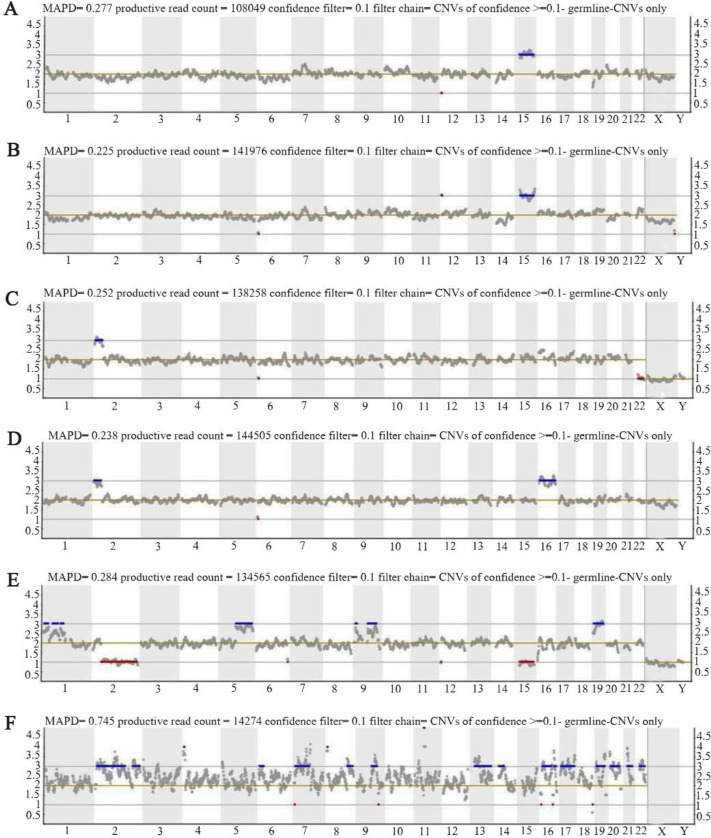
PGT-SR results: NGS analysis was done for 6 embryos and no healthy embryo was found. The results of this study were:
As a result of NGS analysis, cryptic involvement of chromosome 12p13.33p13.31 region was detected. The breakpoints and sizes of the variants are listed below:
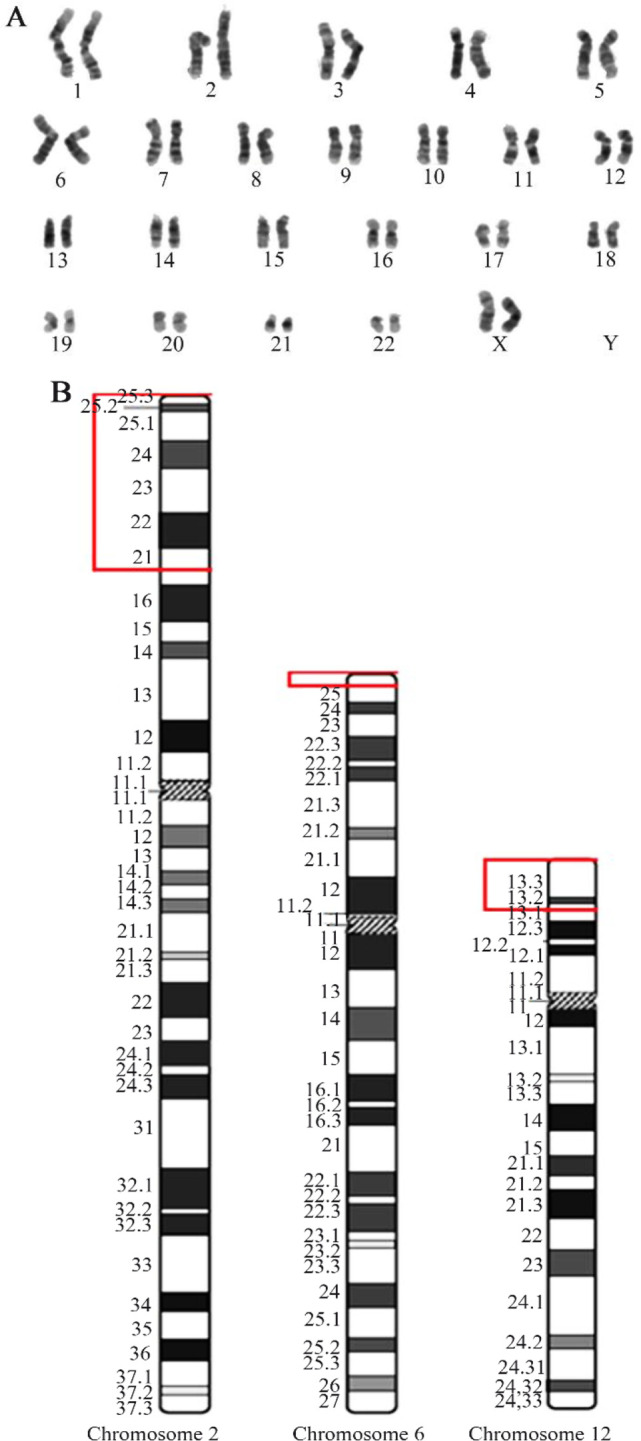
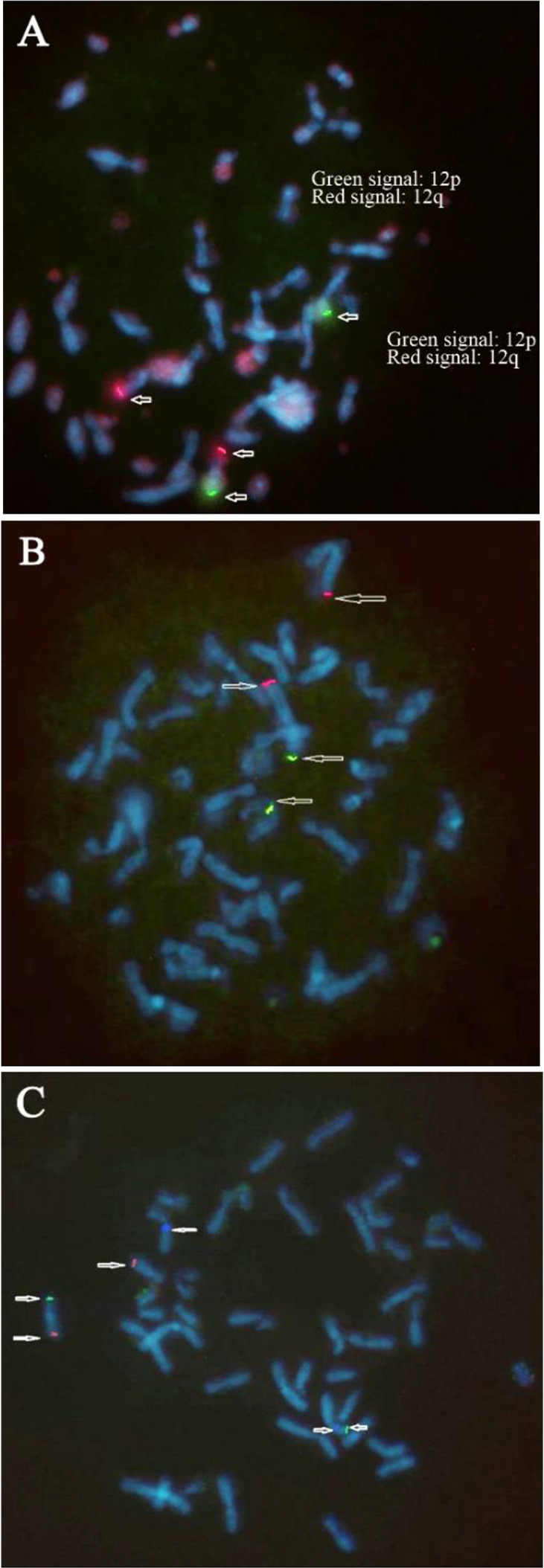
Diagnosis of the chromosomes involved in complex chromosomal rearrangements: After PGT-SR analysis, the karyotype and FISH analysis of the mother was studied to exclude possible complex translocation. FISH analysis with chromosome 2, 6, and 12 specific probes revealed that the mother was a carrier of a balanced 3-way translocation of 46,XX,t (2;6;12)(p21;p25;p13). The cryptic involvement of 12p13 was first detected during our PGT-based NGS study of embryos. G-banded metaphases were captured (Figure 3), and a subsequent metaphase FISH study was prepared. The results showed the presence of a 12p green signal on derivative chromosome 2 and a 12q red signal on chromosome 12 (Figure 4A). Subsequent FISH on the other metaphases (Figure 4B) showed the presence of a 2p green signal on derivative chromosome 6 and a 2q red signal on chromosome 2. Figure 4C represents the presence of a 6p green signal on the short arm of chromosome 12. This confirmed the complex cryptic translocation of 46,XX,t(2;6;12)(p21;p25;p13), which was not detected on karyotyping and was incidentally found during the PGT-SR NGS study. The karyotype of the mother after metaphase FISH was therefore 46,XX,t(2;6;12) (p21;p25;p13).
Balanced complex translocation carriers of three-way exchange involving three chromosomes increase the risk of recurrent miscarriages and affect children due to the production of unbalanced gametes (11).
The estimated frequency of balanced complex chromosomal translocations involving three chromosomes was reported as 0.1% among couples with a history of pregnancy losses (14). Li et al. searched for the influence of three types of balanced CCR on early embryonic development and molecular karyotype, and they found that the frequency of high quality blastocysts for three-way rearrangements was low (15). Scriven et al. reported that the chance of normal/balanced embryos for male and female three-way translocation carriers was 19.4% and 4.9%, respectively (7). In our case, the carrier mother had a history of affected children, miscarriages, and IVF failure. CCR cariers have an increased risk of chromosomal instability in embryos, so identification of the chromosomes involved in the translocation is important in providing the CCR couple with accurate genetic counselling for reproductive risks and PGT options. The couple’s chance of having a normal or balanced embryo is expected to be very low. When the couple was referred to our laboratory, four PGT-SR studies had previously been performed in other laboratories due to the wife’s two-way translocation. One of them was the FISH based PGT-SR study, which only detects the imbalances due to two-way translocation between chromosomes 2 and 6; therefore, the results of the current study cannot yield information about the participation of chromosome 12. Among the three NGS based PGT-SR studies, none of them could find a chromosomal abnormality involving the 12p13.33p13.31 region. Trisomy 12 was only reported in one of them. Comparing the results of our PGT-SR study with previous NGS-based PGT-SR studies in couples, it was found that copy number variations of 12p13.33p13.31 were not reported before the current study. CCR was suspected as a result of our NGS-based PGT study, and after the PGT-SR study, the presence of three-way translocation of the wife was confirmed by FISH analysis. If the presence of the complex chromosomal translocation had been detected in previous IVF applications, the family could have been better informed about their reproductive risks.
Some of the CCRs have cryptic changes like unexpected involvement of chromosomes or micro-deletions or microduplications. Several studies (1, 11, 12) found that seemingly balanced reciprocal translocations can have unexpected complexity and cryptic changes. The accuracy for detecting chromosomes and chromosomal breakpoints depends on the quality of the chromosome analysis. Conventional cytogenetic analysis may have some difficulties in detecting complex chromosome rearrangements because of unexpected involvement of chromosomes and submicroscopic chromosomal anomalies. Telomeric regions of all chromosomes have the same light-staining pattern of G-banding, so conventional cytogenetics may miss these small translocations, which are called “cryptic translocations”. Conventional cytogenetics is inadequate for detecting these translocations since the size and banding pattern of the chromosome regions involved are too similar for the exchange to be detected, or the size of the exchanged segments is smaller than the resolution limit of the G-banding. With the use of FISH and array technologies, it is possible to define complex chromosomal translocations (11). In our case, cryptic involvement of the 12p13.33p13.31 segment was first suspected according to the NGS based PGTSR study’s results and then confirmed by FISH in lymphocyte cultured cells of the wife.
The reason why the involvement of chromosome 12 was overlooked during previous PGT studies was thought to be related to the size and banding pattern of the chromosome 6 and chromosome 12 segments involved in the translocation. The resolution in conventional cytogenetic analysis is approximately 5–10 MB according to banding quality. The translocated segments of chromosomes 6 and 12 are approximately the same size and have the same banding pattern (light band), thus making it difficult to recognize the presence of complex translocation. As the CCR carrier status of the wife was not known before our PGT-SR study, the NGS-based PGT-SR study helped us to find the presence of CCR. Previous studies showed that cryptic chromosome involvement in some CCRs carriers was diagnosed during PGT workup incidentally (16, 20). PGT-SR for cryptic translocations detects a higher frequency of unbalanced karyotypes in comparison with prenatal diagnosis techniques (chorionic villus sampling and amniocentesis) (13).
Although it is difficult to find normal embryos for balanced complex chromosome rearrangement (BCCR) carriers, preimplantation genetic testing gives a chance for carriers of CCR to reduce the risk of recurrent miscarriages and having off-spring with unbalanced chromosomal changes (12). A limited number of cases of PGT for carriers of CCRs were reported. Some of the cases were analyzed by FISH technique (16, 17), but with the development of NGS technologies, the number of PGD cases analyzed by NGS is increasing (15, 18–20). FISH, array CGH, and NGS methods are commonly used for PGT-SR studies. FISH, as compared with NGS, has the disadvantage of screening only a limited number of chromosomes due to the limited number of probes for simultaneous use. PGT-SR using NGS technology detects not only chromosomes that participate in translocation but also recognizes all involved chromosomes. With the development of molecular technology, NGS became an accurate method for detecting the copy number variations in embryos.
In our reported case, balanced three-way translocation carrier status was detected after NGS-based PGT-SR, in spite of having two-way balanced translocation. The sizes and banding patterns of exchanged fragments of chromosome 6 and 12 probably caused some difficulty in defining the correct diagnosis. In conclusion, our study showed that the NGS-based PGT technique can effectively help families with a cryptic balanced trans-location plan their pregnancies and detect unbalanced chromosomal abnormalities that may be below the resolution limit of conventional cytogenetic analysis. FISH and conventional karyotype analyses are the gold standards for detecting balanced CCR carriers. Although the FISH technique is still accepted as the gold standard method for PGT-SR study of CCRs, the NGS-based PGT-SR method provides the opportunity to find the cryptic CCRs incidentally; therefore, this case report also emphasizes the importance of simultaneous scanning of all chromosomes to detect cryptic CCRs. The use of the FISH and NGS methods together in the preimplantation genetic diagnosis process will help to determine the potential risks and make a more accurate diagnosis. The detection of undiagnosed complex balanced translocation carriers among IVF patients will likely be improved by NGS-based PGT-ST.
