
Millions of people die annually due to environmental and global health issues exacerbated by air pollution. Since the beginning of time, humankind has likely had to deal with air pollution while enjoying the warmth of the smoky fire in Palaeolithic cave dwellings. As soon as man began to dwell in towns and cities, the inevitable air pollution resulting from fuel burning became a source of human pain. Fossil fuel consumption has reached historic highs due to the rapid development of energy-intensive industries and the growing standard of living in developed nations. After the industrial revolution, the population of the globe has considerably expanded, particularly in urban areas (1). Air pollution is the fourth most important global risk factor for death and is responsible for seven million deaths globally each year. It is a driver for non-communicable diseases and causes or exacerbates numerous human health ailments. In 2019, it was estimated that 99% of people on Earth lived in areas where air quality levels failed to meet the standards recommended by the WHO. The average daily economic cost of air pollution has been estimated at around $8 billion, which equates to 3–4% of the world's gross domestic product (2). Much of the burden of pollution's adverse impacts on health falls on low-and middle-income nations. In lower and middle-income nations, an estimated 89% premature deaths linked to air pollution occurred, with the Southeast Asia and Western Pacific regions experiencing the highest percentage of these deaths (3).
Of late, air pollution from anthropogenic emissions is becoming a significant issue in Asia due to rising energy, automobile, industrial, and agricultural product consumption, household pollution, and its effects on human health. According to the data obtained in 2021, the majority of the world's most polluted cities, with the poorest air quality, were concentrated in the South Asia and Central Asia, which together accounted for 46 out of the global top 50 most polluted cities (4); approximately 70% of air quality-related deaths, according to the United Nations Environment Programme (UNEP), occurred in this part of the world (5). Almost all (99.9%) of Southeast Asia's 656.1 million inhabitants reside in places with higher particle pollution levels than the WHO's 5 μg/m3 standard. Air pollution shortened the life expectancy of Southeast Asians by 1.5 years on average compared to what the average lifespan would be if air quality levels aligned with the standards recommended by WHO. More than 60% of the population in South Asia is exposed to an average annual concentration of fine particulate matter (PM2.5) exceeding 35 g/m3 (6). India, a rapidly industrializing country with a growing population, has some of the world's worst air quality where premature deaths from air pollution increased 2.5 times in 20 years (7). India's mean annual population-weighted concentration of PM2.5 in 2019 was 91.7 g/m3 (with a 95% uncertainty interval (UI) of 69.6 to 113.9 μg/m3). This serves as an indicator of the high levels of ambient particulate matter (PM) exposure experienced across the country. The four Indian states with the highest levels of PM2.5 exposure, ranging from 123.5 to 217.6 g/m3, were located in the northern region of the country where particulate matter concentrations were elevated. In India, 55.1 and 57.4% of the population relied on solid fuels for cooking purposes in 2019. Using solid fuels contributed an average of 82.8% g/m3 PM2.5 (41.9%–153.8) to home emissions in 2019, along with the ambient 91.7% g/m3 PM2.5 levels across the country (8). India started the National Clean Air Programme (NCAP) in 2019, with the intention of reducing air pollution in 131 of the worst-affected municipalities across the country. However, the goal has since been changed from the initial 20%–30% reduction by 2024 to a 40% decrease by 2025 or 2026.
Limiting outdoor activities, using eco-friendly transportation, producing energy-efficient appliances, supporting clean energy sources, changing lifestyles, and manufacturing energy-efficient appliances are a few effective ways to reduce air pollution's negative effects, even though it is impossible to completely avoid exposure (9). Although there is not a single strategy to eliminate air pollution, some dietary practices and nutrients may assist in lessening its detrimental impact on health (10). Air pollution causes oxidative stress, which can damage cells and increase inflammation; therefore, consuming antioxidant-rich foods, such as fruits, vegetables, nuts, and whole grains can help reduce oxidative stress and inflammation. Foods rich in omega-3 fatty acids, such as fatty fish like salmon and sardines, as well as chia seeds, flaxseeds, and walnuts have been shown to have anti-inflammatory properties. Vitamins and other macro and micronutrients may help mitigate the negatives of air pollution. Vitamin C is a powerful antioxidant that aids in the reduction of the negative effects of air pollution on the body. It leads to the neutralization of free radicals produced by air pollution and the reduction of inflammation. Citrus fruits, kiwi, papaya, berries, and bell peppers are abundant in vitamin C. Another powerful antioxidant that helps protect the body from oxidative stress produced by air pollution is vitamin E. Nuts, seeds, leafy greens, and vegetable oils are high in vitamin E. Vitamin D is necessary for a healthy immune system, which can help lessen the effects of air pollution on the body. The greatest source of vitamin D is sunshine, although it may also be obtained via fatty fish, fortified dairy products, and pills. Furthermore, the B vitamins, including B6, B9 (folate), and B12 help decrease inflammation and support immune system. Whole grains, leafy greens, legumes, and fortified cereals contain B vitamins. Vitamin A supports respiratory health and may lessen the likelihood of respiratory disorders associated with smog exposure. Spinach, liver, sweet potatoes, and carrots are a few foods high in vitamin A (11–13).
In this study, the evidence has been synthesized on vitamin D's protective properties and dietary and pharmaceutical interventions have been discussed to show their beneficial effects in decreasing long-term negative impacts of air pollution on women's health. The constituents of air pollution interfere with metabolic processes and cause vitamin D deficiency; therefore, the mechanistic understanding required to establish how air pollution alters biochemical processes has been discussed in this paper since air pollution contributes to detrimental health effects, especially in women, by lowering the amounts of active vitamin D metabolites.
In this study, a comprehensive search was conducted across multiple electronic databases, including Web of Sciences, PubMed, ScienceDirect, Scopus, and Google Scholar, with no restrictions on publication dates. The search strategy involved crafting queries using pertinent keywords and phrases tailored to the syntax of each database. Specifically, keywords encompassing “air pollution”, “composition of air pollutants”, “PAH”, “particulate matter”, “ultrafine particulate matter”, and their effects on maternal health, pregnancy, pregnant women, prenatal development, and maternal growth were utilized. Additionally, keywords related to “vitamin D”, “Calciferol”, “1,25 (OH)2D” and their therapeutic applications in mitigating damage were included. Moreover, terms such as “nano formulation”, “liposomes of vitamins”, and “nanotechnology” were incorporated to encompass advancements in drug delivery systems. The selection criteria prioritized documents which were relevant to the research objectives, had available full-text content, and were written in English language. After retrieving search results, duplicate records were systematically eliminated, and the remaining documents underwent thorough screening to ascertain relevance. The chosen databases collectively offered a comprehensive repository of scholarly literature spanning diverse disciplines. Statistical analysis was subsequently employed to synthesize pertinent characteristics of the selected documents, including publication year, authorship, and geographical distribution.
Ambient air pollution: Outdoor pollution is usually referred to as “ambient air pollution”. The causes of ambient air pollution include emissions from combustion processes in motor vehicles, burning solid fuels, wind-borne dust, biogenic emissions from plants, bushfire smoke, and industry. Carbon monoxide (CO) and other harmful pollutants, including nitrogen oxides, are released into the atmosphere due to the burning of fossil fuels and inadequate use of reactive energies for transportation or electricity generation. Inhaling such air decreases the heart's capacity to pump adequate oxygen, leading to respiratory and cardiovascular diseases. In the US, coal-fired power plants are responsible for 35% of harmful mercury emissions (14). Key adulterants in industrial emissions include PM2.5 and PM10, CO, NO2, SO2, and VOCs. Asthma and bronchitis can be exacerbated by excessive physical activity. The O3 released into the air by industrial processes can worsen asthma episodes, irritate the eyes and throat, and cause breathing problems (15). The incidence of wildfires and the number of bonfires is increasing due to climate change, which can contribute to air pollution. Burning garden waste and stubble contributes significantly to bonfires. It increases the amount of PM2.5 in the air, interacting with other hazardous elements like chemical gas and pollen to produce smoke. Smoke makes the air hazy, creating challenges for people to breathe. Symptoms of exposure include trouble breathing, eye irritation, nose and throat irritation, and itch in the respiratory tract. Soot, dust, and particulates (which contain several hazardous compounds) remain suspended in the atmosphere for days (16). The greenhouse effect causes the average temperature to rise daily. Hence, the rate of backfires changes as the temperature increases. The biogeochemical cycles in nature depend on bacteria and fungi, which are involved in microbial degradation. They serve as key indicators of unusual environmental circumstances. When these microorganisms in the environment deteriorate, poisonous methane gas is released. Methane is a poisonous gas that can be inhaled and cause death. PM2.5 and PM10, NO2, and hydrocarbons, as injurious as smoking ten cigarettes a day, are released when vehicle gasoline combustion occurs (17). Heart complaints, asthma, breathing issues, and other respiratory disorders develop with the open burning of junk waste because the pollutants like soot, black carbon, and carcinogens emitted when waste is burned in the open air can become deposited on ice surfaces and contribute to the melting of the glacier (15). According to Food and Agriculture Organization (FAO) report, about 40% of global emissions come from livestock, 16% from mineral processes, 17% from burning of the biomass, and 8% from agricultural wastes. Four agricultural activities cause toxins to be released into the air. These include using insecticides, depositing agricultural waste, animal husbandry activities, and using salts in irrigation water. Agrarian solid wastes are sometimes burned to clear the land for new developments, but this causes the release of soot, PM, and other pollutants into the air.
Indoor air pollution: Numerous toxic pollutants and activities, including PM, volatile organic compounds (VOCs), carbon monoxide (CO), sulphur dioxide (SO2), nitrous oxide (NO), polycyclic aromatic hydrocarbons (PAHs), toxic materials, poor ventilation, as well as issues with temperature and humidity contribute significantly to indoor air pollution (18). According to the WHO study “Household air pollution and Health” released in 2019, approximately 17% of lung cancer deaths are caused by carcinogens and chemicals found in indoor air pollution, accounting for 45% of all pneumonia deaths in children under the age of five. Pneumonia is also the cause of 27 annual deaths linked to indoor air pollution. According to the analysis, household air pollution was estimated to contribute to 3.2 million deaths annually by 2021, with a significant number of these deaths occurring among young children. Exposure to indoor air pollution causes almost a million premature deaths yearly, accounting for 12% of all fatalities from ischemic heart diseases. Strokes affect 23% of the population. Regular exposure to indoor air pollution related to solid fuel combustion and paraffin at home causes around 12% of all fatal strokes. In 21% of cases, lower respiratory system infections are present. Adults are at increased risk of developing acute lower respiratory infections due to household air pollution. It is responsible for 22% of adult pneumonia mortality and 19% of chronic obstructive pulmonary disease (COPD) deaths. Exposure to indoor air pollution causes 23% of all COPD deaths in adults and 6% of lung cancer deaths in low-and middle-income countries (19). Using kerosene or solid fuels like charcoal, coal, or wood for domestic energy requirements results in household air pollution containing carcinogens, responsible for approximately 11% of adult lung cancer deaths. Indoor air pollution is ten times more dangerous than outside air pollution especially when chemical-based and manufactured goods are used in household products. VOCs emitted from sources like paints, craft supplies, furniture, furnaces, coal, and heaters culminate in nearly 4 million premature deaths annually. According to the data provided, household air pollution is responsible for 64% of all newborn deaths linked to air pollution worldwide, while ambient PM2.5 is responsible for the remaining 36%. The highest number and rates of air pollution-related deaths are seen in sub-Saharan Africa and South Asia, where the use of solid fuel for cooking is most prevalent. About 80% of the almost 236,000 infant deaths in sub-Saharan Africa along with 50% of the 186,000 deaths across South Asia are attributed to household air pollution (20). These are potent health threads that can lead to conditions such as asthma, respiratory disorders, and lung diseases caused by exposure to poor indoor air quality. Indoor air pollution has been linked to more than half of all cases of respiratory diseases in children under the age of five (21). Women, due to their active involvement in routine cooking and heating in rural settings, are more prone to suffer ailments owing to extended exposure to biomass emissions (18). Case-control research provides a clearer picture of the negative repercussions, such as higher child mortality rates in the 1–4-year age group and the statistical finding that more girls are likely to die than boys due to using solid fuel (22).
Particulate matter (PM): Air pollution (ambient and indoor) emitted from combustion sources or formed through atmospheric chemical reaction is a complex mixture of microscopic pjri_articles and gaseous pollutants, including organic compounds, smoke, soot, sulphates, nitrates, acidic components, dust pjri_articles, dirt, and PM (22, 23). A heterogeneous mixture of gases in air pollution and delicate PM, pjri_articles less than 2.5 μm in diameter (PM2.5), provides the most substantial evidence for harmful impacts on health (24). PM is an intricate mixture of solid pjri_articles and liquid droplets. Aerodynamic diameter, which categorizes PM into fractions based on particle size, is used to describe different types of particulate matter, such as PM10 (coarse pjri_articles of 2.5–10 μm), PM2.5 (fine pjri_articles between 0.1–2.5 μm), and ultra-fine PM (UFPM; ultrafine pjri_articles less than 0.1 μm) (25). PM can also be formed through indirect gas-to-particle conversion. Inhaled PM initially meets coarse hairs in the upper respiratory tract, which intercepts the larger pjri_articles under normal physiological conditions (26). These large pjri_articles adhere to the nasal epithelium and are removed by mucociliary clearance before reaching the lower respiratory tract. Smaller particulate matter, such as ultrafine PM, PM2.5, and PM10, are able to penetrate deeper into the lower respiratory airways. The deposition of these fine and ultrafine pjri_articles in the lungs is more extensive compared to the filtration of larger pjri_articles (above 10 μm) in the upper airway (27). PM2.5 and PM0.1 are relatively smaller, allowing them to circulate and pass through various cellular systems. This poses substantial health risks as they can reach and deposit in the deeper regions of the lungs, such as the terminal bronchioles as well as alveoli, from where they can enter the pulmonary circulation and spread to other organs, including the kidneys and brain (28, 29).
Combustion processes generate primary PM, including diesel exhaust pjri_articles (DEPs) (28). Secondary PM is created in the atmosphere by photochemical processes that affect the nucleation of pollutants, including sulphur dioxide and ammonium nitrate. Metals, elemental carbon, organic carbon, sulphates, and nitrates are the ingredients that make up PM. The composition of ambient particulate matter is influenced by the mixing of different emission sources at any given location and time. According to a report by the Intergovernmental Panel on Climate Change (IPCC), the main contributors to climate change, air pollution, and the release of greenhouse gases are transportation (14%), energy including the production of heat and electricity (35%), manufacturing (21%), buildings (6%) and agricultural and land use change (24%). These factors also account for a sizable portion of the non-communicable diseases and unfiltered energy sources (30).
Recent studies indicate that exposure to PM is associated with increased mortality. This is linked to its effects on mitochondrial machinery and functioning, disrupted ATP generation, increased mitochondrial reactive oxygen species (ROS), DNA breakage, inflammation, apoptosis, and epigenetic changes that alter the structural integrity and functioning of key organs and tissues (7, 31). Environmental policies and health regulations often target gaseous pollutants such as nitrogen dioxide (NO2). However, NO2 can also interact with high levels of ozone (O3) and volatile organic compounds (VOCs) in the environment to produce a complex mixture of highly reactive oxidants, including hydroxyl radicals, peroxyl radicals, and singlet oxygen species (32). Another highly oxidizing agent created as a photochemical byproduct of ambient air pollution in this process is tropospheric O3.
Nitrogen dioxide (NO2): NO2 emission is associated with traffic that contributes up to 80% of ambient air pollution which remains in close association with PM, irritating the respiratory system by penetrating deep into the lung (14). When inhaled at high concentrations, it can increase the severity of the inflammation in the airways and exacerbate allergen induced airway hyperresponsiveness (AHR). Negative effects occur at concentrations more than 0.2 ppb, and concentrations greater than 2.0 ppb affect different immune responses by targeting CD8+T cells and natural killer (NK) cells. The negative effects of NO2 exposure are more pronounced in people with prior respiratory infections. For certain patients, short-term exposure to NO2 causes a rise in bronchial reactivity and worsening of chronic respiratory diseases. Nevertheless, subsequent meta-analyses revealed a connection between NO2 concentration and increased mortality from all causes, as well as increased risk of lung cancer, and respiratory and cardiovascular diseases (14). When VOC emitted from anthropogenic activities is combined with nitrogen oxide, carbon monoxide, methane, and sunlight, it produces NO2. Chronic lung damage and decreased smell sensitivity may result from prolonged exposure. It also plays a role in forming ground-level ozone (33).
Ozone (O3): The largest source of O3 precursors is gasoline vapor, followed by automobile exhaust and chemical solvents. Ozone exposure enhances the production of tumor necrosis factors, interleukins, and fibrinogenic proteins in human airway epithelial cells (34). The 95th percentile for the average daily 8-hr maximum ozone concentration is predicted to increase from 79 ppb in 2012 towards 87 ppb by 2050, wherein one ppb of ozone equates to 1.97 μg/m3. Due to its poor water solubility, ground-level ozone (O3) can penetrate deeply into the lungs, producing respiratory problems, as the upper respiratory tract cannot efficiently eliminate it (35).
Carbon monoxide (CO) and carbon dioxide (CO2): When fossil fuel combustion is incomplete, CO and CO2 are formed. An essential element connected to a higher chance of pollen being allergenic and having greater IgE binding strength is the quantity of CO2 and high temperature of the environment. These changes might impact the development of allergies and asthma. Evidence shows that decreased CO levels are associated with declining rates of asthma mortality. Inhalation of CO can cause poisoning, resulting in symptoms such as vomiting, weakness, headaches, dizziness, nausea, and ultimately unconsciousness. Compared to oxygen, carbon monoxide has a far stronger affinity for haemoglobin (19). Similarly, over time, those exposed to high quantities of carbon monoxide may suffer from severe poisoning. Ischemia, hypoxia, and cardiovascular diseases are detected due to loss of oxygen caused by the competitive binding of CO. The greenhouse gases that are closely linked to climate change and global warming are impacted by carbon monoxide (35).
Sulphur dioxide (SO2): Sulphur dioxide is a harmful gas and one of the common air pollutants produced from both anthropogenic and natural sources, such as burning of fossil fuels and biomass at major sulphur-containing industrial facilities like oil refineries and power plants. Inhaled SO2 can be harmful to asthmatic and allergy-prone individuals. In the presence of other pollutants, SO2 is the most corrosive gas in the atmosphere and nitrogen dioxide can triple the corrosive effect of SO2 in places with low humidity; this effect is amplified further by the presence of O3.
The concentration of SO2 and O3 must be lesser than 10 g/m3 to limit the corrosion rate (14). The main health issues linked to elevated levels of SO2 include bronchitis, bronchospasm, and increased mucus production. The current annual limit for SO2 is 0.03 ppm. SO2 can penetrate deeply into the lung, where it is converted to bisulfite. Next, it interacts with sensory receptors to cause bronchoconstriction, particularly in individuals with lung diseases (33).
Volatile organic compounds (VOCs): Various VOCs are generated by incomplete fuel combustion, burning of biomass, and from vegetation. VOCs participate in photochemical processes that produce secondary pollutants, including low-level ozone. The most prevalent VOCs of human origins include alkanes, alkenes, esters, alcohols, and acids. Human malignancy has been linked to VOCs, including toluene, xylene, ethylbenzene, and benzene (35). VOCs can contaminate indoor air and may be harmful to human health with immediate and long-term negative impacts (19). Long-term exposure can result in hazardous effects, whereas short-term exposure is shown to irritate the eyes, throat, mucous membranes, and nose. VOCs are also a source of unpleasant odors of indoor air.
Ammonia (NH3): Agriculture and waste are human-made and natural sources that create NH3. Although ammonia does not directly affect human health, it can impact natural ecosystems in direct and indirect ways by causing acid and nitrogen deposition. Ammonia also plays a significant role in production of secondary particulate pollution in the environment (35).
Nutritional approaches for reducing air pollution-associated health risks in women: Given the multiple distinct methodological difficulties involved, uncovering the molecular connections between gene-environment interactions and reproduction in humans is a challenging goal. It is hypothesized that genetic or epigenetic aberrations are particularly relevant to reproductive health because they play a significant role in the intricate interaction between genotype and phenotype (36). Although molecular biologists are aware of the difficulties of such approaches, significant gaps in our understanding occur during the crucial windows of susceptibility from conception to 37–40 weeks of gestation.
To improve population health, it is better to detect nutritional deficiencies that characterize human reproduction. New techniques to address these difficulties are urgently needed. It was proposed nearly 50 years ago that variation in the prevalence of metabolic diseases among populations could be caused by the presence of thrifty genes that would confer advantages in nutritionally challenging environments, but could become harmful if populations were exposed to conditions of food abundance (37). In the early 1990s, epidemiologist David Barker discovered that a child's prenatal environment had long-term programming effects on their future health and development. To find associations between the birth weight and mortality rates for cardiovascular disease, resistance to insulin, and hypertension, Barker and colleagues utilized birth weight as an alternative measure for inadequate intrauterine nutrition. Poor prenatal nutrition frequently results in restricted intrauterine development and low birth weight (38). In prosperous countries, up to 7% of the live births are low birth weight infants. The rates of low birth weight can reach 15% on average in developing nations and 27% in Southeast Asian nations, including India (39). As more people become aware of the impacts of air pollution during pregnancy, there is an exponential increase in the need to offer advice on how to mitigate those effects. The government recommends using air quality alert systems to plan activities, avoiding outdoor exercise on high pollution days and living near pollution sources, minimizing exposure to air pollution while commuting, wearing face masks when appropriate, cooking in well-ventilated areas, and using portable air cleaners with high-efficiency particle air (HEPA) filters (40). Besides these personal strategies, the concept of nutrition as a critical element in regulating air pollution toxicity is relevant to vulnerable groups, such as pregnant women and children, those living in polluted areas, and those with poor dietary habits. This is especially significant when infectious diseases and malnutrition are prevalent because virtually all nutrients in the diet play a vital role in host resistance to infection. In Southeast Asian nations, where infectious diseases, poverty, and hunger are rampant, the situation is even worse (41). Nutrition is important in cumulative risk assessment not only because it is regulating inflammatory and antioxidant pathways, particularly those associated with air pollution insults, but also because it is affecting pregnancy- and delivery-related complications. Diets high in macro and micronutrients, antioxidants, and anti-inflammatory compounds can promote health and reduce sensitivity to the chemical stressors found in air pollution (42). A good diet may significantly protect the body against all the chemical, biological, and physical stresses. Thus, useful dietary interventions may be most successful when implemented early in pregnancy. This is especially important for women who are malnourished and infected due to unsanitary settings. Several investigations have also validated these epidemiologic findings (43).
Experimental and human investigations led to the development of the Developmental Origins of Health and Disease (DOHaD) theory. This hypothesis postulates that environmental influences on fetal and neonatal development, such as nutrition, may modify target gene expression to permanently alter cell or tissue function and structure (44). Additionally, this research suggests that prenatal exposures can impact fetal programming and have long-term consequences for an individual's future health. Pregnant women and their growing fetuses are at risk of the adverse health consequences of air pollution. Pregnant women exposed to air pollution, especially during early gestation, face major health risks (45). The most relevant pollutants, such as NO2, SO2, PM2.5, and PM10 appear to harm clinical pregnancy and fertility in terms of live birth and implantation, increase implantation failure (NO2 and PM10), and reduce embryo quality. In epidemiological studies of the general population, evidence shows that exposure to high amounts of NO2 and SO2 relates to an increased risk of miscarriage (46). In addition, earlier research has linked low levels of 25(OH)D to primary ovarian insufficiency (POI), endometriosis, and polycystic ovary syndrome (PCOS) (47). Air pollution is a key contributor to poor health across the world. It elevates the likelihood of cardiovascular and pulmonary diseases by increasing oxidative stress and inflammation in the body (22). Nutrients such as omega-3 polyunsaturated fatty acids, B vitamins, and vitamin C and E may be able to mitigate some of the detrimental effects of air pollution (48). Air pollution can also diminish our exposure to sunshine, which can lead to a decrease in vitamin D production (49). Hopefully, useful dietary reference intake (DRI) guidelines will be established for this crucial nutrient by determining the appropriate intake for vitamin D during pregnancy and lactation and this can be an efficient method for mitigating some of the harmful health impacts of air pollution.
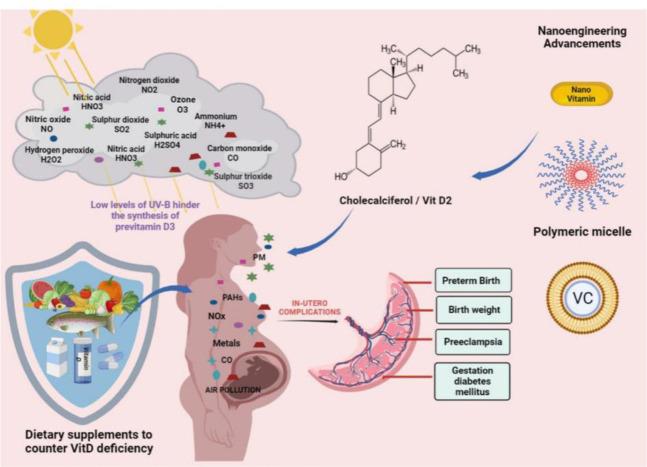
Vitamins are essential micronutrients that cannot be synthesized and therefore must be obtained from the diet or supplements. Vitamins have a limited medicinal use due to their weak stability and absorption. One promising application is the construction of advanced formulations of vitamins using nanotechnology including liposomes, nanoemulsions, coenzyme forms, and chelated vitamins. Nanotechnology has the potential to revolutionize medicine, particularly in pregnancy and women's health (50) with the purpose of improving maternal and fetal health outcomes. Additionally, research suggests that nano-engineered vitamins may be beneficial in reducing the risk of health complications connected to fetal exposure to air pollution. Nano-engineered vitamins are created by encapsulating traditional vitamins and minerals in tiny pjri_articles, usually less than 100 nm in size. These pjri_articles can be designed to release their contents slowly over time, providing sustained nutrient delivery to the mother and fetus. Additionally, the small size of the pjri_articles allows them to bypass the body's natural defence mechanisms and be transported across the placenta through normal transcellular mechanisms. These formulations help enhance the absorption, bioavailability, and effectiveness of vitamins in the body (11, 51). Furthermore, they are safe and well-tolerated by pregnant women. While the use of nano-engineered vitamins in pregnancy is still a relatively new field, the promising results of these studies suggest that they could have significant benefits for maternal and fetal health (52). However, more research is needed to fully understand the long-term effects and potential risks associated with their use.
The effect of Vitamin D on pregnancy: Vitamin D is a crucial fat-soluble vitamin essential for bone health as it helps the body's absorption and utilization of calcium and phosphorus from dietary sources. The primary source of vitamin D is sunlight. However, pregnant women are frequently recommended to avoid excessive sun exposure due to the danger of skin damage and skin cancer. Pregnant women must therefore ensure enough vitamin D intake through food or supplementation (53–55). Clinical research on the importance of vitamin D supplementation during pregnancy has been lacking since the early twentieth century. A lack of bone mineralization caused by vitamin D deficiency (hypovitaminosis) results in soft and weak bones, malformations, and fractures, a condition known as rickets (56). Pregnant women deficient in vitamin D can pass this problem on to their growing fetus. Some significant issues, such as high blood pressure and blood sugar levels, can emerge during pregnancy. Absorbing enough vitamin D through diet or supplements is critical for pregnant women to support the health and metabolism of their developing fetus (57). Many health issues associated with air pollution exposure can be mitigated in part via vitamin supplementation. The beneficial effects of vitamins include free radical scavenging, antioxidant activity, DNA repair, immunomodulatory, anti-inflammatory actions, and inhibition of lipid peroxidation processes (11). By reducing the amount of ultraviolet-B (UV-B) light that reaches the earth's surface, air pollution could unintentionally have a detrimental effect on vitamin D level. Sunlight exposure causes the skin to produce sitosterols, including vitamin D. UV-B light in the wavelength range of 290 and 315 nm is needed for the production of previtamin D3. Provitamin D3 is created in the skin because of 7-dehydrocholesterol exposure to sunlight, and it may then be transformed to vitamin D3 either by heat-induced isomerization or photo-conversion. After being produced, vitamin D3 travels in the blood where it interacts with vitamin D-binding proteins (DBP) and lipoproteins before being metabolized by the liver and kidneys to produce 25-hydroxyvitamin D (25(OH)D), the main circulating form of vitamin D, and 1,25-dihydroxyvitamin D (1,25(OH)2D), an active hormonal form. Vitamin D levels can be determined via 25(OH)D assays (49, 53, 55, 58).
The mother is the only provider of vitamin D to the fetus. During pregnancy and lactation, the metabolism of vitamin D is enhanced. The placenta begins to mature at four weeks of gestation. During a normal pregnancy, maternal blood concentrations of 1,25(OH)2D, the active form of vitamin D, are increase during the first trimester (57, 59). This increase in 1,25(OH)2D is most likely attributed, at least in part, to active production in placental decidual cells. It helps to double calcium absorption during pregnancy. Because of the widespread distribution of the vitamin D receptor (VDR), it is more likely that this physiological elevation in 1,25(OH)2D influences other biological reactions throughout pregnancy. Pregnancy requires the placenta to process and provide vitamin D to the developing fetus. In addition to the receptors that bind active vitamin D, the placenta also contains the enzyme 1α-hydroxylase required for converting the circulating form of vitamin D (25 hydroxy vitamin D) into the active form (1, 25 dihydroxy vitamin D) (54, 55, 57, 58). Vitamin D penetrates into the placenta, and the amount in the fetal cord blood correlates with the mother's 25(OH) D level. Since the active metabolite 1, 25(OH)2D does not easily cross the placenta, the fetal kidneys and placenta work together to provide 1,25(OH)2D to the fetal circulation. Human syncytiotrophoblast and decidual cells may produce 1,25(OH)2D3 and exhibit CYP27B1 activity, and these two enzymes are found in the maternal (decidual) and fetal (trophoblastic) parts of the placenta. The spatiotemporal organization of the placenta throughout gestation has also been demonstrated to localize placental CYP27B1 and the VDR to the maternal and fetal regions of the placenta (59, 60). The placenta enhances calcium transfer to the fetus by expressing key mediators of vitamin D metabolism such as PTHrP, insulin-like growth factor 1, human placental lactogen, oestradiol, and prolactin. During fetal development and lactation, PTHrP acts as a calciotropic hormone. Elevated levels of PTHrP during pregnancy may activate renal CYP27B1, indirectly increasing 1,25(OH)2D concentrations, and decreasing PTH levels. This, together with other variables, results in increased maternal 1,25(OH)2 D concentrations during pregnancy compared to non-pregnant or postpartum women (60). The active form of vitamin D, 1,25(OH)2D3, has a shorter half-life and binds to the VDR more strongly than other vitamin D metabolites. On the other hand, 25(OH)D is a storage form of vitamin D that indicates the overall state of vitamin D. Vitamin D deficiency might disrupt intestinal homeostasis and barrier functioning by interacting with VDR, which influences bacterial colonization, tight junction architecture, and anti-inflammatory responses (61). Probiotic therapy can boost VDR expression and function, reducing intestinal inflammation and increasing serum 25(OH)D levels. Low blood 25(OH)D levels is linked to inflammatory bowel disease, and probiotics tend to boost 7-dehydrocholesterol (7-DHC) production and circulating levels of 25(OH)D. The epigenetic uncoupling of vitamin D feedback catabolism at the feto-maternal interface is crucial for increasing the bioavailability of 1,25(OH)2D (62). By keeping low levels of Ca 2+ and ROS, vitamin D helps to avoid pregnancy-related problems (Figure 1). Through the photolysis of 7-dehydrocholesterol, the UV rays from sunshine act on the skin to begin the production of vitamin D3 (cholecalciferol). Vitamin D3 enters the bloodstream and travels to the liver, where it is converted to 25-hydroxyvitamin D3(25(OH)D3), the primary precursor for active vitamin D, by the vitamin D-25 hydroxylase enzyme (encoded by the CYP27A1 gene). The 25(OH)D3-1α-hydroxylase enzyme (encoded by the CYP27B1 gene) adds an additional hydroxyl group at the 1 position of 25(OH) D3 to form the active 1,25(OH)2D3. This active vitamin D metabolite enters the nucleus, binds to the VDR, and the VDR-1,25(OH)2D3 complex binds to vitamin D response elements (VDREs) to regulate the expression of numerous genes. Increased levels of Ca 2+ and ROS, which are typically controlled by vitamin D and help to maintain low resting levels of both Ca 2+ and ROS, are associated with the onset of complications during pregnancy. Vitamin D maintains low Ca 2+ levels through enhancing expression of the plasma membrane Ca 2+ATPase (PMCA) which releases Ca 2+ and calbindin, as well as antioxidants that lower ROS levels. Metabolites of vitamin D are crucial for the growth of immune cells and the synthesis of cytokines. The possible impact of PM2.5 exposure on the activation of the NLRP3 inflammasome is mediated by ATP. Exposure to PM2.5 induces intracellular ATP decrease (ATP efflux) or elevated extracellular ATP (ATP exposure). This can activate P2X7 receptor which results in various biological processes including K + efflux, Ca 2+ influx, mitochondria damage, lysosome rupture, and endoplasmic reticulum stress, and subsequently oxidative stress and inflammatory response. The inflammasome subunits, NLRP3, ASC, and procaspase-1, assemble to form the NLRP3 inflammasome, which then becomes activated. By cleaving the precursor cytokines pro-IL-1 and pro-IL-18, activated caspase-1 generates the physiologically active cytokines IL-1 and IL-18 and promotes the inflammatory type of cell death known as pyroptosis. Typically, vitamin D has anti-inflammatory characteristics that protect the body against chronic and severe systemic inflammation (63).
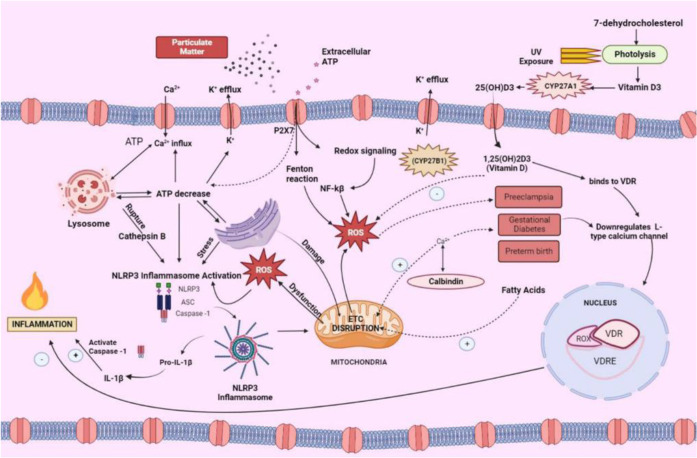
The epidemiological data suggest a connection between events during the prenatal period and vulnerability to developing disease later in adulthood (44). Studies have shown that vitamin D affects implantation tolerance and placental growth, and its immunosuppressive properties may be related with increased expression of CYP27B1 and VDR in the first trimester (54, 57, 59, 64, 65). Maternal vitamin D levels can impact the neonate's accumulation of bone minerals through altered expression of the genes encoding placental calcium transporters, which are epigenetically regulated by 1,25(OH)2D (53). Vitamin D deficiency during pregnancy may affect the fetal “imprinting”, which may lead to susceptibility of the fetus to chronic diseases both immediately after birth and later in life (66). It can additionally impact the development of the fetal skeleton and the preservation of the mother's bones. Early-life sun exposure, germline polymorphisms in VDR and CYP24A1, and sun exposure were found to be in connection with non-Hodgkin lymphoma risk in a clinic-based case-control research. A recent study found that VDR binds to promoter region of germline genes and possesses trans-repressive characteristics. The mechanism by which 1,25 (OH)2D suppresses IgE production is through the trans-repressive activity of the VDR-corepressor complex, which impacts chromatin compaction around the Iε region (58). Notwithstanding numerous theories, it is still unclear what biological processes may cause air pollution and reduce fertility. During a critical stage of embryonic development, direct exposure to pollutants through the placenta is thought to have the potential to irreparably harm cells that are in the process of dividing, leading to hypoxic damage, and even immune-mediated injury. This could result in miscarriage and other serious complications (67) (Table 1).
Table 1 The association between air pollution and pregnancy complications
| Population/cohort studies | Air pollutant | Types of diseases | Findings | Ref |
|---|---|---|---|---|
| 2754 mother-newborn pairs | NO2, SO2, CO, PM2.5,and PM10 | Glucolipid metabolicdisorders | Through systemic inflammation, prenatal air pollution exposure could adversely impact glucolipid metabolism of the developing fetus | (68) |
| 58025 pregnant women | PM2.5 | Vitamin D status | Exposure to PM2.5 before the assessment of 25-hydroxyvitamin D levels increases the risk of vitamin D deficiency in pregnant women | (69) |
| 115588 vaginal births | O3 and NO2 | Preterm birth | Higher exposure to pollutants like ozone and NO2 is associated with shorter gestation period. Women who conceived during fall season had lower ozone exposure | (70) |
| 50 cases of autism spectrum disorder | Maternal lifestyle or environmental chemicals | Autism spectrum disorder (ASD) | Higher maternal intake of certain nutrients and Supplements reduces ASD risk, while exposure to air pollution increases it | (71) |
| 3285 pregnant women | PM2.5 and PM10 | Trimester-specific air pollution exposure | A decrease in 25(OH)D levels and a higher risk of maternal vitamin D insufficiency were linked to exposure to particulate air pollution during the whole pregnancy. There was a 45% and a 48% increase in the likelihood of maternal vitamin D insufficiency, respectively, for every 10 g/m3 increase in PM2.5 and PM10 exposure | (3) |
| 375 mother-child pairs | PM10 and NO2 | Decrease in vitamin D levels in the cord blood | Low vitamin D level in infants was strongly predicted by maternal exposure to ambient urban NO2 and PM10 levels during the whole pregnancy. The association was strongest for third-trimester exposure | (72) |
| 700 children of 6 years | NO2, PM2.5,and PM10 | Asthma and allergy | Ambient air pollution exposure during pregnancy has been associated to immunological abnormalities in infancy which increases the prevalence of allergic rhinitis and asthma | (73) |
| 996 mother-child pairs | PM2.5 and black carbon | Oxidative imbalance, asthma, and allergic diseases | Prenatal exposures to pro-oxidant factors and potentially protective nutrients (such as vitamin D and n-3 polyunsaturated fatty acids) may influence the risk of asthma and allergic diseases in adolescence | (74) |
| 3731 pregnant women | PM2.5 | Perinatal anxiety and depression | Pregnancy-related PM2.5 exposure raised the risk of depression and anxiety by 11.5% and 10.8%, respectively | (75) |
| 27768 pregnant women | PM2.5 and PM10 | The effect on pregnant women’s vitamin D levels | Higher PM2.5 concentrations were associated with lower 25-hydroxyvitamin D (25OHD) levels (β= −0.20, 95%CI: −0.21 to −0.19), and higher 60-day cumulative daily mean PM10concentrations were also associated with lower 25OHD levels (β= −0.14, 95%CI: −0.15 to −0.14) | (76) |
| 6374 pregnant women | PM | Maternal glucose metabolism | Higher HbA1c, lower serum vitamin D level, and PM2.5 exposure | (77) |
| 8250 mother-newborn pairs | PM2.5, PM10, SO2, and CO | Fetal hyperinsulinism mediated by maternal inflammatory response | Exposure to ambient air pollution during pregnancy enhances the chance of fetal hyperinsulinism; however, higher levels of 25(OH)D can mitigate these effects | (78) |
| 2644 pregnant women | NO2 andbenzene | Infant mental development | Increased levels of 25(OH)D may reduce the impacts of prenatal exposure to ambient air pollution and reduce the chance of fetal hyperinsulinism. The mean exposure to NO2 and benzene during pregnancy was 29.0 g/m3 and 1.5 g/m3, respectively | (79) |
| 799 mothers of single child | Household air pollution | Hypertensive disorders of pregnancy (HDP) and GDM | The probability of stove stacking, HDP, and GDM was two- and six-fold higher, respectively, when household air pollution exposure resulted from using biomass fuels and burning trash. The increased risk of HDP and GDM associated with the use of biomass fuels was reduced with greater prenatal vitamin D intake | (80) |
| 857 mother-child pairs | PM2.5 | Allergic diseases in adolescence | Lower fractional exhaled nitric oxide (FeNO) and IgE levels are associated with increased intake of prenatal vitamin D, folate, and n-3 polyunsaturated fatty acids (PUFAs) | (81) |
| 6939725 pregnant women | PM2.5, PM10, SO2, NO, and NOX | GDM | GDM was linked to fine particulate matter and air pollutants (PM10, PM2.5, SO2, NO, NOX, and BC ). The odds ratio for these contaminants was 1.06 (95%CI: 1.05–1.08, Z = 7.76, P0.001) | (82) |
| 688 independent newborns and 2118 older children | PM2.5 and PM10 | DNA methylation in newborns | Prenatal PM exposure was associated with several differentially methylated CpG sites and differentially methylated regions (DMRs) in newborns, and these genes have previously been connected to outcomes affecting the lungs | (83) |
| 22253277 pregnant women | PM2.5, PM10, CO, NO, NO2, NOx, O3, and SO2 | GDM, HDP, preeclampsia, and gestational hypertension | During the first trimester, there were notable associations between exposure to PM10, SO2, and PM2.5 and the risk of gestational hypertension, GDM, and preeclampsia. Throughout pregnancy, exposure to PM2.5significantly increased the risk of hypertensive disorders | (84) |
| 39657 women | Indoor air pollution | Preeclampsiaeclampsia | Increased risk of preeclampsia or eclampsia is linked to indoor air pollution from biomass and solid fuel burning among Indian women | (85) |
| 5 cases of low birth weight and 3 still-births | Indoor air pollution | Low birth weight and stillbirth risks | Indoor air pollution was linked to a higher risk of stillbirth and low birth weight, as well as a lower mean birth weight | (86) |
| Various cohort studies from 1997–2017 | PM2.5 and PM10 | Hypertensive disorders | Increased MTHFR C677T polymorphisms interact with the environment to influence women's vulnerability to hypertensive problems during pregnancy | (87) |
| 11 cohort studies | PM2.5 | Preterm birth | Even when the ambient PM2.5 concentration is relatively low, it is crucial to protect pregnant women from PM2.5 exposures, especially during their first trimester | (88) |
| 9 cohort studies | PM2.5 | Preeclampsia | Pregnant women who are exposed to PM2.5, particularly in the third trimester of pregnancy, may be more likely todevelop preeclampsia | (89) |
| Different studies from 2009–2013 | NO2, NOX, PM10, PM2.5, CO, and O3 | Hypertensive disorders and preeclampsia | With a combined odds ratio of 1.57 and 1.31, exposure to air pollution increases the risk of preeclampsia and other pregnancy-related hypertensive disorders | (90) |
| 20 cohort studies | PM2.5, PM10, NO2, and SO2 | GDM | PM2.5 exposure in the second and first trimesters, and SO2 and NO2 exposure in the first trimester significantlyincreased the risk of GDM in Asian subjects as compared to American subjects | (91) |
| 62 studies | CO, PM10, NO2, and PM2.5 | Low birth weight and preterm birth | Studies found that exposure to CO, NO2, PM10, and PM2.5 increased the risk of low birth weight and decreased birth weight | (92) |
| 19 cohort studies | Household air pollution | Low birth weight and stillbirth | The use of solid fuels for cooking/heating in the home decreased birth weight and increased the risk of stillbirth and low birth weight | (93) |
| 31 cohort studies | PM2.5, PM10, NO2, and SO2 | GDM | Exposure to black carbon and NO3 significantly increased the risk of GDM throughout the first and second trimesters of pregnancy | (94) |
| 13 studies | SO2, PM10, NO2, PM2.5, O3, and CO | Congenital anomalies | The coarctation of the aorta was substantially correlated with NO2 concentrations | (95) |
| 25 studies | PM10, PM2.5, NO2, and O3 | ASD | There is an insignificant association between maternal exposure to ambient air pollution and ASD in children, a weak link between NO2 and ASD, and limited evidence to suggest an association between PM2.5 and ASD | (96) |
| 19 studies | O3 | Preterm birth | Preterm birth is linked to increased ozone exposure during the early stages of pregnancy | (97) |
| 20 studies | CO, NO2, O3, and PM10 | Tetralogy of fallot, coarctation of aorta, atrial septal defect, ventricular septal defect | Congenital heart defects seemed to be linked to exposure to ambient air pollution during pregnancy | (98) |
| 7 studies | PM2.5 | Stillbirth | An increased risk of stillbirth was linked to maternalexposure to PM2.5 during the whole pregnancy and the third trimester | (99) |
| 81 eligible cohort studies | PM2.5 and PM10 | Preterm birth, stillbirth, and gestational age | PM2.5 and PM10 exposure increased the risk of preterm birth in the entire pregnancy, low birth weight, small-for-gestational-age, and still birth in the third trimesters | (100) |
| 74454 birth records | SO2, CO, PM10, O3, NO2, and PM2.5 | Gestational diabetes and preeclampsia | Maternal exposure to air pollutants increases gestational diabetes risk, especially in the first trimester. Preeclampsia risk increases with increasing exposure | (101) |
Anti-inflammatory effect of vitamin D: Exposure to PM can cause an inflammatory response, which may be alleviated by vitamin D's immunomodulatory properties. PM2.5 exposure and NLRP3 inflammasome activation are linked to lower intra-cellular ATP levels. Vitamin D metabolites are essential for the differentiation of immunological and inflammatory cells, the production of cytokines, the regulation of systemic inflammation, and the prevention of oxidative stress (102). Vitamin D's active form binds to the nuclear receptor. By attaching to the nuclear receptor and regulating gene transcription, it reduces inflammation and oxidative stress, as both are associated with chronic diseases. Vitamin D might diminish Toll-like receptor (TLR) expression and suppress intracellular NF-kB activity in people who are overweight and have mitochondrial dysfunction (103, 104).
Antioxidant potential of vitamin D: Diabetes mellitus during pregnancy is related to decreased anti-oxidant capacity and increased ROS generation via lipid, protein, and DNA oxidation (105). Numerous investigations have discovered that vitamin D3 (cholecalciferol) has antioxidant properties that can mitigate oxidative stress. According to the findings of experimental research, vitamin D3 supplementation helps to reduce ROS production by suppressing the gene expression of NADPH oxidase (106). NADPH oxidase is a major generator of ROS, and its activation is a positive indicator of oxidative stress. Elevated ROS levels induce oxidative stress. Vitamin D3 may improve endothelial cell growth while decreasing apoptosis. When vitamin D levels are adequate, multiple intracellular oxidative stress-related processes are downregulated. Serum 25(OH)D deficiency accelerates apoptosis, increases intracellular oxidative damage, and oxidative stress. The level of intracellular Nrf2 is inversely related to the accumulation of mitochondrial ROS and the resulting increase in oxidative stress.
Vitamin D protects cytotoxicity: Apoptosis is a controlled process that regulates cell populations. Vitamin D deficiency has been associated with increased cell proliferation, potentially due to a disruption of the normal cell cycle, resulting in less cell cycle arrest. Vitamin D's anti-apoptotic impact is mediated through nuclear VDRs and the regulatory effects of 25(OH)2D3 in Ca2+ signalling. Intracellular Ca2+ signals can cause apoptosis, although the downstream steps implicated in apoptotic signalling are unknown (107). Vitamin D stimulates the expression of p21 and p27, which decrease cyclin activity and cause cell cycle arrest. VDR directly regulates p21 transcription, whereas p27 is primarily regulated by proteasome-dependent protein degradation. Although treatment by 25(OH)2D3 decreases the expression levels of p45/Skp2 and Cks1, which are involved in the ubiquitination and degradation of the p27 protein, it did not affect the levels of p27 mRNA (108).
Vitamin D restores mitochondrial function: Vitamin D is essential for maintaining the mitochondrial respiratory chain activity. In vitamin D deprivation, the expression of nuclear genes and proteins that support mitochondrial respiration decreases, leading to reduced mitochondrial respiration and decreased ATP synthesis (109). Vitamin D regulates two aspects of mitochondrial activity. It increases the expression of many elements necessary for mitochondrial function through the vitamin D receptor (VDR) in the nucleus. Additionally, vitamin D can directly enter the mitochondria. The relationship between the lack of vitamin D and diabetes may be explained by its crucial role in ensuring appropriate mitochondrial function (110). The increase in ROS and a reduction in ATP production may be the cause of the pancreatic β-cells' dysfunction to release insulin. Vitamin D deficiency has an important effect on Ca2+ homeostasis because it will make it more difficult for the cells' Ca2+ pumps on their plasma membranes and the endoplasmic reticulum (ER) to release Ca2+ from their cytoplasm (107) (Table 2).
Table 2 The relationship between vitamin D consumption and complications during pregnancy
| Population/cohort studies | Complications | Findings | Ref |
|---|---|---|---|
| 7663 women | Miscarriage | Miscarriage is linked to vitamin D shortage and insufficiency; however, preconception care may be beneficial | (111) |
| 18 pregnant women and 9 infants | Preeclampsia, Cesarean delivery, and preterm birth | Prenatal vitamin D administration enhances maternal and fetal 25(OH)D levels and may influence maternal insulin resistance and fetal development | (112) |
| 28000 women | Preeclampsia | Calcium supplement, vitamin D, and calcium combined with vitamin D can each lower the incidence of preeclampsia by 47.4%, 32.6%, and 19.6%, respectively | (113) |
| 4777 pregnant women | Preeclampsia | Supplementation with vitamin D was linked to a lower risk of developing preeclampsia | (114) |
| 25530 women | Preeclampsia | Compared to women with sufficient vitamin D levels, those with insufficient or deficient vitamin D levels exhibited a higher prevalence of preeclampsia | (115) |
| 456 women | Hyperbilirubinemia and polyhydramnios | In pregnant patients with GDM, vitamin D therapy may lessen infant problems such as hyperbilirubinemia and polyhydramnios | (116) |
| 2146 women | Gestational diabetes mellitus | Participants with GDM had significantly lower serum 25OHD than participants without GDM or glucose intolerance | (117) |
| 9209 women | Gestational diabetes mellitus | The risk of developing GDM was significantly increased, with a decrease of 4.93 nmol/L of serum 25(OH)D and moderate heterogeneity | (118) |
| 15 cohort studies | Adverse gestational outcomes | Pregnant women who take vitamin D supplements, regardless of whether they contain calcium or not, may have a reduced risk of developing preeclampsia, although further research is required to confirm the finding | (119) |
| 27 studies | Gestational diabetes mellitus | The group of people with vitamin D levels between 40 and 90 nmol/L had the reduced risk of developing GDM | (120) |
| 9 studies | Diabetes mellitus | Significant associations were found between the VDR rs739837 polymorphism and susceptibility to type 2 diabetes mellitus (T2DM) | (104) |
| 16 studies | Low birth weight | A higher risk of low birth weight was associated with maternal vitamin D insufficiency | (121) |
| 5390 women | Bone health and offspring growth | Prenatal vitamin D supplementation has been linked to longer humeral lengths (HL) in the uterus, larger infant size at delivery, and higher 25(OH)D concentrations in cord blood | (122) |
| 8063 mother-child pairs | Childhood allergic diseases | Pediatric eczema risk increased with lower maternal vitamin D levels during pregnancy, but this association was not observed for the risk of asthma or wheezing | (123) |
| 4 studies with 380 trials | Homeostatic model assessment for insulin resistance (HOMA-IR) | Vitamin D supplementation increased 25(OH)D levels and decreased HOMA-IR in non-diabetic pregnant women. However, high vitamin D doses did not further impact 25(OH)D levels, but did further reduce HOMA-IR | (124) |
| 10 cohort studies | HDP | The ApaI polymorphism of the maternal vitamin D receptor gene may be linked to HDP vulnerability | (125) |
| 10317 pregnant women | Maternal depression (MD) | Low levels of circulating 25(OH)D are linked to MD, and studies suggest their interaction | (126) |
| 7804 women | Vitamin D insufficiency | Pregnant South Asian women frequently suffer from vitamin D deficiency | (127) |
| 1848 cases and 40788 participants | GDM | The highest category of circulating 25(OH)D was linked to a 29% reduced risk of GDM and was related with a 2% lower risk | (128) |
| 1550 participants | GDM | Vitamin D supplementation for women with GDM may help them maintain better glycemic control and experience fewer negative maternal-fetal outcomes | (129) |
| 23 studies | Preeclampsia | Preeclampsia risk is higher in women with vitamin D insufficiency below the 20 ng/ml threshold. At the 10.60 ng/ml threshold, this association can have 90% specificity | (130) |
| 3305 preeclampsia cases and 3903 participants | Preeclampsia | Low levels of 25(OH)D during pregnancy were strongly linked to an increased risk of preeclampsia and might be used as biomarkers to monitor pregnant women at high risk | (131) |
Effects of vitamin D deficiency on the mother and fetus during pregnancy: Vitamin D insufficiency has been linked to an increased risk of infertility, PCOS, preterm birth, preeclampsia, gestational diabetes, and low birth weight (60).
Infertility and PCOS: The primary cause of female infertility is assumed to be PCOS. Vitamin D is involved in the development of PCOS-related infertility, specifically in the production of ovarian follicles (132). It also influences hormone synthesis and oxidative stress, as both are essential for follicle development. Vitamin D administration has also been shown to be effective in treating ovulatory dysfunction in PCOS women.
POI: It is a common gynaecological endocrine disease caused by the loss of primordial follicles. POI affects 1% to 4% of women and is characterised by loss of ovarian function prior to the age of 40 (133). POI is characterized by infertility, early menopause, and abnormal levels of reproductive hormones. Some case-control studies have examined the relationship between blood levels of persistent organic pollutants (POPs) and the frequency of POI. These studies suggest that higher blood levels of certain POPs, such as DDT, may be associated with an increased risk of developing POI (134).
Preterm birth: It is a frequent pregnancy condition that affects roughly 12% of all babies worldwide, and the prevalence is rising in most countries. Pregnant women with low vitamin D levels face an increased risk of preterm delivery and low birth weight. The rate of preterm birth is also increased by air pollution, particularly in the early and late stages of pregnancy. Vitamin D intake during pregnancy may aid in preventing premature labor because it promotes antimicrobial activity and affects the immune system, reducing inflammation and the risk of premature birth (57). Previous research suggests that maintaining a maternal blood 25(OH)D concentration of at least 40 ng/ml through vitamin D supplementation during pregnancy can significantly reduce the risk of pre-term birth. Maternal vitamin D deficiency can also cause rickets for newborns, particularly in breastfed infants whose mothers were deficient in vitamin D during pregnancy and lactation (55). Further research is required to understand how vitamin D impacts the health of the mother and the developing embryo.
Preeclampsia: It is a pregnancy-specific hypertension condition that affects 5–10% of all pregnancies, which is a major source of maternal and fetal morbidity and death. Preeclampsia risk may increase if a pregnant woman is exposed to air pollution early in pregnancy. This exposure can lead to poor remodeling of the uterine spiral arteries and shallow placental implantation, which are risk factors for preeclampsia (135). Vitamin D may influence early placental development and, as a result, the onset of preeclampsia. There is increasing evidence that immune cells and inflammation play a role in both the pathophysiology and physiology of pregnancy. Placental inflammation and pregnancy difficulties have been linked to the NLRP3 inflammasome, which governs sterile inflammation.
Gestational diabetes mellitus (GDM): It is a condition in which hyperglycaemia is developed during pregnancy, and one of the environmental elements that may contribute to its development is air pollution. GDM is associated with an increased risk of prenatal complications such as hypoglycemia and polycythemia, impeded fetal development, and Cesarean delivery. It is linked to poor prenatal outcomes and an increased risk of acquiring diabetes later in life. Women who are overweight or obese are more likely to acquire GDM (136). GDM and poor bone mineral content in newborns have also been connected to vitamin D insufficiency during pregnancy. Vitamin D deficiency can contribute to insulin resistance and beta cell dysfunction, leading to cell death and the onset of diabetes. Insulin resistance is mostly caused by inflammation, which vitamin D can help to alleviate (57, 137). Vitamin D supplementation during pregnancy may be an effective method for preventing GDM.
Due to constantly changing lifestyles and environmental effects, it is extremely difficult for women to maintain sustainable health in modern era. Negative outcomes for mothers and children are strongly correlated with many maternal and fetal variables. Reproductive problems such as infertility, preeclampsia, endometriosis, polycystic ovary syndrome, and uterine fibroids have been shown to negatively impact conception, beginning with the initial events of implantation, and continuing until term delivery. Additionally, a higher risk of gestational problems has been linked to women's propensity to become pregnant at older ages. Therefore, creating innovative methods for managing reproductive health is now more crucial than ever. Therapeutic, preventative, and diagnostic methods have created exceptional prospects for improving solutions in reproductive medicine to elevate women's quality of life. Despite significant advancements, clinical methods for reproductive health have several drawbacks. Most studies testing novel approaches for managing women's reproductive health are still in their early stages. It is vital to conduct meticulous investigations in the future to determine the potential usefulness of methodologies that allow for real-time treatment, prevention, and evaluation of disease. This is a crucial challenge, as there is a significant lack of effective strategies for the efficient clinical implementation of these more recent approaches. Problems associated with a shortage of vitamin D during pregnancy have been linked to exposure to various air pollutants. Pollutant-induced changes may lead to the emergence of many challenges, including pregnancy complications in women. Vitamin D, by acting on the VDR, can produce various favorable biological effects that improve human health. Vitamin D has recently received much attention for its capacity to regulate reproductive function and pregnancy. Despite these promising advantages, therapeutic application of the vitamin is limited because of its poor stability and absorption. The nano-engineered vitamin D can be used to overcome this issue and delivered to enhance both maternal and fetal health in pregnant women. A nano-engineered vitamin formulation may be particularly beneficial during pregnancy (Figure 2). It can improve fetal growth and development, prevent pre-term birth, and reduce the risk of gestational diabetes and preeclampsia. The mother and fetus can receive continuous nutritional support through the use of nano-engineered vitamins. These vitamins are created by encasing an optimal blend of essential nutrients within minuscule pjri_articles. These pjri_articles are designed to release their contents gradually over an extended period, ensuring a steady supply of vital nutrients for both the mother and developing child. Nanotechnology has recently transformed healthcare around the world and is expected to have a significant impact on women's reproductive health. While the potential benefits of nano-engineered vitamin D are promising, the practical application of this technology for improving maternal health outcomes remains a subject of ongoing debate and research for bridging the current gaps in maternal health protection.
The authors thank the Indian Council of Medical Research (ICMR), Department of Health Research (DHR), Ministry of Health and Family Welfare, Government of India, for supporting Professor Pradyumna Kumar Mishra's laboratory.
